


A two-strand twist ponytail has such a lovely mix of detail and ease.
I like how the twists give a simple ponytail a little more personality, while still letting the shape and texture of your hair take center stage.
The fun is in how much the look can shift with small changes in placement, fullness, or finish.
Some versions feel neat and polished, others a bit more relaxed, and I’m curious to see which direction you’ll be drawn to.
Two-Strand Twist Ponytail With Face-Framing Pieces

A small two-strand twist sweeps back from the hairline and blends into a high ponytail, giving this long brunette style a neat detail without changing its relaxed shape. The loose pieces at the front keep the look from feeling too pulled back.
I’d keep the twist fairly close to the scalp so it stays visible against the darker hair. A little natural texture through the ponytail also helps it feel casual enough for everyday wear.
Twisted Low Ponytail With Face-Framing Pieces

A loose twist at the back gathers this shoulder-length blonde hair into a low ponytail, while two longer front sections stay out to soften the shape. The relaxed finish keeps the ponytail from looking too neat or formal.
For a two-strand twist ponytail, I’d keep the twist loose and let the ends sit naturally around the shoulders. It’s a simple way to give a low ponytail a little more shape without hiding the hair’s length.
Two-Strand Twist Ponytail With Gray Highlights

The sleek twist at the back gathers long, dark hair into a low ponytail, while silver strands show clearly along the sides and crown. It’s a neat way to wear a two-strand twist ponytail without hiding natural gray.
I’d keep the twist smooth and let the ponytail hang straight so the contrast in the hair stays visible. A little looseness at the crown can make the shape feel less pulled back.
High Ponytail With Two-Strand Twists
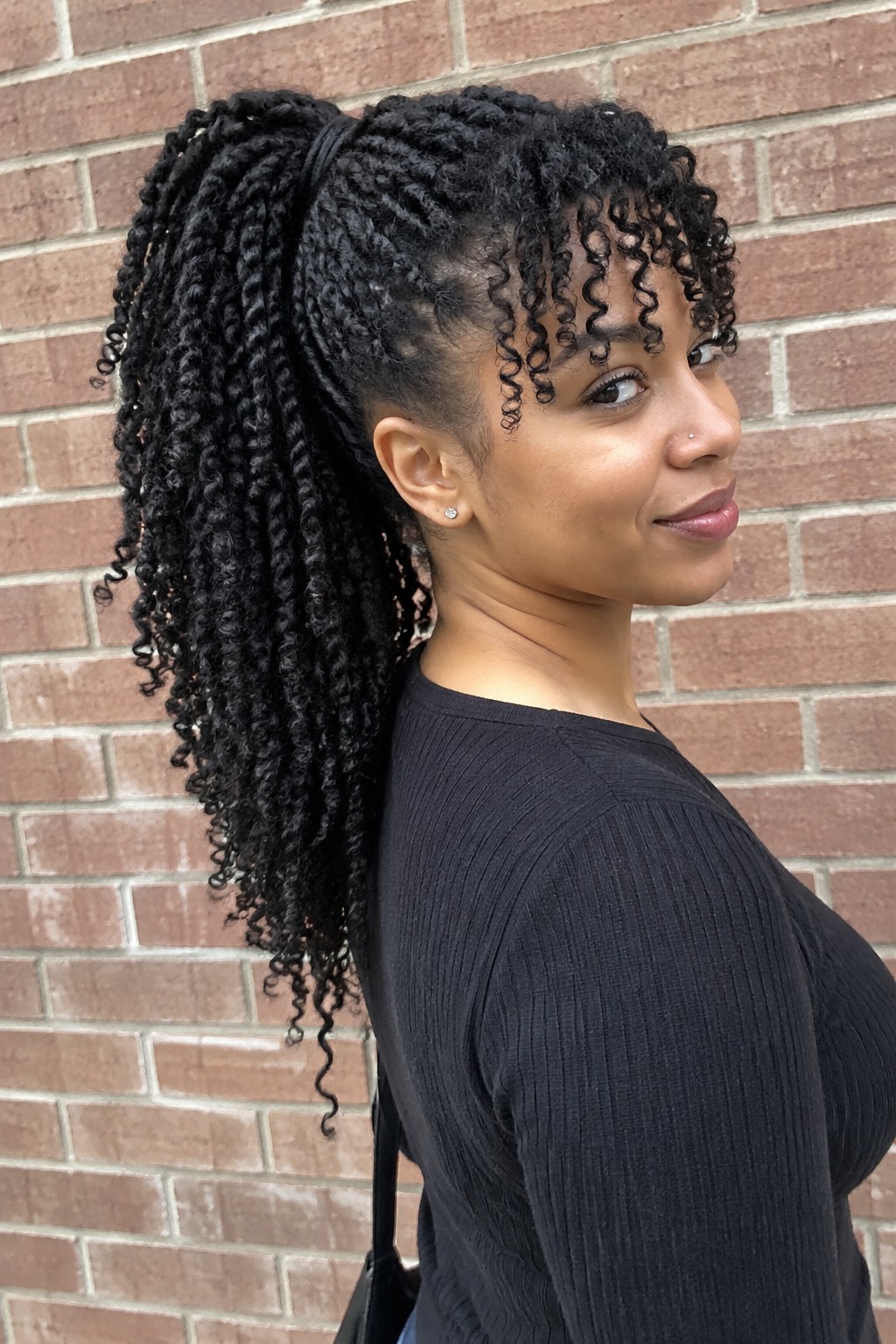
The high ponytail gathers long two-strand twists into a full, cascading shape, while a few loose curls fall across the forehead. That contrast keeps the style from looking too uniform.
I’d keep the front pieces loose to echo the curled ends throughout the ponytail. It’s a nice option if you want the neatness of a pulled-back style without smoothing away all the texture.
Short Bob With a Twisted Half-Up Ponytail
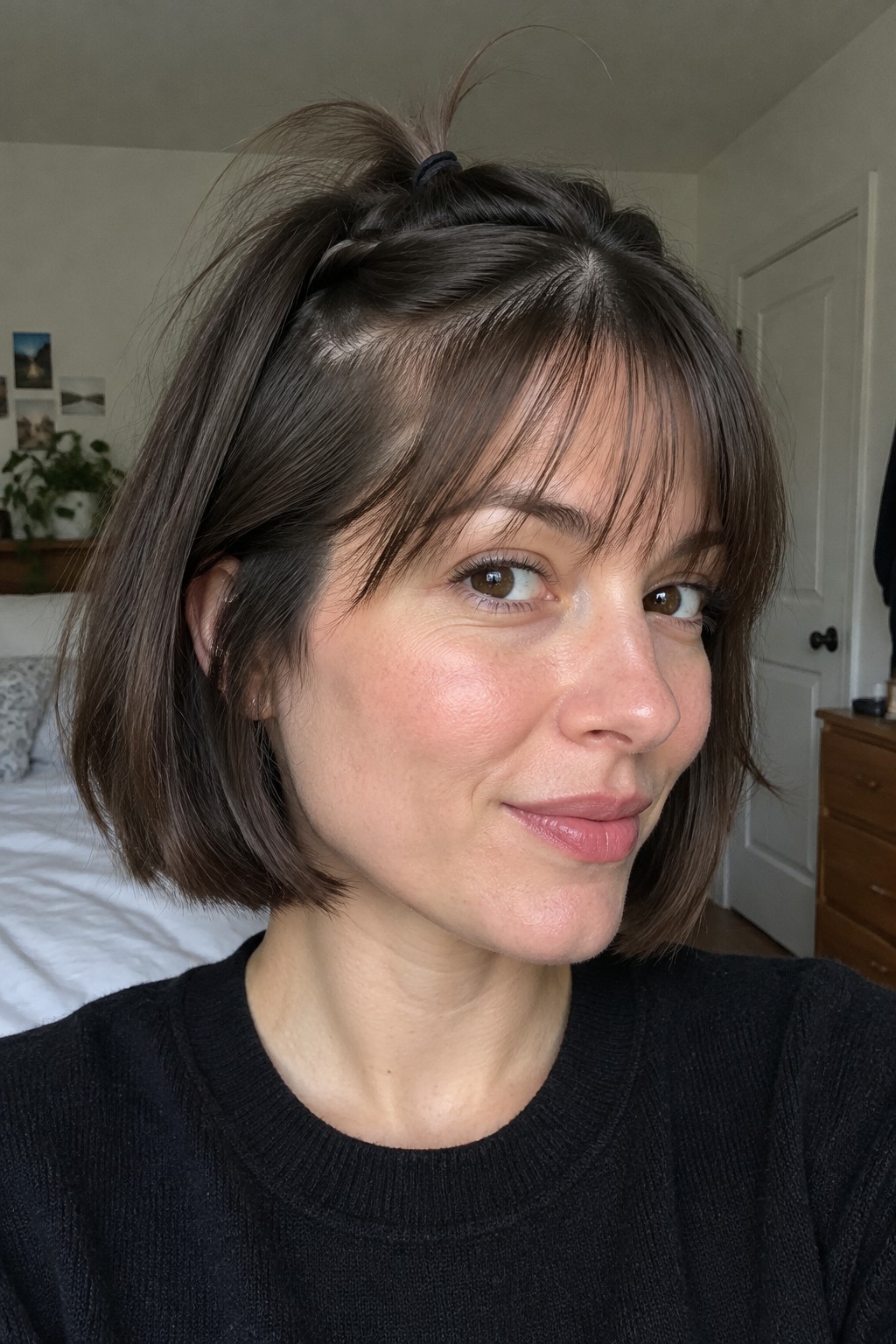
A chin-length bob gives this half-up ponytail a compact shape, while the small two-strand twist sweeps the hair neatly back from the side. Wispy bangs and a few loose strands keep the top from looking too pulled together.
I’d keep the ponytail small so the bob’s curved outline stays visible. The short ends can be left natural, with a little smoothing cream if you want a sleeker finish.
Two-Strand Twist Ponytail With a Side Twist

A loose two-strand twist sweeps from the side of the head and joins a low ponytail, giving the long, wavy hair a little detail without pulling it all back tightly. A few fine strands around the face keep the style relaxed.
I’d keep the twist slightly loose so it blends with the ponytail’s natural texture. It’s a nice option when you want a ponytail with more interest than a simple tie-back.
Half-Up Ponytail With Long Layers

The hair is gathered into a small, softly twisted half-up ponytail, while the rest falls to the shoulders in long layers. Side-swept bangs and loose strands keep the shape relaxed rather than tightly pulled back.
I’d keep the twist gentle so it sits comfortably with the natural texture and doesn’t compete with the layers. It’s a useful way to add a pulled-back detail while leaving most of the hair down.
Two-Strand Twist Ponytail With a Wrapped Base
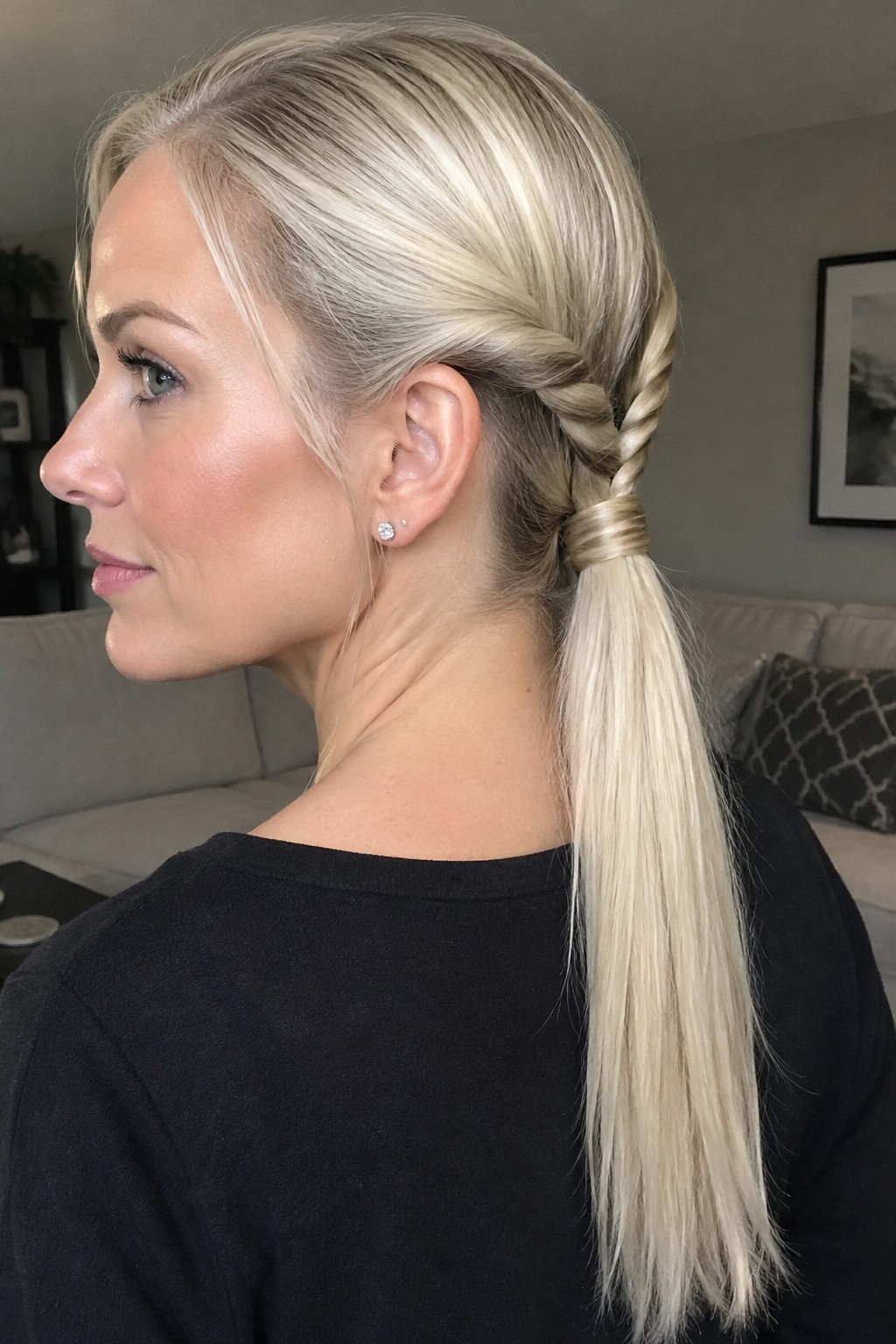
A sleek side twist feeds into a low ponytail, while a separate twist runs down the back of the head. The long, straight blonde length keeps the style clean and lets the woven sections stand out.
I’d keep the ponytail smooth and secure the wrapped base with a hidden pin for a neat finish. It’s a nice way to add detail to a simple low ponytail without twisting the entire length.
Two-Strand Twist Ponytail With Braided Crown Rows
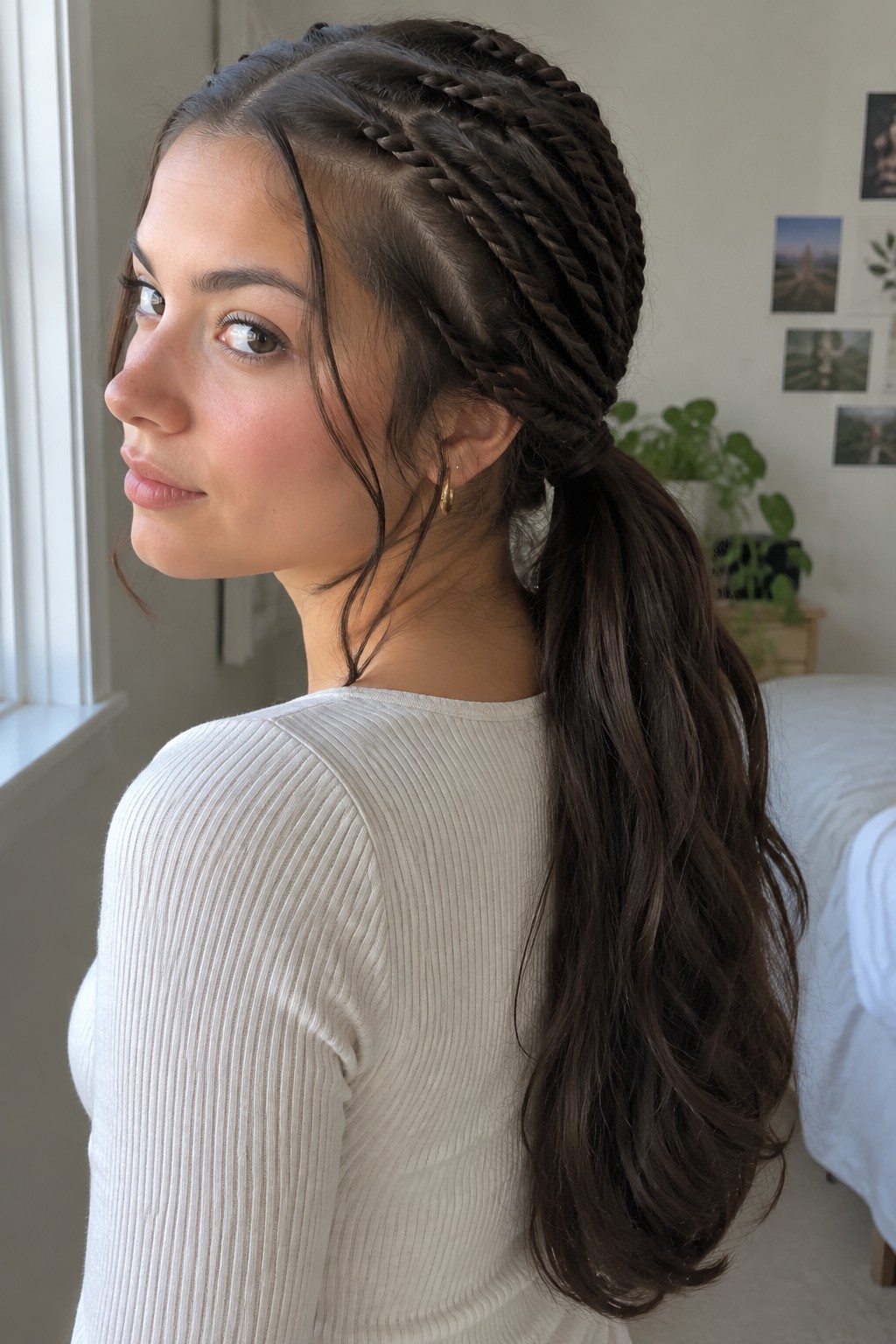
Several slim braids sweep back from the crown and join a long, low ponytail, creating a detailed shape before the hair gathers at the nape. The loose length keeps the style relaxed, while a few fine strands around the face break up the pulled-back sections.
I’d keep the ponytail slightly wavy so it has some texture next to the neat braids. This is a nice option if you want the detail of a twist ponytail with more interest across the top of the head.
Curly Two-Strand Twist Ponytail
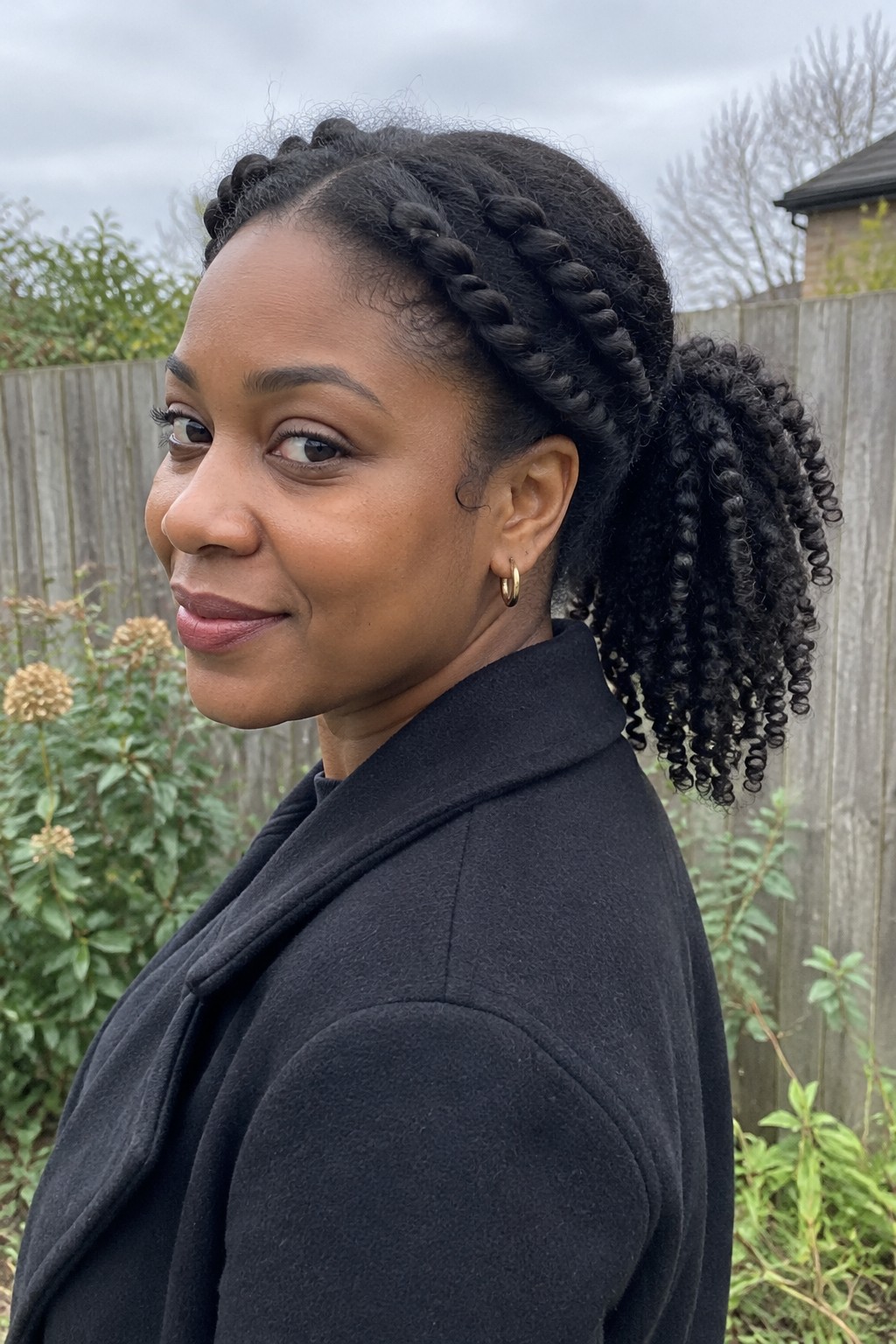
Thick two-strand twists sweep back into a high ponytail, where they blend with a full cluster of natural curls. The contrast between the defined twists along the crown and the springy ends gives this style its shape.
I’d keep the ponytail’s curls loose and airy so they stand apart from the neat twists at the front. It’s a lovely option when you want a protective style with texture on display.
High Ponytail With a Braided Twist Detail

A high ponytail gets extra definition from a narrow two-strand twist that runs along the side of the crown. The rest of the long, highlighted hair stays loose in the ponytail, with softly layered ends that give it a curved shape.
I’d keep the front pieces loose to echo the ponytail’s relaxed finish. This is a nice way to add a little detail to a gym-ready ponytail without twisting all of the hair.
Low Two-Strand Twist Ponytail With Blonde Waves

The hair is gathered into a low ponytail, with twists wrapped across the back to hold it in place. Long blonde lengths fall in loose waves, while a few lighter pieces remain around the face.
I’d keep the twists relaxed rather than pulling them tight, so the gathered section blends into the wavy ponytail. It’s a lovely option for showing off long, highlighted hair without putting every strand up.
Cornrowed Two-Strand Twist Ponytail

Neat rows of two-strand twists sweep back from the hairline and gather into a low ponytail. The close-to-the-scalp pattern keeps the sides sleek, while the coiled ends add a little texture behind the neck.
I like the contrast between the tidy rows and the fuller, curled ponytail. It’s a useful way to wear twists up while keeping the scalp pattern as part of the hairstyle.
Half-Up Ponytail With Twisted Crown Sections

Long, loose waves keep this half-up ponytail relaxed, while two twists meet at the back to gather the top sections of hair. The remaining length stays down, so it’s a good option when you want a little detail without putting all your hair up.
I’d keep the twists slightly loose to match the soft texture through the lengths. Blonde face-framing pieces blend into the rest of the hair and keep the front from feeling too pulled back.
Two-Strand Twist Ponytail With Wispy Bangs

Wispy bangs and loose pieces around the cheeks give this ponytail a relaxed shape, while the two-strand twist along the crown adds detail before the hair gathers at the back. The dark brown hair is pinned into a slightly undone ponytail, with shorter layers left loose at the ends.
I’d keep the twist a little relaxed rather than pulling it tight, so it sits naturally with the soft fringe. This is a nice way to wear a ponytail when you want the crown styled but still like a few pieces to fall around your face.
Low Ponytail With a Rope-Twist Crown
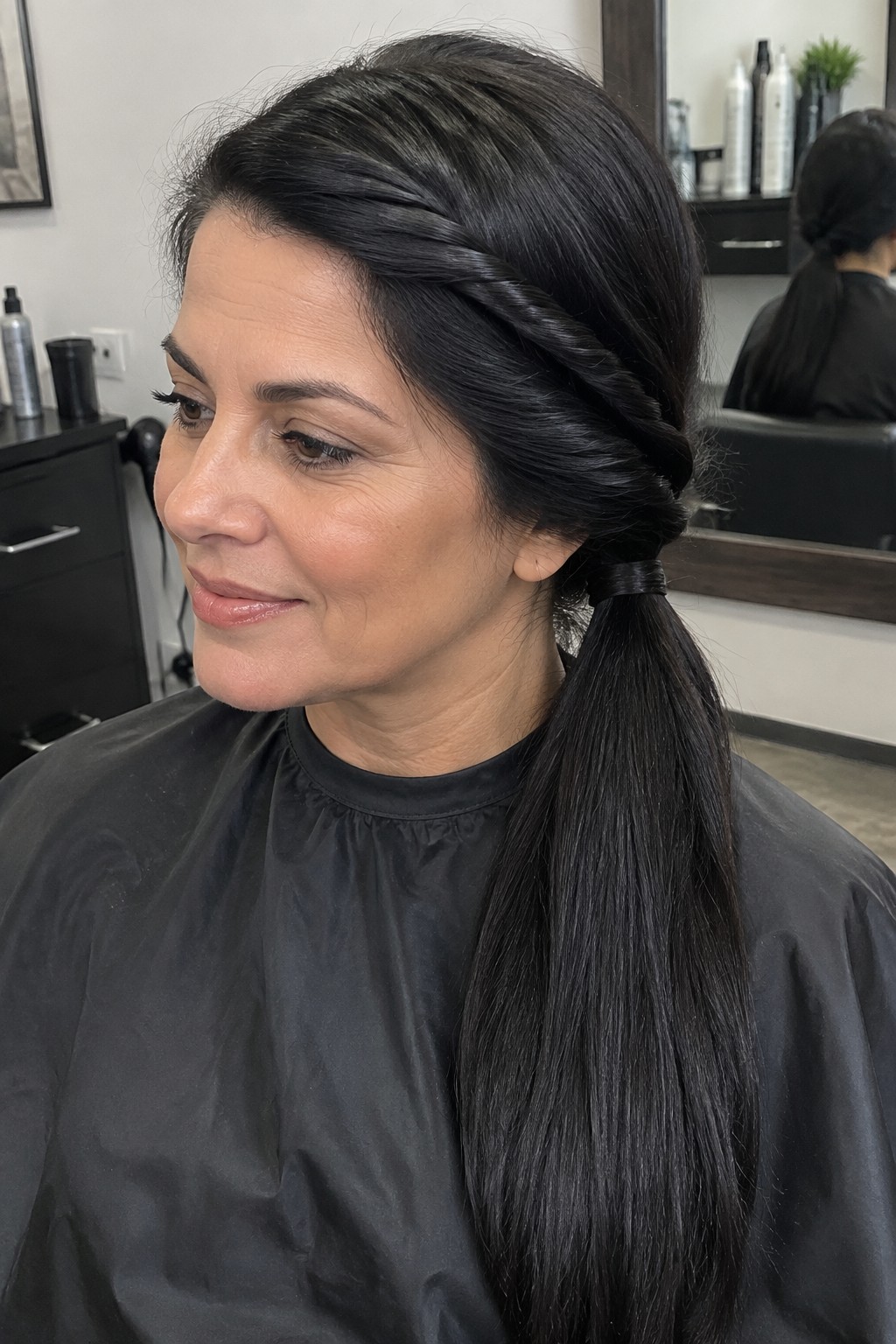
A sleek, low ponytail keeps the long dark hair gathered neatly at the nape, while a two-strand twist sweeps across the crown and joins the ponytail. The smooth finish makes the twisted detail stand out without adding extra decoration.
I’d keep the ponytail straight to preserve the clean shape, or add a little bend through the length for a softer finish. It’s a simple way to give a classic low ponytail more interest while keeping the hair secured.
High Curly Ponytail With Two-Strand Twists
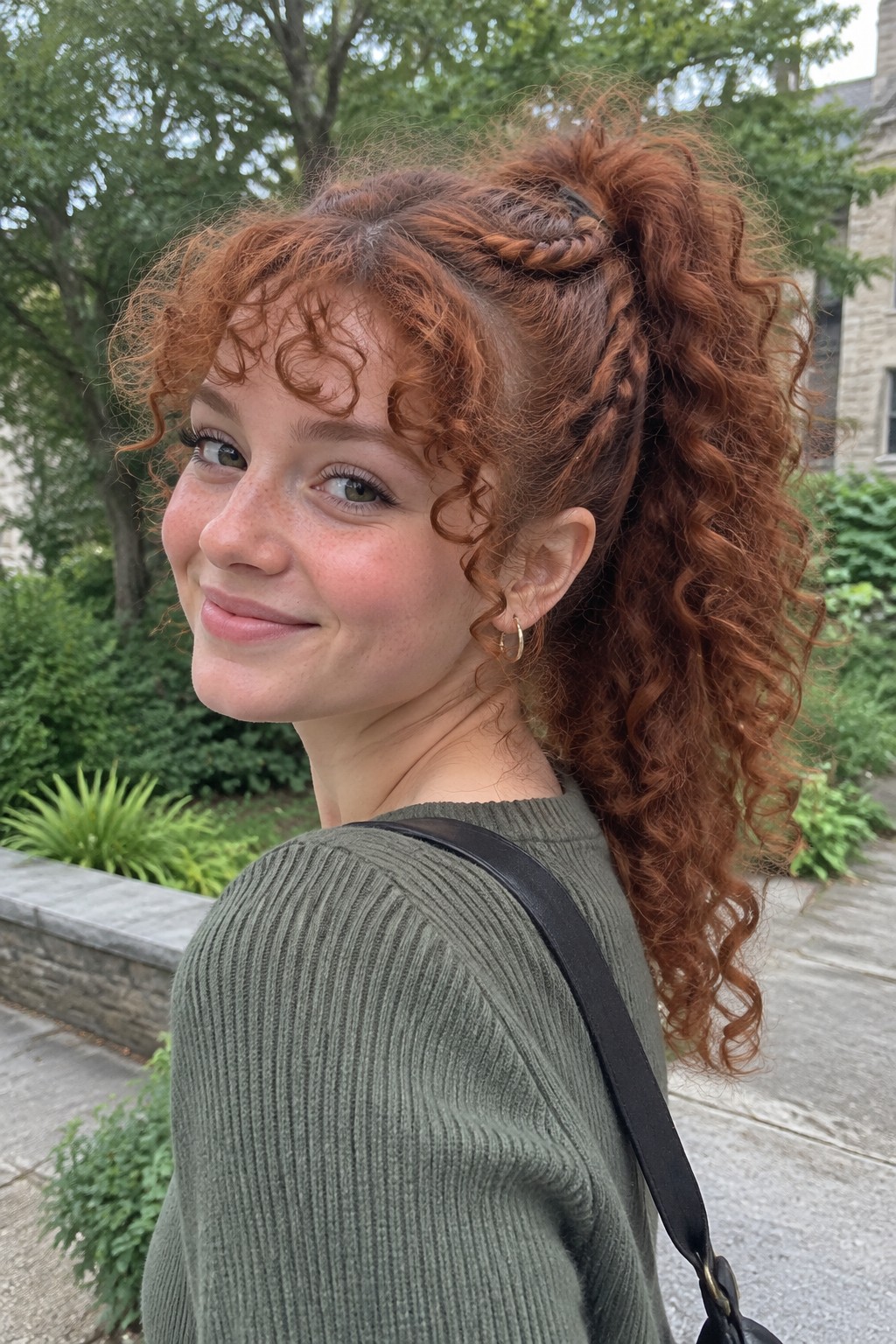
A high ponytail gathers long, copper-red curls into a full shape, while two-strand twists run along the sides and crown. Small curls left around the hairline keep the front from looking too pulled back.
I like the contrast between the neat twist sections and the loose, springy ponytail. If your curls have plenty of texture, leaving the ponytail natural lets the twist detail stand out without making the whole style feel too formal.
Two-Strand Twist Ponytail With a Twisted Headband

Long blonde hair is gathered into a low ponytail, with slim two-strand twists crossing over the crown like a headband. The loose, wavy lengths keep the ponytail relaxed rather than sleek.
I’d keep the twists slightly loose so they sit softly against the head, then leave a couple of fine pieces near the face. This is a nice way to add detail at the crown while keeping most of the length down.
Short Gray Bob With a Twisted Ponytail
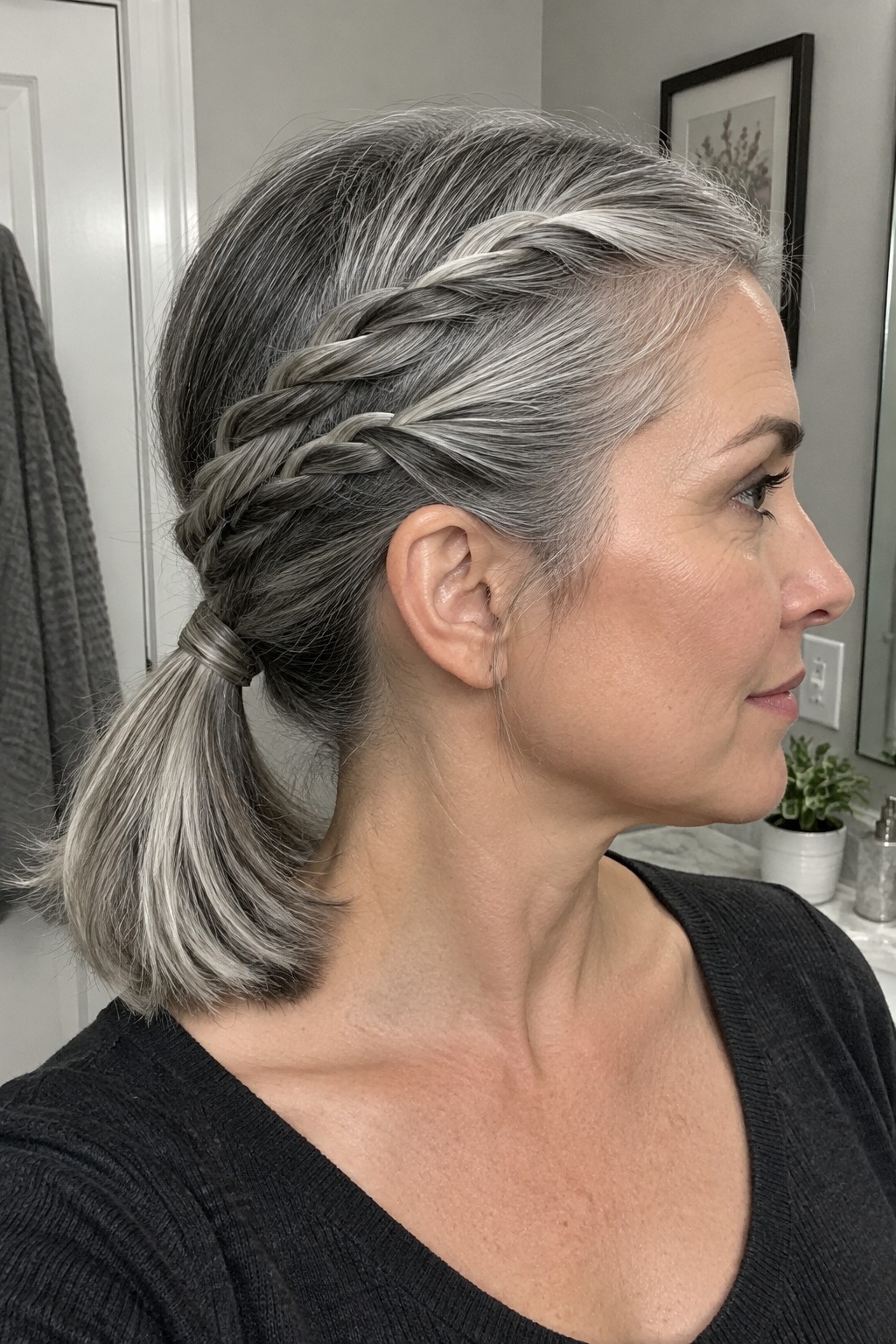
The chin-length bob is gathered into a low ponytail, while two slim twists sweep back from the sides and join near the base. The short, blunt ends make the ponytail feel compact, and the silver-gray color shows the twist pattern clearly.
I’d keep the twists a little loose so they sit comfortably against the head without looking too tight. It’s a useful way to gather shorter hair while still giving the crown some detail.
Low Ponytail With Loose Face-Framing Strands
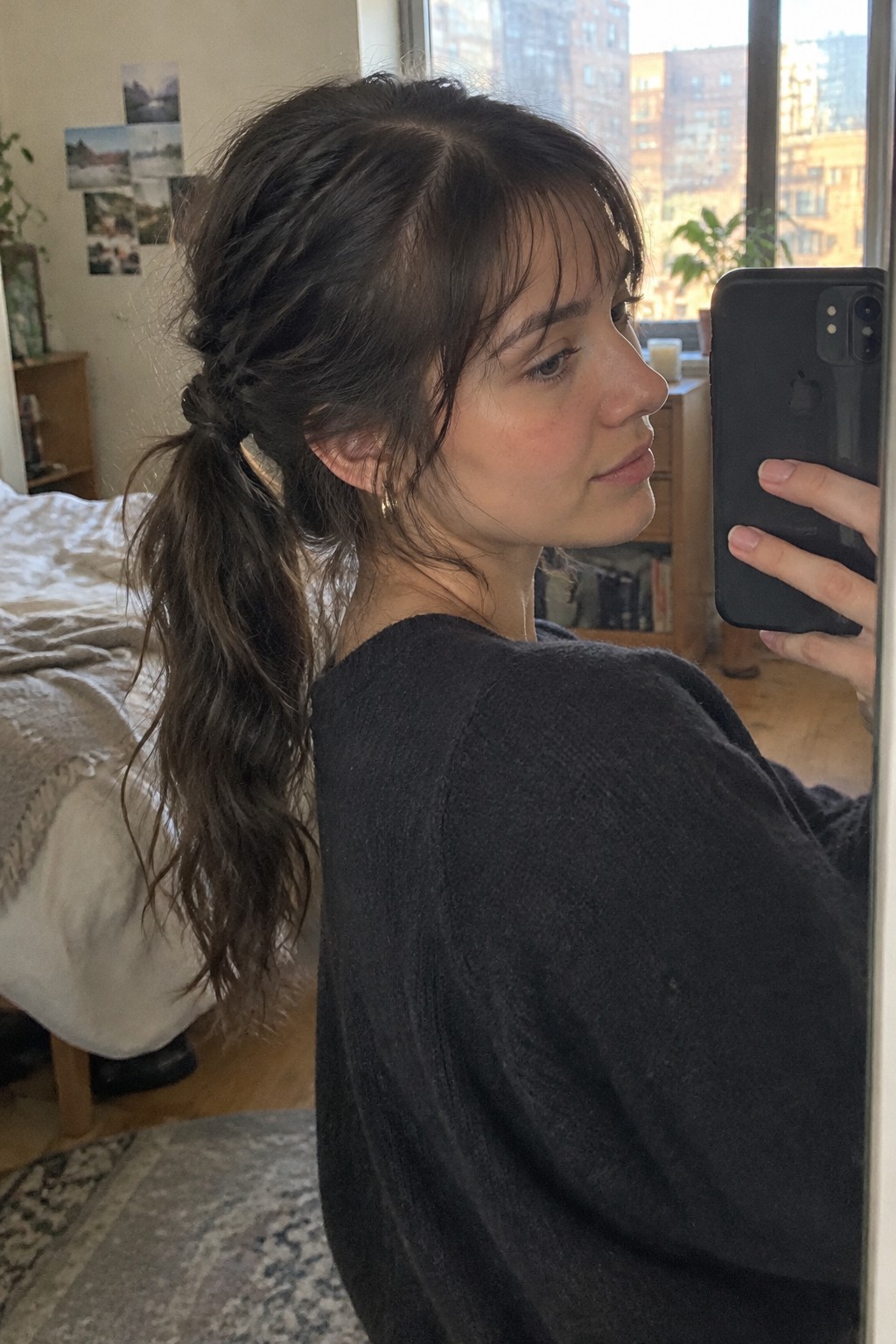
A low ponytail keeps the long dark hair gathered at the nape, with a small twisted section adding detail near the base. Wispy bangs and loose pieces around the temples keep the shape relaxed rather than tightly pulled back.
For a two-strand twist version, I’d keep those front pieces loose and let the ponytail stay a little undone. The wavy lengths suit this easy finish, and the style can work nicely when you want the twist to feel casual.
Frequently Asked Questions
Q: How do I keep my two-strand twist ponytail from getting frizzy? A: Start with moisturized, detangled hair, and twist each section with even tension. A little styling cream can help smooth flyaways without making the twists stiff.
Q: Can I wear this style on stretched or blown-out hair? A: Yes. Stretched hair gives the ponytail a longer, sleeker look, while natural shrinkage makes it fuller. Just make sure your hair is completely dry before styling if you used heat.
Q: How tight should I make the ponytail? A: Secure it snugly enough to hold, but not so tight that your scalp feels sore. If you feel pulling, loosen the base and try a softer hair tie.
Q: Can I leave the twists in overnight? A: Sure. Cover your hair with a satin scarf or bonnet to reduce friction, and gently retie the ponytail in the morning if it has loosened.
