

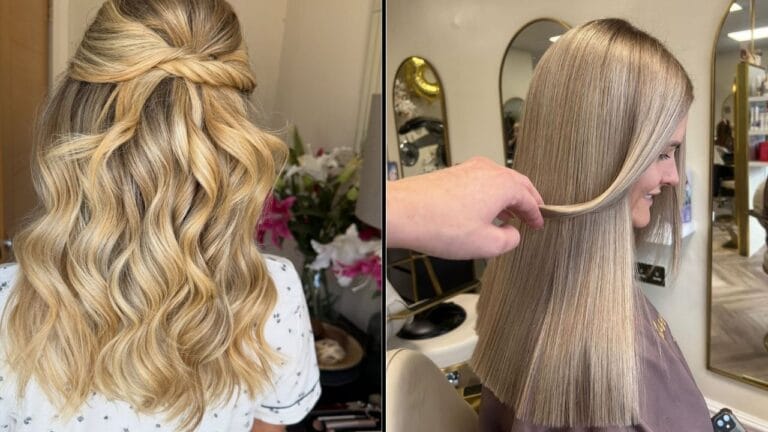
I have spent years watching women sit in my chair and describe their hair as if it is a personal enemy that refuses to cooperate.
It is fascinating how we often view our hair through the lens of its worst traits rather than seeing the simple mechanical reasons why it is acting up.
Most people come to me thinking they need a total overhaul or an expensive chemical treatment when the reality is usually much smaller.
I find that once you understand the relationship between moisture at your ends and weight at your roots, the daily battle finally stops.
Understanding the Balance of Your Daily Hair Health
The core idea behind this guide is that hair problems rarely happen in a vacuum. Most of the time, what we call “problem hair” is actually just hair that is reacting to its environment, your styling tools, or a lack of specific nutrients. I often see women who are frustrated because their hair is simultaneously oily at the scalp and crunchy at the bottom. This tug-of-war is usually a sign that your routine is focused on the wrong area.
When your roots are flat and your ends are dry, it is often because the natural oils from your scalp are getting stuck at the top. If those oils cannot travel down the hair shaft, the ends stay thirsty and the roots get weighed down by the buildup. Frizz enters the chat when that thirsty hair tries to pull moisture out of the air. It is a cycle that feels impossible to break until you start treating different zones of your hair with different levels of care.
Most people are surprised that the solution is not just “more product” but rather “smarter placement.” I see many clients over-conditioning their scalp to fix dryness, which only leads to flatter hair. Conversely, they skip conditioner entirely to get volume, which leads to a cloud of frizz by noon. Learning to balance these three specific zones—roots, mid-lengths, and ends—is the secret to hair that looks like you actually tried, even when you didn’t.
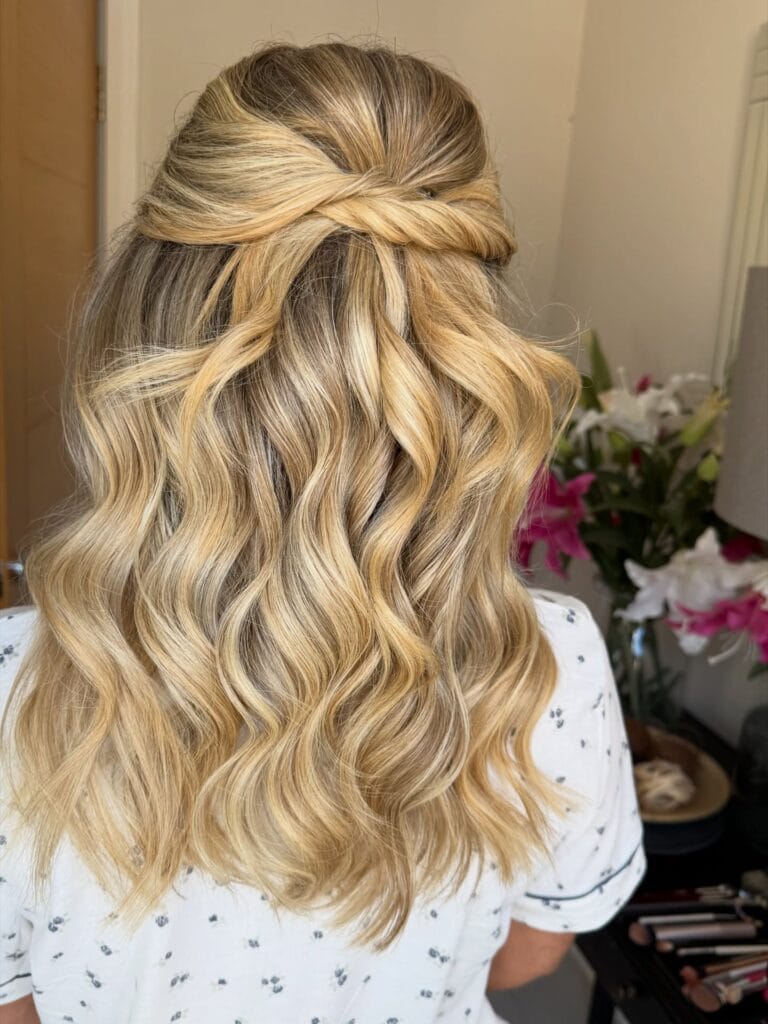
How To Know If This Targeted Approach Is Right For You
This troubleshooting approach works for almost everyone, but it is especially vital if you have fine to medium texture with any kind of length. If your hair is chin-length or longer, you are likely dealing with “old” hair at the ends and “new” hair at the roots. The lifestyle fit here is perfect for the woman who wants to look polished but does not have ninety minutes to spend with a round brush every morning.
If you have a very oily scalp, you might think you cannot use moisturizing products at all. That is a common misconception I hear during consultations. You simply have to be surgical about where those products go. On the flip side, if you have very thick or coily hair, your “flat roots” might actually be a lack of structural support from your haircut rather than a product issue.
The pros of this balanced method are immediate. You will notice more shine, less breakage, and a style that actually lasts through a humid day. The only real con is that it requires a bit more intentionality than just lathering up and rinsing. You have to be willing to look at your hair as three separate sections rather than one single unit.
How To Explain Your Hair Concerns At The Salon
When you sit down for your next appointment, try to move away from vague words like “bad” or “messy.” I always appreciate it when a client can point to specific zones of her head. Instead of saying your hair is dry, tell your stylist that your ends feel like straw but your roots feel heavy. This tells us exactly where we need to adjust the weight of the cut.
You might say something like, “I am struggling with flat roots, so can we add some internal layers for lift without losing the weight at the bottom?” Another great phrase is, “My ends are very dry and prone to frizz, so I need a cut that removes the damage without making my hair too wispy.” These specific requests help your stylist choose the right cutting technique, whether that is point cutting for texture or blunt cutting for a solid perimeter.
Bring photos that show hair texture similar to yours. If you have wavy hair, do not bring a photo of someone with pin-straight hair and ask why yours is frizzier. Look for images where the hair has a similar “movement” to your own. This prevents the common miscommunication where a client wants the result of a specific product rather than the result of a specific haircut.
Daily Styling Routines That Support Your Hair Goals
For a fast daily routine, focus on the “mid-to-ends” rule. When you wash your hair, only apply shampoo to the scalp and let the suds rinse through the ends. When you condition, start at the bottom and stop at the ear line. This keeps your roots light and your ends hydrated. If you are in a rush, a quick blast of dry shampoo at the roots—even on clean hair—can provide the grit needed to prevent that “flat” look later in the day.
When you have more time, try a “pre-wash” treatment. I often suggest applying a hair oil or a deep conditioner to just the bottom three inches of your hair about twenty minutes before you hop in the shower. This protects the dry ends from the stripping effects of the shampoo. For styling, use a lightweight volumizing mousse only at the crown and a smoothing cream only on the ends. Using a microfiber towel instead of a standard cotton one will also cut down on frizz before you even pick up a hair dryer.
A wide-tooth comb and a high-quality boar bristle brush are your best friends here. The comb detangles without snapping dry ends, while the brush helps move those scalp oils down to where they are actually needed. If you want to avoid heat, try “plopping” your hair in a cotton t-shirt or using silk heatless rollers. These methods preserve the moisture in your ends while giving your roots a natural lift as they dry. This approach typically grows out very gracefully because you are maintaining the health of the hair as it gets longer.
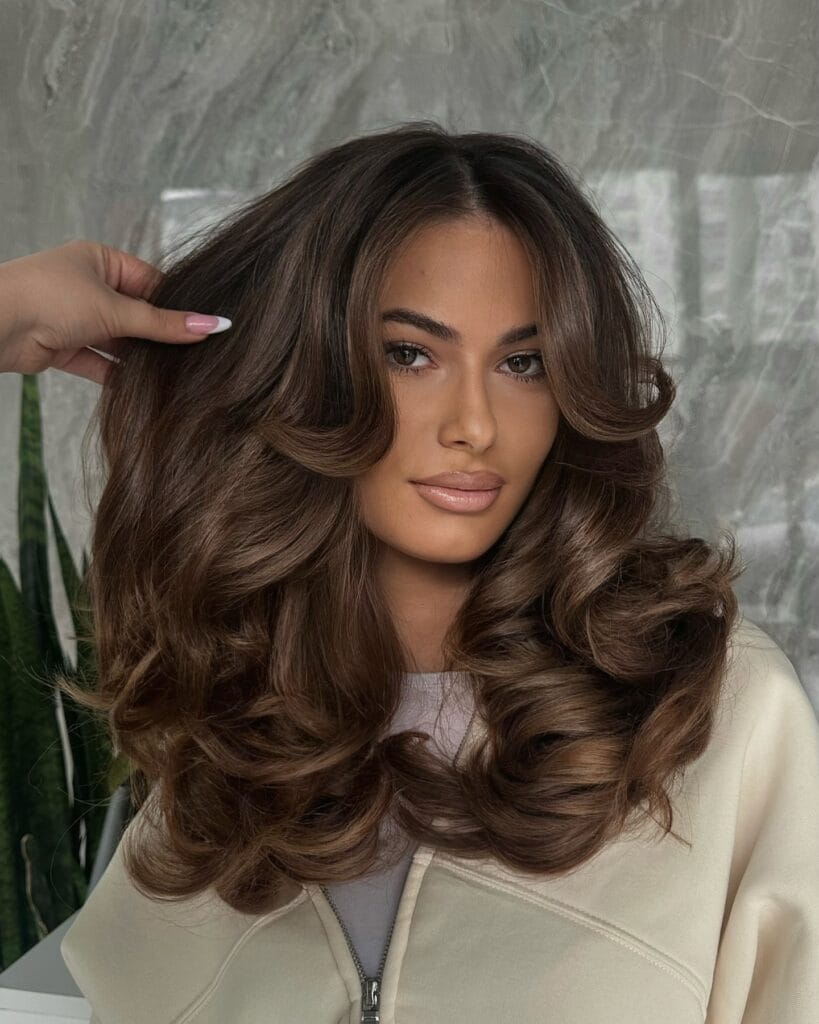
Inspiration Gallery: Real Solutions For Everyday Hair
This gallery features looks that balance volume at the top with healthy, hydrated movement through the lengths. You will see how different lengths handle the transition from root to tip.
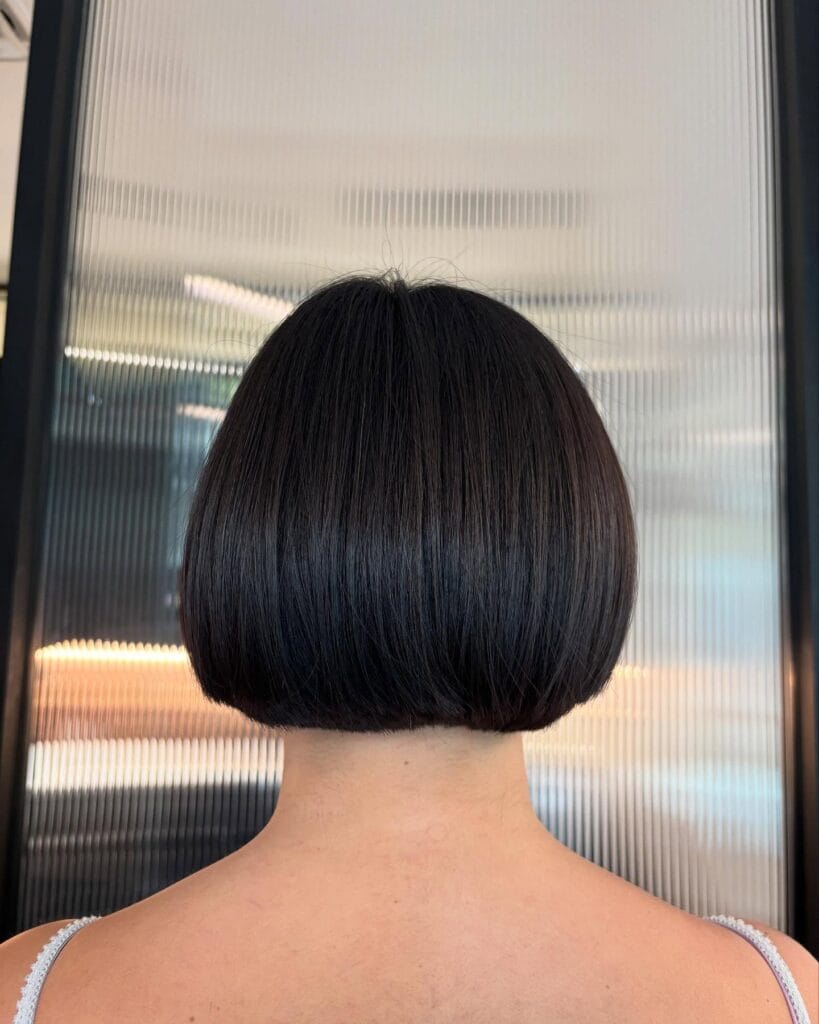
This sleek chin length bob is all about clean lines and healthy shine. The hair is cut blunt and even at the ends with a softly rounded shape that hugs the jawline, while the texture is smooth and straight from roots to tips. The rich dark brown color adds depth and makes the glossy finish stand out beautifully.
I love how a blunt bob like this instantly makes my hair look thicker and more polished, especially on days when my roots want to fall flat. The sharp shape keeps the ends looking full instead of dry or frizzy, which makes styling feel almost effortless. It is the kind of cut that makes me feel put together even with the simplest blow dry.
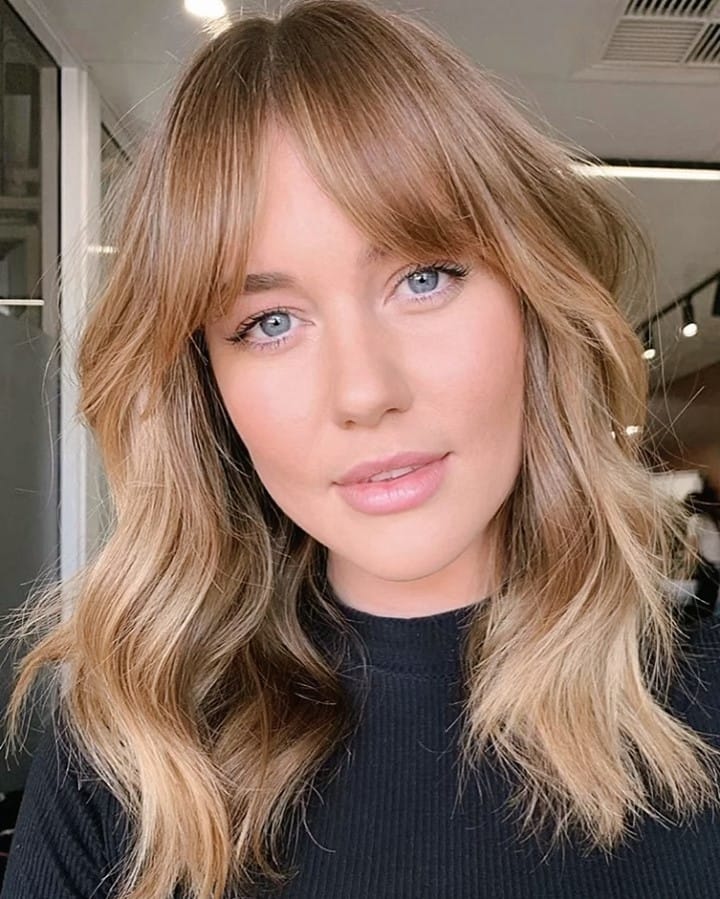
This shoulder length cut features soft, airy layers with loose natural waves that give the hair a light, bouncy feel. The curtain bangs gently frame the face and blend into the layers, while the warm beige blonde color adds brightness and dimension without looking overdone.
I love how this style makes my hair feel fuller at the roots while still keeping the ends soft and healthy looking. The waves and face framing bangs add just enough movement so it never falls flat, which makes it one of those easy everyday styles that still feels a little bit polished.
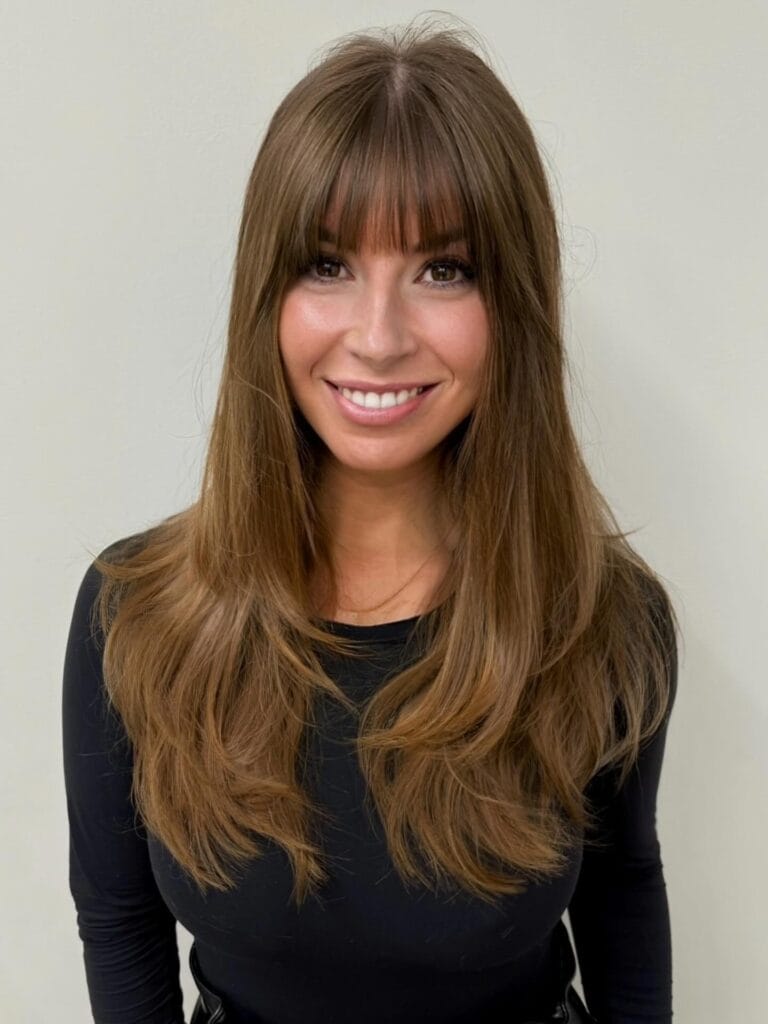
This look features long chestnut brown hair that falls a little past the shoulders with soft, airy layers that keep the shape light and bouncy. The texture is smooth with a gentle blowout finish, while the full fringe frames the eyes and blends naturally into the face framing layers. The ends curve slightly inward which keeps everything looking polished and healthy instead of dry or frizzy.
I love how this style makes my hair feel fuller at the roots while the layers keep the length from looking heavy. The fringe adds a cute focal point around the eyes and somehow makes the whole look feel softer and more flattering. It is one of those easy styles that always looks fresh even on days when my hair does not want to cooperate.
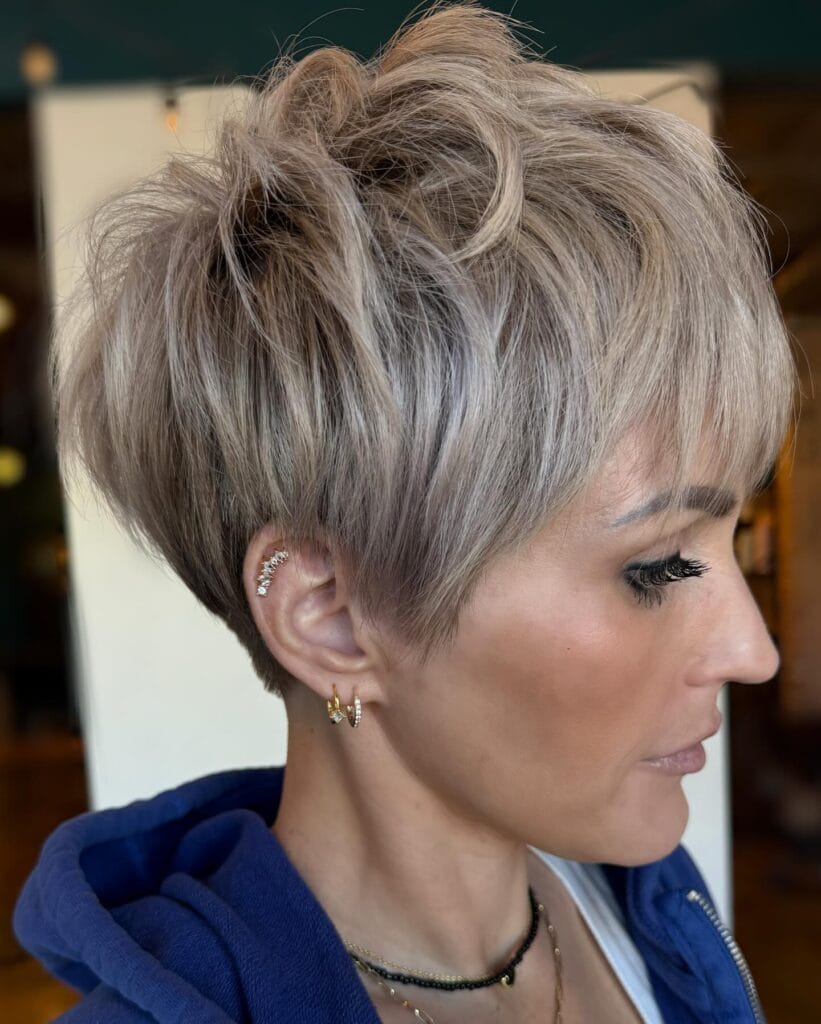
This short textured pixie cut keeps the sides and back neatly tapered while leaving soft choppy layers through the crown for lift and movement. The length stays slightly longer on top so the hair can be tousled for natural volume, and the cool ash blonde color adds a modern, softly dimensional finish. Light feathered pieces around the fringe keep the look airy instead of heavy.
I love how this kind of pixie instantly makes my hair look fuller at the roots without much effort. A quick fluff with my fingers and a bit of styling cream gives that effortless lift that saves me from flat hair days. It feels fresh, playful, and surprisingly easy to style in the morning.
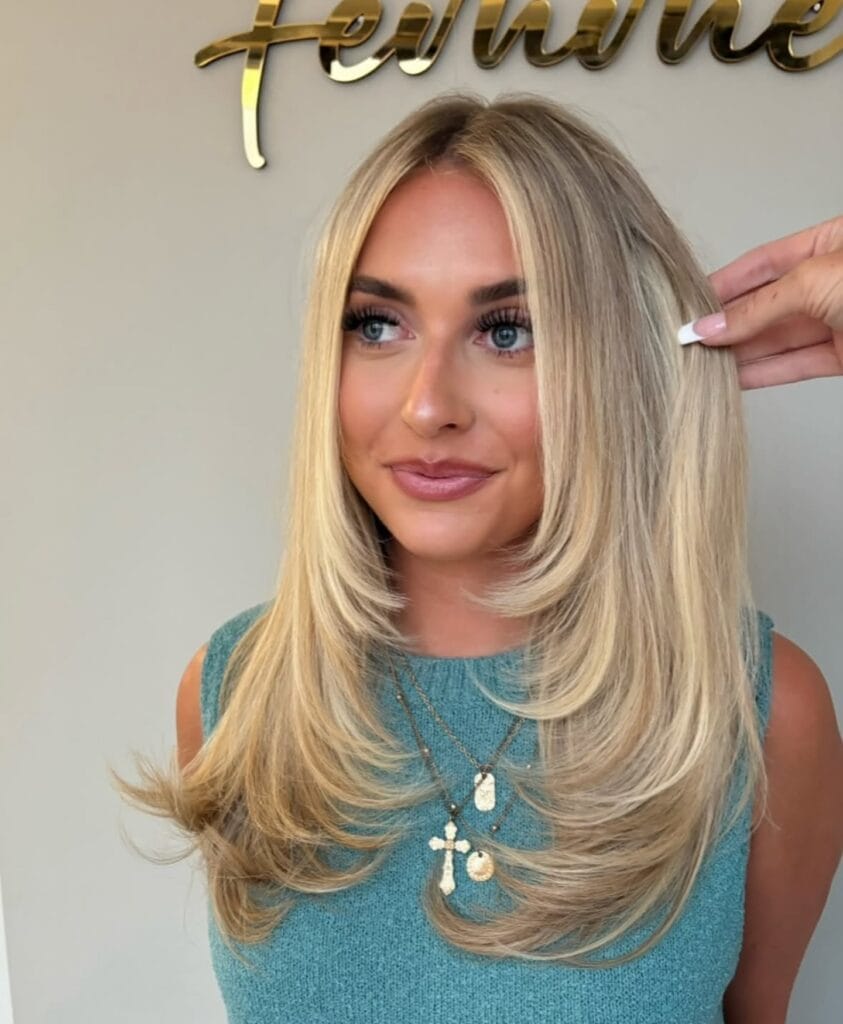
This mid length blonde hairstyle features soft, flowing layers that start around the chin and cascade smoothly through the ends. The hair is styled sleek and polished with a center part and subtle face framing pieces that curve inward, while the longer layers flip gently outward for movement and bounce. The creamy blonde color with slightly deeper roots adds dimension and keeps the whole look bright and fresh.
I love how this kind of layered blowout instantly makes my hair feel fuller and healthier, especially when my roots tend to fall flat. The soft layers lift everything up while the smooth finish keeps frizz in check, which makes my hair look polished without feeling overly styled. It is one of those styles that feels effortless but still gives that pretty salon glow every day.
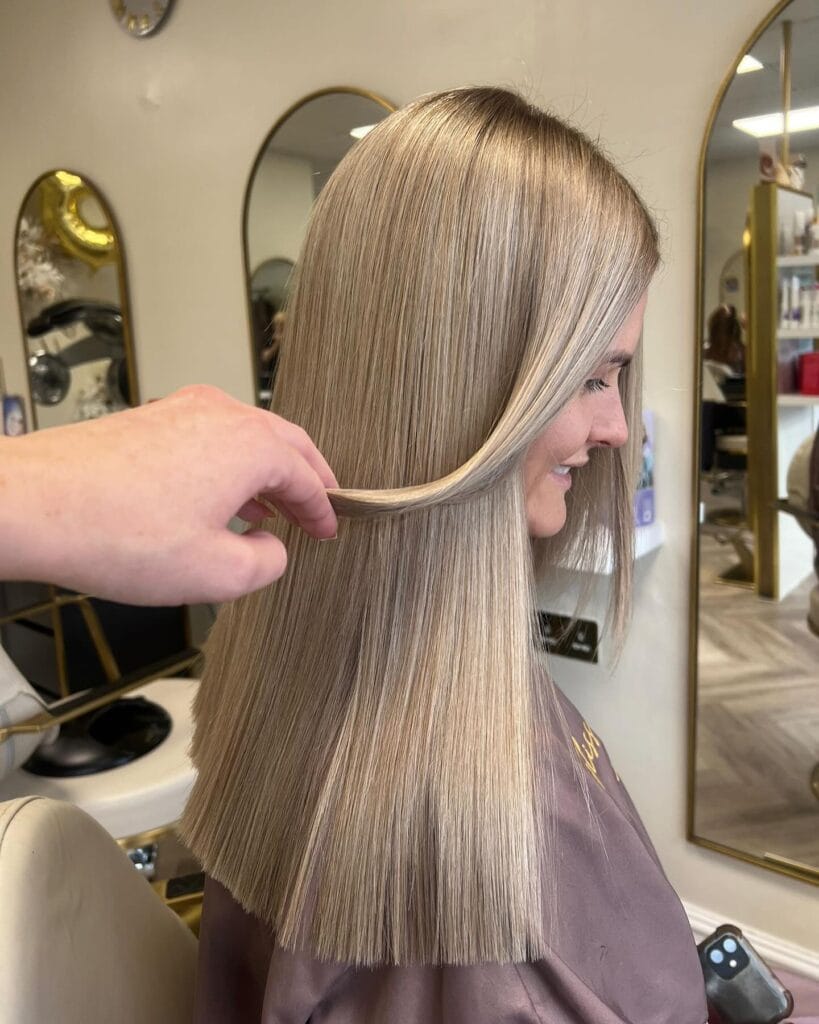
This sleek shoulder length cut keeps things clean and polished with perfectly straight strands and blunt ends that create a sharp, healthy finish. The hair is smooth and silky with soft root lift for a little natural volume, while the cool beige blonde color blends subtle highlights for a glossy, dimensional look. A center part keeps the style balanced and modern, letting the smooth texture really shine.
I love how this kind of cut instantly makes my hair look thicker and healthier, especially when my ends are feeling dry or tired. The blunt shape keeps everything looking full while the soft lift at the roots stops it from falling flat during the day. It is one of those styles that feels simple but still makes my hair look really put together.
Why Your Hair Type Changes As You Age
I see many women in their 50s and 60s who are confused by a sudden change in their hair’s behavior. It is very common for hair to become finer at the root while the texture of the individual strands becomes more wiry or “frizzy.” This is often due to hormonal shifts that affect oil production on the scalp.
If you are noticing this, you might need to switch to a scalp-stimulating shampoo while upping the moisture in your conditioner. Gray hair, specifically, has a different cuticle structure that tends to be more open, which is why it feels drier and catches the light differently. Embracing a more moisturizing routine is usually the key to making silver hair look intentional and polished rather than dull.
Common Mistakes To Avoid
The biggest mistake I see is “over-washing” to combat flat roots. If you wash every day because your hair feels flat, you are likely stripping your ends, which causes them to frizz. It is a vicious cycle. Try using a physical exfoliant on your scalp once a week instead. This removes the dead skin and product buildup that causes flatness without the daily stripping of natural oils.
Another error is using the wrong towel. Rubbing your hair with a rough bath towel raises the hair cuticle, which is a one-way ticket to Frizz City. Gently squeeze the water out instead. Finally, check your heat settings. Most people use their flat irons and blow dryers on the highest setting possible. Unless you have extremely thick, coarse hair, you are likely “cooking” the moisture out of your ends, leading to that dry, split-end look we all want to avoid.
Problems You Might Run Into And How To Fix Them
Why is my hair frizzy even though I use expensive oils? You might be applying the oil to dry hair, which just sits on top. Try applying a tiny amount to damp hair to lock in the water molecules before they evaporate.
How can I get root volume without using sticky hairspray? Try a root-lifting powder or a “dry” texture spray. These provide lift by creating friction between the hair strands rather than gluing them together.
My ends are splitting even though I just got a haircut. Why? This is often caused by mechanical damage. Check your pillowcase—switching to silk can prevent the friction that snaps dry ends during the night.
Is it possible to fix dry ends without cutting them off? You can temporarily “seal” them with products containing proteins or silicones, but once a hair strand has split, a trim is the only permanent fix. Think of it like a snag in a sweater.
Can hard water cause flat roots and dry ends? Yes, minerals in hard water can sit on the scalp and create a film that weighs hair down while also preventing moisture from entering the hair shaft. A clarifying shampoo or a shower filter can help.
Does air-drying make frizz worse? For some textures, yes. If your hair is porous, air-drying allows it to swell with moisture from the air. A quick rough-dry with a blow dryer can “set” the cuticle and prevent this.
How do I stop my roots from getting oily by the afternoon? Avoid touching your hair throughout the day. The oils from your hands transfer to your hair and weigh it down surprisingly fast.
What is the best way to brush hair to prevent breakage? Always start from the ends and work your way up to the roots. If you start at the top, you are just pushing all the tangles down into a giant knot at the bottom.
Other Options You Might Like
- The Modern Shag: If you want maximum root volume and can handle a bit of intentional “messiness,” this cut uses layers to do the heavy lifting for you.
- Blunt Lobs: This is great for making thin ends look much thicker and healthier while keeping enough length to pull back.
- Face-Framing “Butterfly” Layers: A perfect choice if you want to keep your long hair but need to remove weight around the face to prevent a “dragged down” look.
- The French Bob: A chin-length option that prioritizes health and ease, usually requiring very little styling to look chic.
- Internal Ghost Layers: This is a technique where layers are cut underneath the top section of hair to provide “hidden” lift for flat roots without changing the overall look.
