

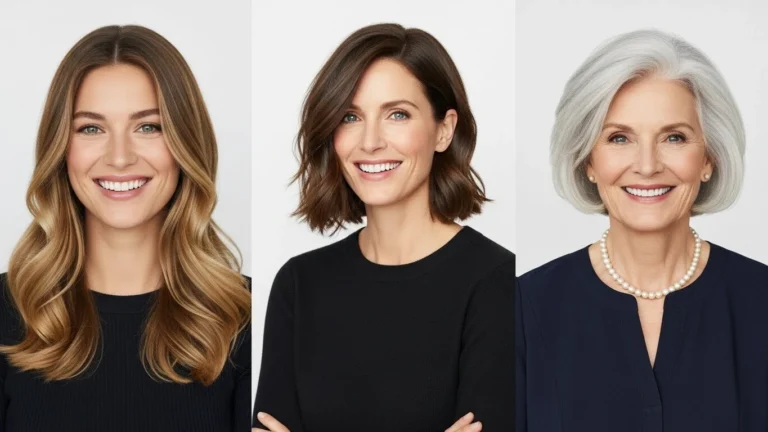
There is an old, tired “rule” that used to circulate in beauty magazines: the one that said once a woman hits forty, she has to chop her hair into a sensible bob. Or the one that suggested long hair is only for the “young and carefree.”
Honestly? I think those rules were written by people who were more concerned with tradition than with actual beauty.
I remember watching my aunt turn fifty. She had this incredible, thick mane of silver-streaked hair that hit the middle of her back. It was her signature. But, feeling the pressure of “the rules,” she went to a salon and walked out with a short, layered pixie. She looked fine, but she looked diminished. It was like she had dimmed her own light because she thought she had to “act her age.” It took her three years to grow it back, and I’ll never forget the day she finally felt like herself again.
In 2026, the most flattering hair length isn’t dictated by the year on your birth certificate. It is dictated by the health of your hair, the proportions of your face, and the energy you want to put out into the world. However, our hair does change as we age. Its texture, its density, and how it holds color will shift.
Here is how to navigate lengths at every stage of life while keeping the focus on what makes you feel radiant.
In Your 20s: The Era of Experimentation
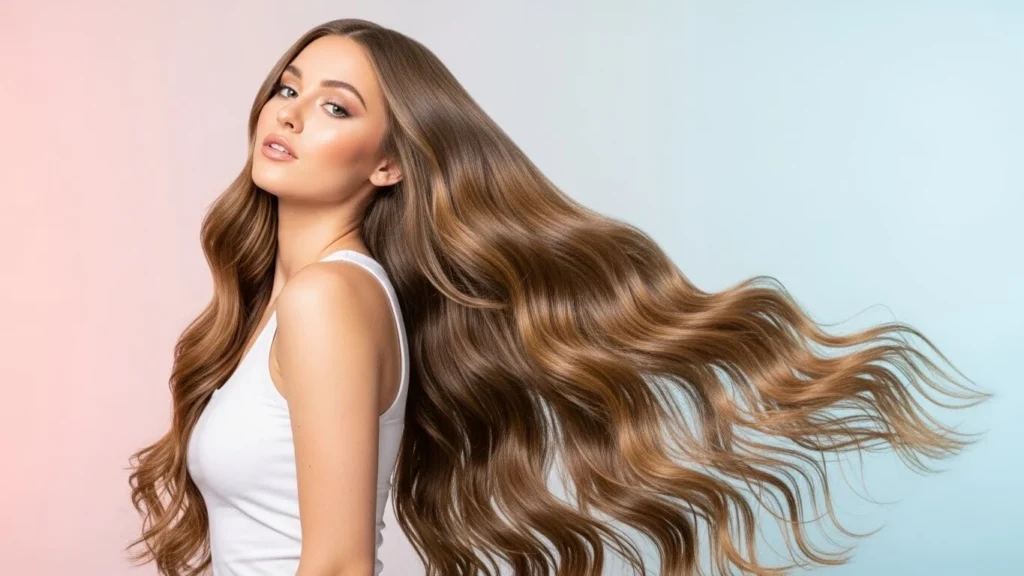
This is the time to push the boundaries. In your twenties, your hair is typically at its peak “resiliency.” It can bounce back from bleach, heat, and radical length changes more easily than it might later on.
- The Power Length: The “Ultra-Long” or “The Micro-Bob.”
- Why it works: This is the best time to go for extremes. Whether it is waist-length waves that feel romantic and boho, or a sharp, chin-length bob that screams “I’ve arrived,” your twenties are about finding your identity.
- The Pro Tip: Don’t get stuck in a “safety” length. If you’ve had the same long hair since high school, try a mid-length lob. It’s the perfect bridge to a more sophisticated look.
In Your 30s: The Sophisticated Shift
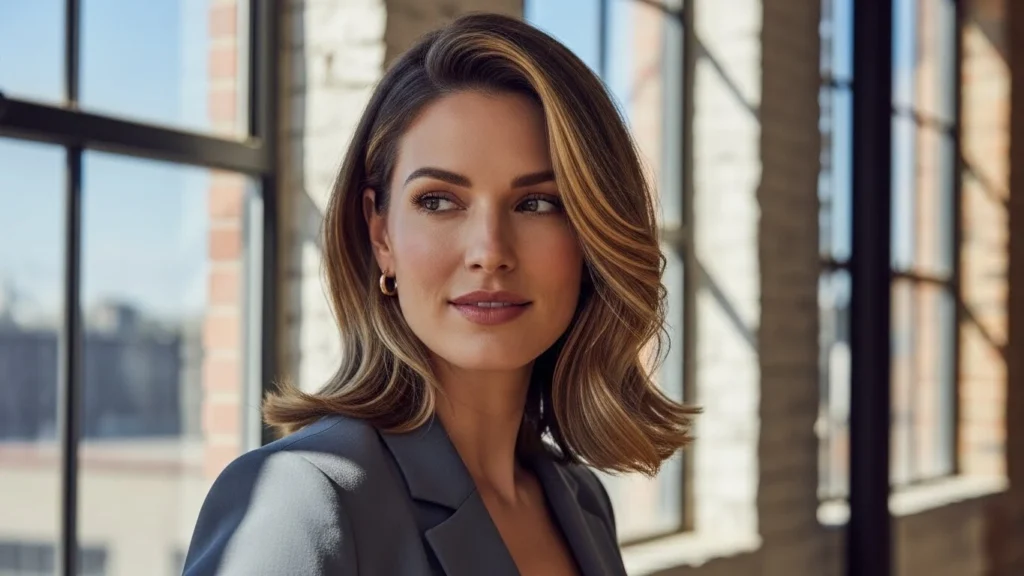
For many American women, the thirties are a decade of high-speed living…climbing career ladders, starting families, or building businesses. You want hair that looks intentional but doesn’t require an hour of work every morning.
- The Power Length: The Collarbone Cut (The Lob).
- Why it works: The collarbone is one of the most universally flattering points on a woman’s body. A cut that hits right at the bone is long enough to pull back into a chic “mom bun” or ponytail, but short enough to have swing, volume, and a “boss” energy.
- The Pro Tip: Focus on “internal layers.” These add movement without making the hair look choppy, giving you that effortless “cool girl” vibe that works in a boardroom or at a park.
In Your 40s: Building Volume and Frame
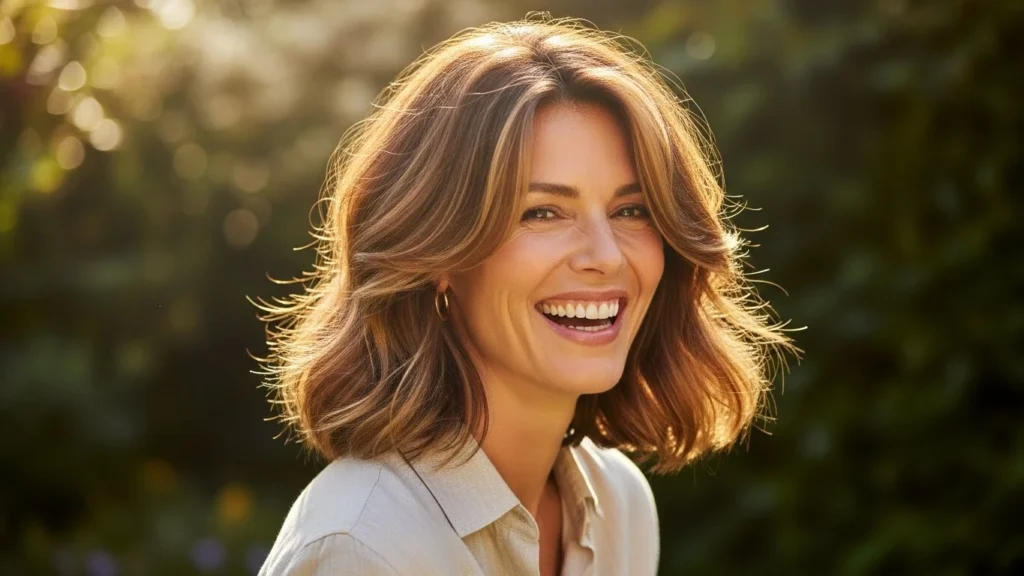
As we hit our forties, many women notice a slight change in texture or a bit of thinning near the temples. The goal here is to use length to create the illusion of fullness and to lift the features of the face.
- The Power Length: Shoulder-Length with Face-Framing Layers.
- Why it works: Keeping the length around the shoulders allows you to maintain that feminine feel while removing the “weight” that can sometimes pull the face down. Soft layers starting around the cheekbones act like a non-surgical facelift, drawing the eye upward.
- The Pro Tip: Avoid “blunt” ends if your hair is thinning. A bit of texture at the bottom makes the hair appear thicker and more vibrant.
In Your 50s and 60s: Texture is Queen
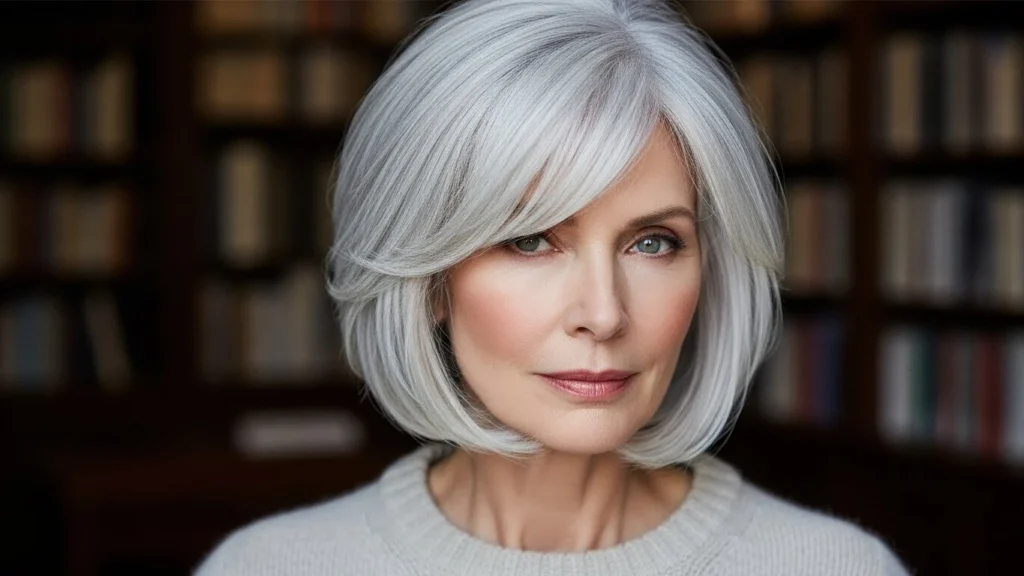
This is the stage where the “short hair” pressure peaks, but you have options. The key in your fifties and sixties is to ensure the hair looks healthy and hydrated. Gray hair (if you’re embracing it) has a different texture. It can be wiry or very fine… so the length needs to support that.
- The Power Length: The Modern Shag or the Structured Bob.
- Why it works: If you have great volume, a shoulder-length shag with lots of layers can look incredibly youthful and edgy. If your hair is finer, a structured bob that hits just below the jawline creates a strong, elegant frame for your face.
- The Pro Tip: Bangs—especially soft, wispy ones—can be a game-changer here. They hide forehead lines and bring all the attention back to your eyes.
The “Universal” Rule: The 2-Inch Check
Regardless of your age, there is one trick stylists use to see if a length is working. It’s the “Shoulder Gap.”
| Length Category | Best For… |
| Short (Above Chin) | Emphasizing jawlines and eyes; great for fine hair. |
| Mid (Chin to Shoulder) | Creating volume and “swing”; the most versatile for all ages. |
| Long (Below Shoulder) | Softening strong features; requires the most “health” maintenance. |
How to Know When it is Time to Cut
If you are clinging to your length just because you’ve always had it, you might be doing your beauty a disservice. Here are three signs it is time to try a new length:
- The “Triangle” Effect: Your hair is flat on top and wide at the bottom. This usually means the length is weighing down your roots.
- The Constant Ponytail: If your hair is only “down” for five minutes before you get annoyed and tie it up, the length isn’t serving your lifestyle.
- The Ends are “See-Through”: If you can see through the bottom two inches of your hair, those inches are doing nothing for you. Cut them off and watch how much healthier the whole style looks.
At the end of the day, the most flattering length is the one that makes you want to catch your reflection. If you feel beautiful with hair down to your waist at sixty-five, keep it. If you feel powerful with a buzzcut at twenty-two, rock it. The only stage of life that matters is the one where you finally feel like you.
