

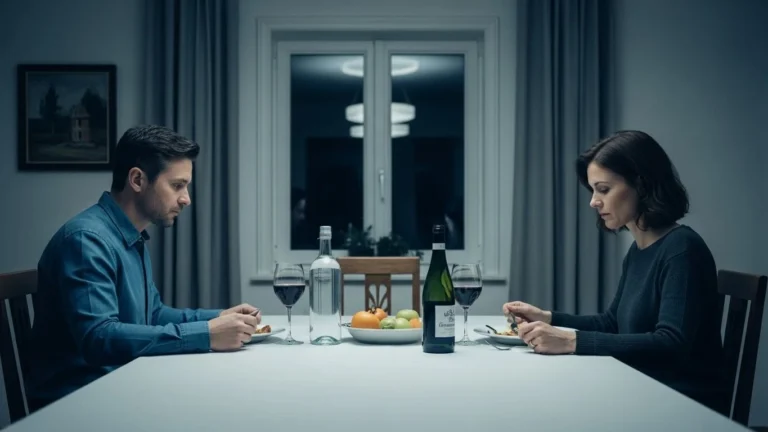
It usually starts with a comfortable silence. You’re sitting on the patio, the sun is going down, and you realize you haven’t said a word to each other in twenty minutes. At first, this is the dream, right? You’ve reached that “soulmate” level where words aren’t necessary. You know his coffee order, his stance on the neighbor’s barking dog, and exactly how he’s going to react to the latest political headline.
But there is a thin, dangerous line between “comfortable” and “static.”
I remember a specific night out with my partner a few years back. We were at a nice bistro, the kind with white tablecloths and overpriced wine. I looked around and saw a younger couple a few tables over. They were leaning in so far they were practically sharing a chair, talking a mile a minute. Then I looked at us. We were both pleasant, we were sharing bread, but we were talking about the logistics of our upcoming bathroom remodel. I realized I hadn’t asked him a question that started with “How do you feel about…” in months. I had become an expert on his habits, but a stranger to his inner world.
Why does this happen to even the best couples? Why do we trade our deep-dive conversations for “Did you remember to pick up the dry cleaning?” Understanding the “why” is the first step to fixing it.
1. The Illusion of Knowledge
The biggest culprit is something psychologists call the “Closeness-Communication Bias.” Essentially, the closer we feel to someone, the more we assume we already know what they are thinking and feeling. We stop asking because we think we already have the answers.
When you were dating, every piece of information was a new discovery. Now, you’ve heard his “glory days” high school stories a dozen times. You think you’ve read the whole book, so you stop turning the pages. The problem is that while you were busy assuming he was the same person you met in 2018, he was evolving. He’s had new failures, new quiet successes, and new fears that he hasn’t shared because, well, you never asked.
2. The Cognitive Load of “Adulting”
Let’s be real: being an adult in 2026 is exhausting. Between career pressures, managing a household, keeping up with family obligations, and trying to stay healthy, our “bandwidth” for deep conversation is limited.
By the time 8:00 PM rolls around, your brain is fried. It is much easier to ask “What’s on Hulu?” than it is to ask “What is something you’re currently struggling to forgive yourself for?” Deep questions require emotional energy and active listening. When we are tired, we default to the “path of least resistance,” which is usually logistics or entertainment.
3. The Fear of What We Might Find
Sometimes, we stop asking real questions because we are subconsciously afraid of the answers. If things feel stable and “fine,” asking a deep question can feel like poking a sleeping bear.
What if his answer reveals that he’s unhappy with the life you’ve built? What if he’s going through a mid-life crisis you aren’t ready to handle? What if the “real” him has changed in a way that doesn’t align with the “real” you? To keep the peace, we stay in the shallow end of the pool where it’s safe.
The Cost of the “Question Gap”
When curiosity dies, intimacy begins to starve. Intimacy is built on the feeling of being seen and known. If you stop asking questions, your partner stops feeling like an individual and starts feeling like a co-manager of a small corporation (your household).
This “logistical drift” creates a vacuum. When you don’t know what is going on in your partner’s head, you start to fill in the blanks yourself. Usually, we fill those blanks with our own insecurities or assumptions, which leads to resentment and “ships passing in the night” syndrome.
How to Break the Pattern
The good news is that curiosity is a muscle. You can’t expect to go from “What’s for dinner?” to “Tell me about your deepest childhood trauma” in one night, but you can start to shift the needle.
The “New Person” Mindset
Try this exercise: Next time you are out for dinner or taking a walk, pretend you are on a third date with a stranger who just happens to look like your husband. What would you ask him if you didn’t already “know” everything? You’ll be surprised how much he has to say when he’s given a fresh stage.
Schedule the Depth
It sounds unromantic, but sometimes you have to put “Connection” on the calendar. Dedicate twenty minutes on a Sunday morning to “The Non-Work/Non-Kid Talk.”
| The Traditional Talk | The Curiosity Pivot |
| “How was your week?” | “What was the most challenging conversation you had this week?” |
| “Are you stressed about money?” | “What does ‘financial security’ actually feel like to you right now?” |
| “Are we okay?” | “What is one thing I’ve done lately that made you feel really appreciated?” |
Keeping the Story Alive
A relationship is not a book you finish reading; it’s a series that is still being written. Every year brings new chapters. If you stop asking questions, you’re basically looking at the cover and assuming you know how it ends.
The most romantic thing you can do for your partner isn’t buying a gift or planning a grand gesture. It is simply being interested in them. It is looking at them across the dinner table and realizing that there is still a whole world inside them that you haven’t explored yet.
Start asking. Not because you need to know for the schedule, but because you want to know for the soul.
