


A good braid can be such a relief on a long shift.
I like styles that keep hair tucked away without feeling fussy, and braids offer so many ways to get that secure, comfortable fit.
The details make all the difference, from how a braid is placed to how neatly it gathers your hair.
These work-friendly ideas have a practical feel, but there’s plenty of variety too, so you can find a look that suits your hair and your workday.
Dutch Braid for Long Hair
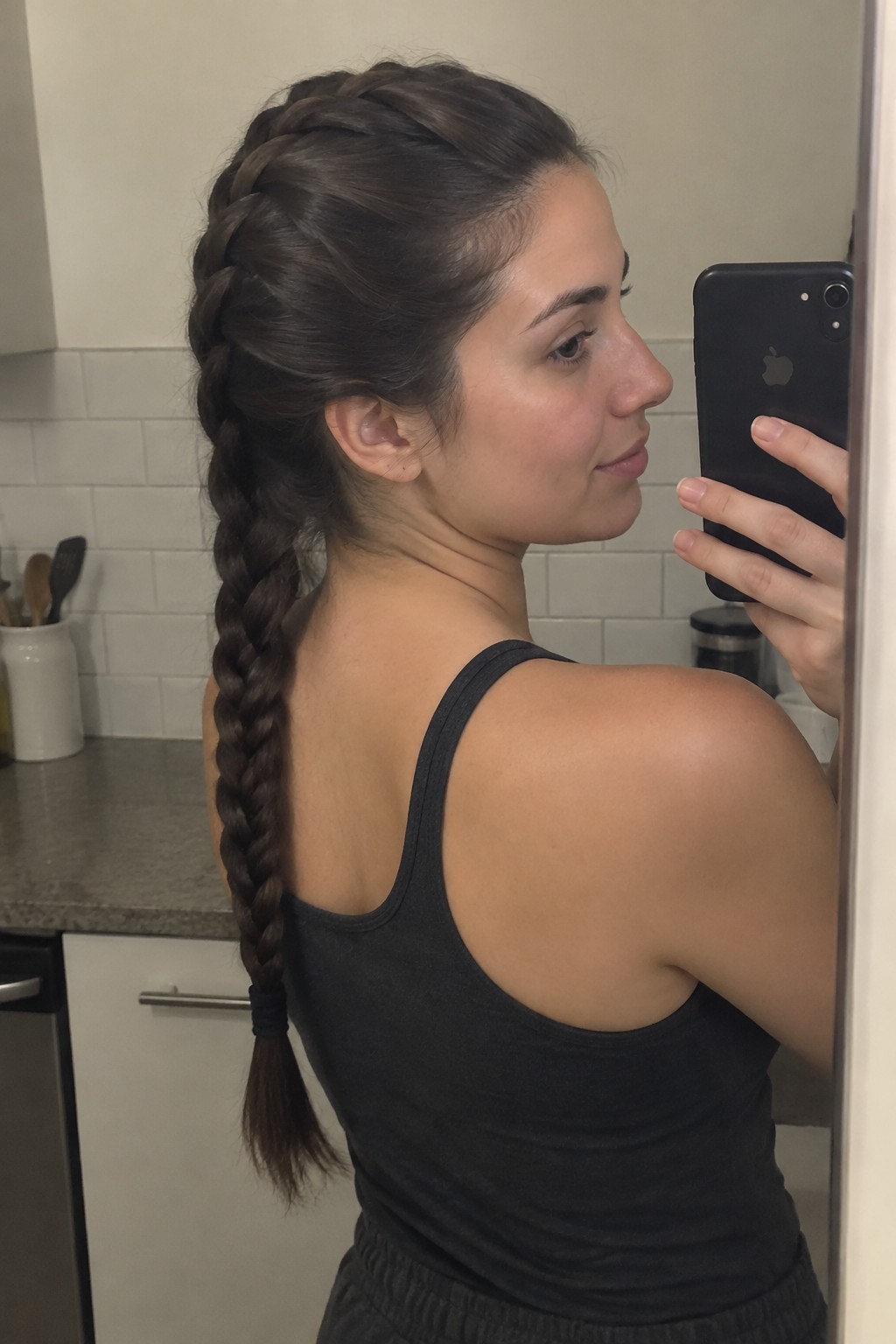
A Dutch braid starts at the hairline and continues down the back, keeping long dark hair gathered close to the head. Its raised, woven shape looks neat while holding the lengths securely, which makes it a practical option for a long shift.
For a firmer hold, I’d braid smooth or lightly textured hair and secure the tail with a small elastic. If you prefer a little less tension, keep the braid comfortable at the scalp rather than pulling each section too tightly.
Double Dutch Braids for Long Shifts

Two tight Dutch braids run from the hairline down the back, keeping long black hair gathered close to the scalp. The paired plaits create a secure shape that stays neat without loose lengths falling forward.
I’d choose this option for a shift when I want my hair fully contained but still braided rather than tucked away. Starting each braid high and keeping the sections even helps the style feel balanced.
Low Braided Bun With Loose Face-Framing Pieces
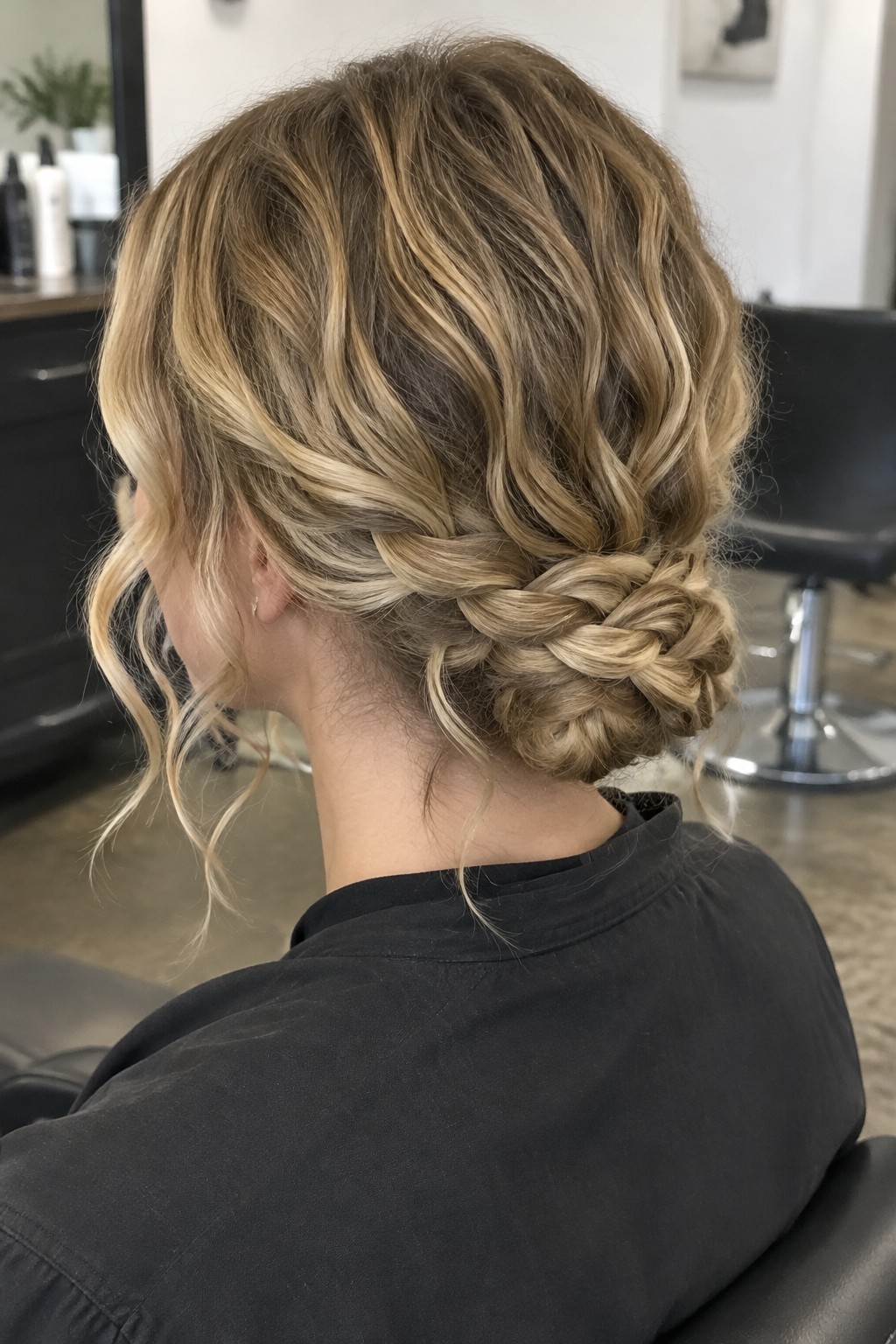
A braid swept along the back and tucked into a low bun keeps this shoulder-length style gathered at the nape. The crown stays softly loose, while a few curled pieces fall around the face.
For a long shift, I’d keep a few pins handy to secure any strands that work free. The relaxed finish still feels polished, but the hair stays mostly contained.
Long Side Braid With Face-Framing Pieces

A thick braid worn over one shoulder keeps long hair gathered while leaving a few lighter pieces loose around the face. The side placement makes the braid easy to check and adjust during a long shift.
I’d keep the braid snug through the middle and secure the end with a small elastic so it stays contained. The loose front strands can be tucked back if they get in the way.
Crown Braids Into a Low Bun
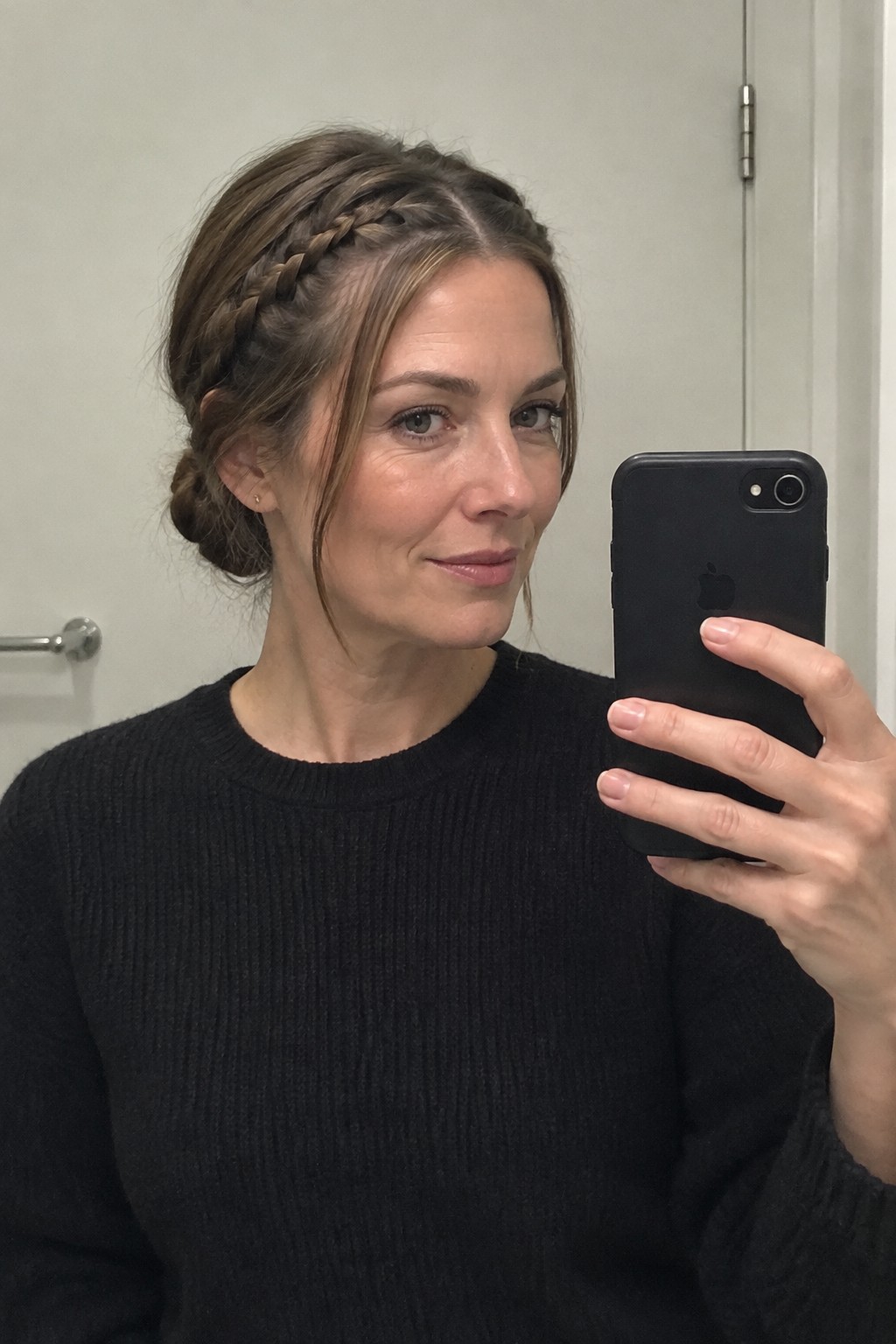
A braid follows each side of the crown and joins a low bun at the back, keeping the longer hair tucked away from the neck. A few slim pieces are left loose around the face, while the braided sides help keep hair secure during a long shift.
I’d keep the bun snug and pin the braid ends well so they stay in place through a busy day. This updo works especially well when you want hair fully gathered without giving up a braided detail.
Crown Braid Updo

A thick braid follows the crown and wraps around the back of the head, keeping the hair gathered securely in a neat updo. The coiled shape gives the style a little height while tucking the ends away from the neck.
For a long shift, this kind of braid keeps hair contained without relying on a loose tail that can swing forward. I’d keep the braid comfortably snug and secure it with pins, especially around the back where the ends meet.
Low Braided Ponytail With a Twisted Crown
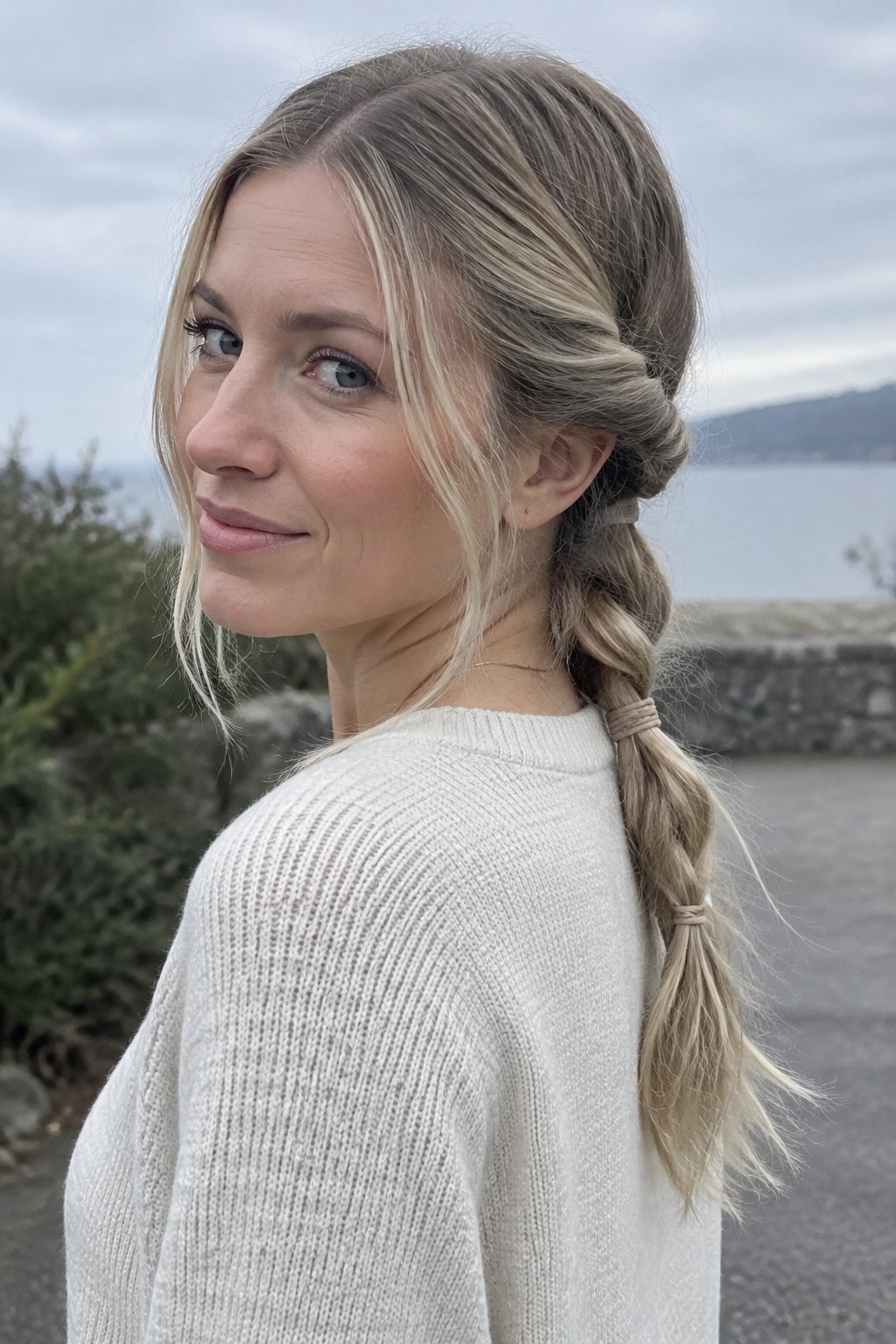
The hair is gathered back with a twist along the sides, then woven into a long, loose braid. Blonde face-framing strands are left out, while the braid keeps the rest of the hair gathered close to the nape.
For a long shift, I’d keep the braid a little snugger than the one shown so the ends stay contained. The relaxed shape still feels less severe than a tight bun, and the braid can be secured with small elastics along its length.
Crown Braid Into a Low Bun

A braid that follows the crown and wraps into a low bun keeps long hair gathered neatly at the back. Wispy bangs and a couple of loose strands soften the pulled-back shape without getting in the way.
I’d consider this a useful option for a long shift when you want hair secured but prefer something more detailed than a plain bun. Pinning the braid close to the head helps keep the style tidy, while the low placement avoids a bulky shape at the crown.
High Braided Bun With a Dutch Braid

A thick Dutch braid is wrapped into a high bun, keeping the long hair gathered neatly off the neck. The woven sections give the bun a fuller shape than a simple twist.
For long shifts, I’d keep the braid snug and secure the bun with pins so it stays out of the way. This updo suits anyone who wants a practical pinned style with a braided detail.
Half-Up Crown Braid With Long Waves
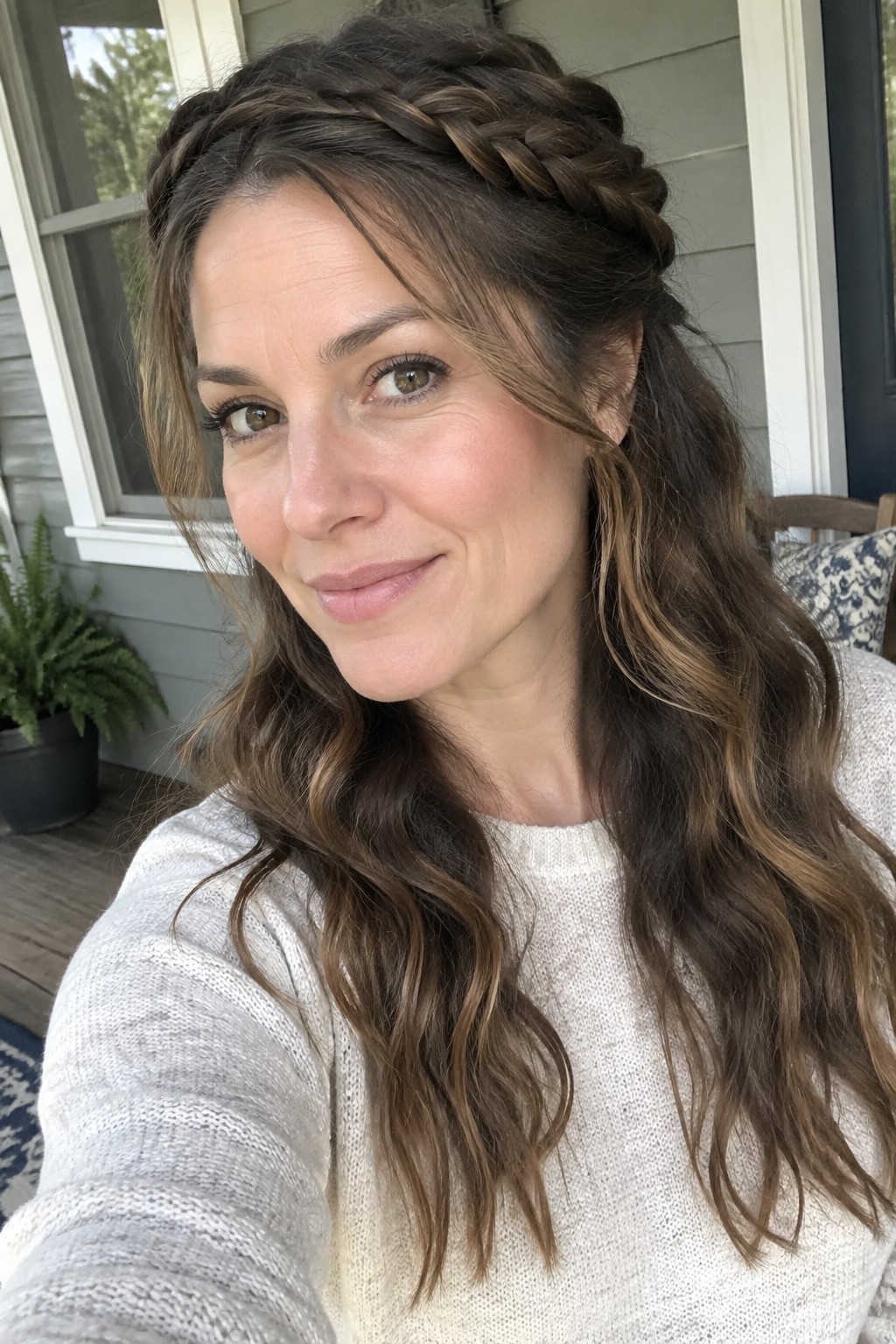
A braid wrapped across the crown keeps the top section of this long hairstyle pulled back, while loose waves fall over the shoulders. The small face-framing pieces soften the line of the braid without taking away from its shape.
For a long shift, I’d use this as a starting point and secure the braid firmly with pins, since the loose lengths will still need occasional tidying. It’s a nice option when you want hair off your face but prefer not to tie up all of your length.
Short Bob With a Braided Crown
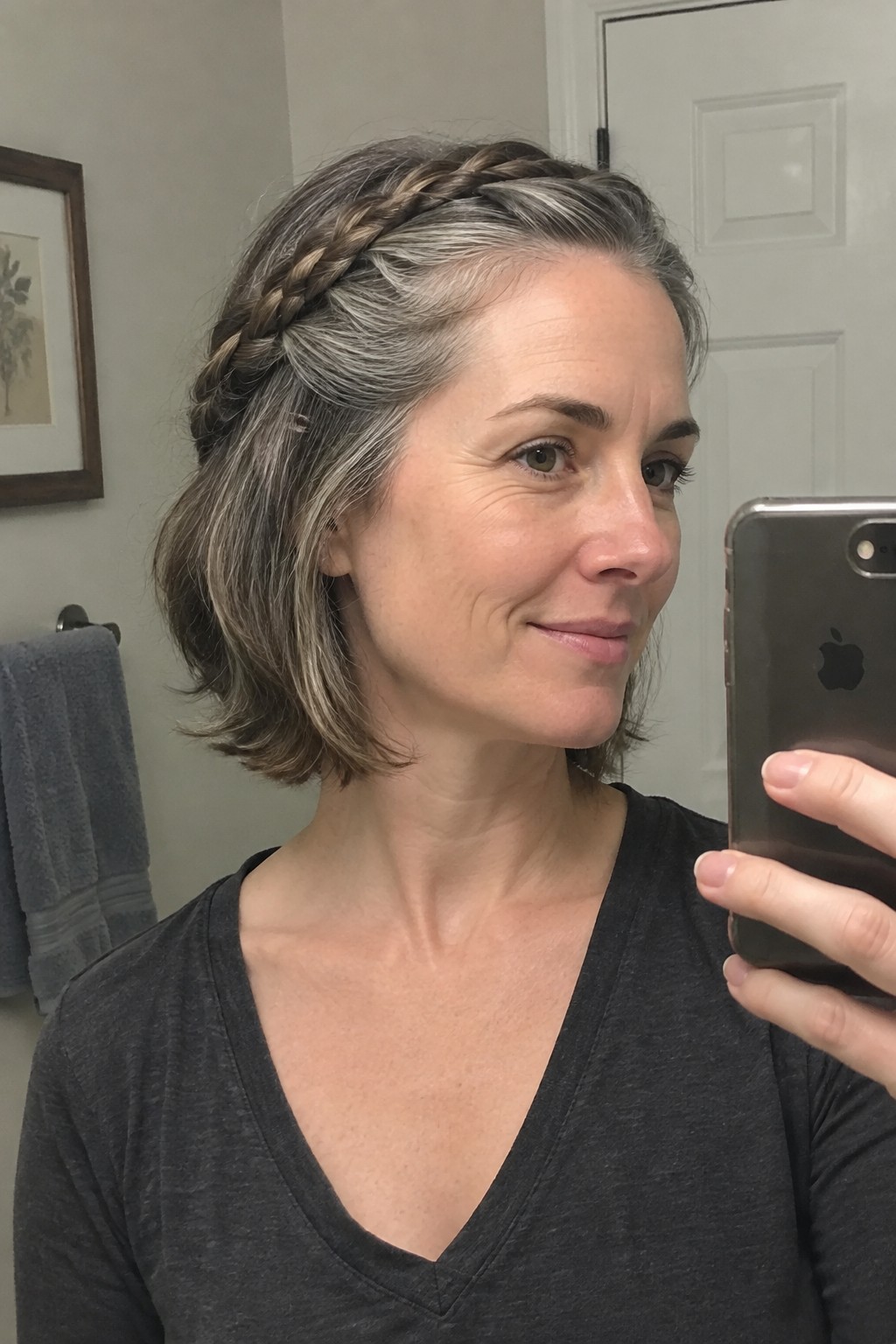
A narrow braid runs across the top of this short, layered bob, keeping the front sections swept back while the ends sit around the jaw and neckline. The mix of silver and brown strands makes the braid easy to distinguish from the hair beneath it.
I’d consider this a useful option for a shift when you want the front pieces secured without putting the whole bob up. The shorter back layers can stay loose, though a few pins may help keep the braid in place through a busy day.
Half-Up Crown Braid With Loose Waves
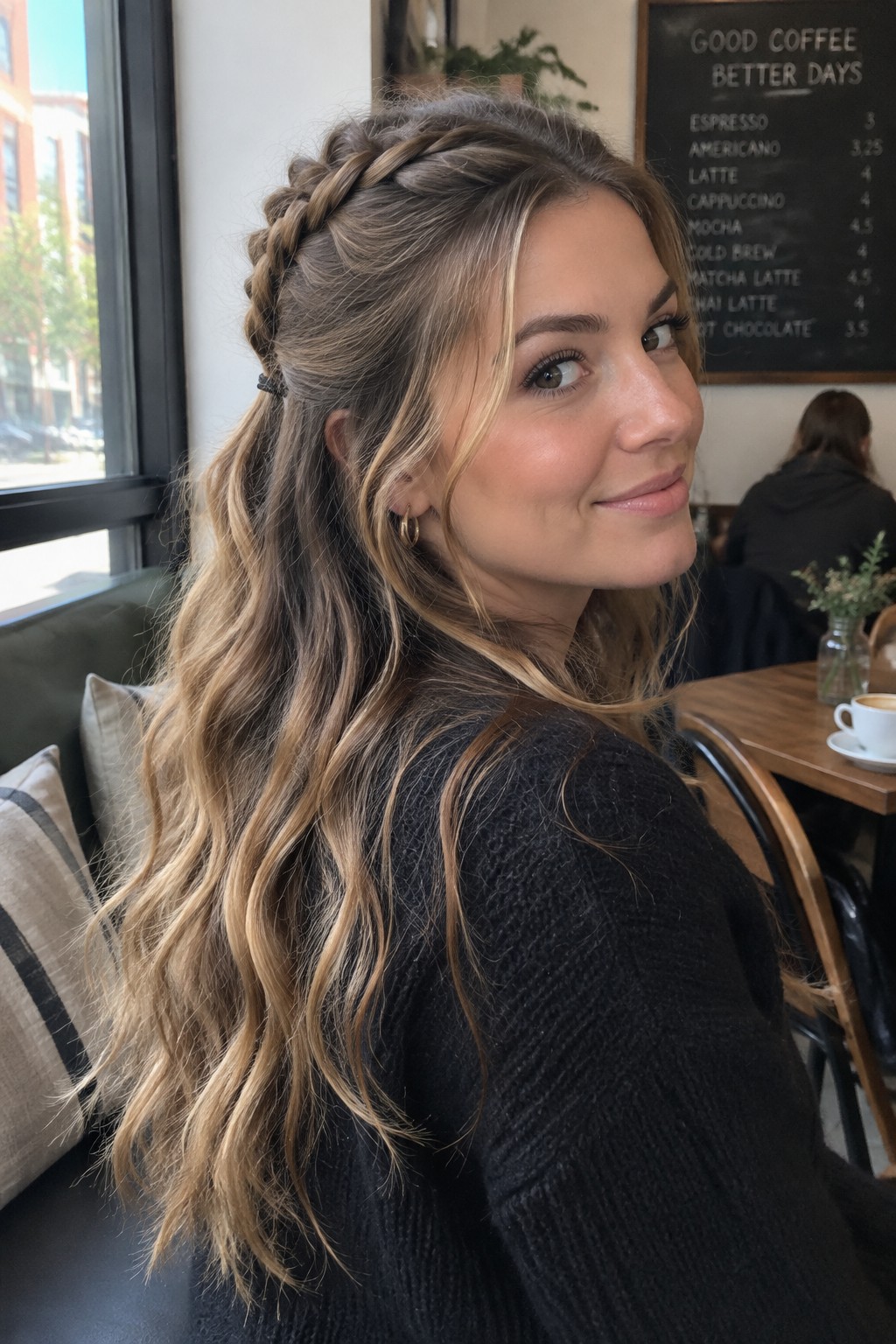
A braid wraps across the crown and meets at the back, leaving the long, wavy lengths loose. Blonde highlights pick out the braid and the face-framing pieces, while the half-up shape keeps some hair secured away from the face.
For a long shift, I’d adapt this by pinning the braid firmly and gathering the loose lengths into a low ponytail if they need to stay out of the way. The braid gives the style its detail without requiring the whole length to be woven.
Braided Headband With a Low Ponytail
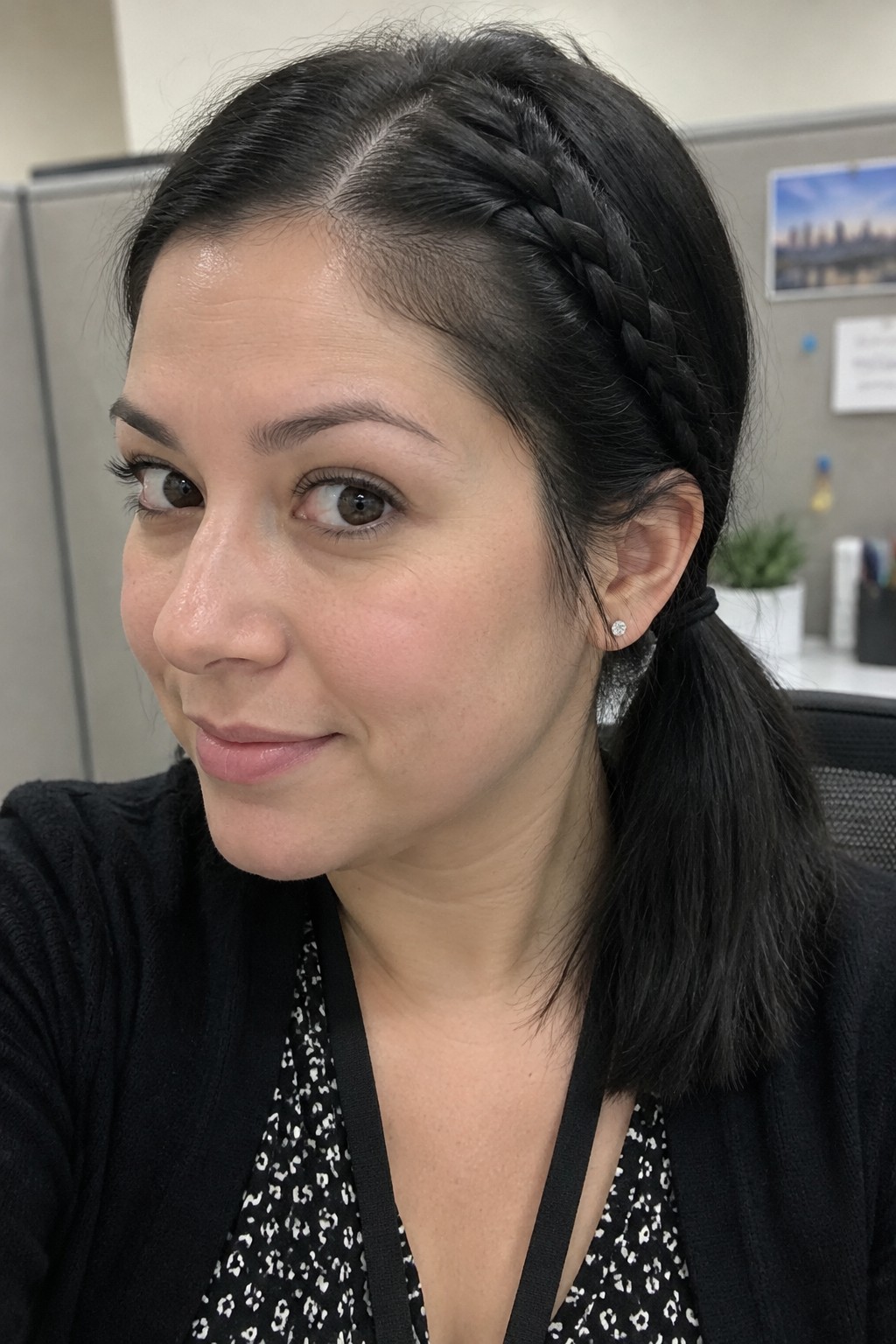
A slim braid follows the hairline from the side part and blends into a low ponytail, keeping the front neatly secured while leaving the length loose. The dark, straight hair gives the braid a clean, defined shape.
For a long shift, I’d borrow the braided-front detail and tie the ponytail snugly at the nape so it stays out of the way. It’s a practical option when you want hair off your face without putting all of it into an updo.
Multiple Braids Gathered Into a Low Bun
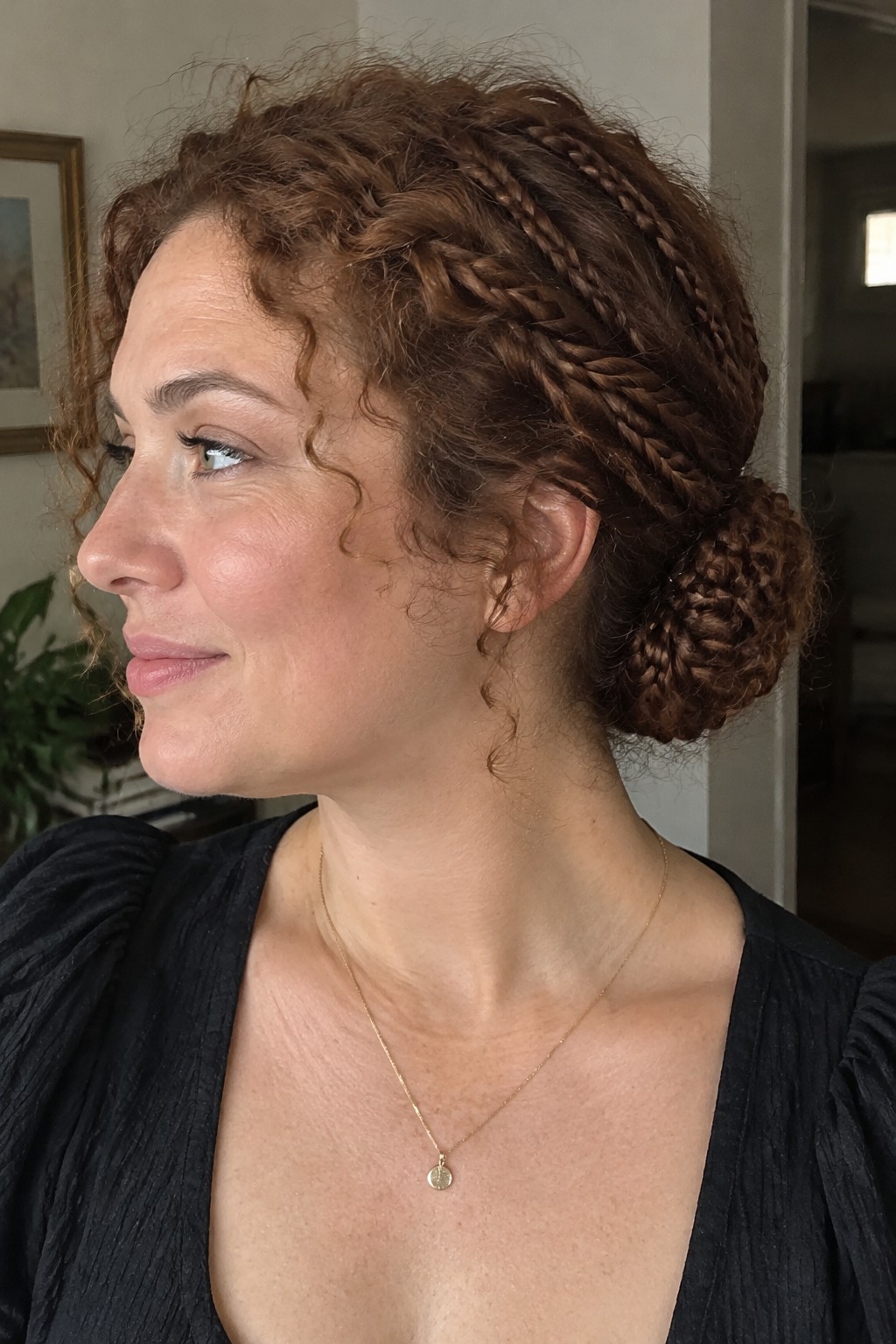
Several narrow braids run back from the hairline and join a compact bun at the nape. This updo keeps long hair secured while leaving a few natural curls loose around the face.
I like the way the smaller braids add detail without making the bun bulky. For a long shift, pinning the bun firmly and smoothing flyaways can help keep the style tidy.
Side Dutch Braids Into a Low Ponytail

Two slim Dutch braids run back from the hairline and join a low ponytail, keeping the sides neat while the shoulder-length ends stay loose. The braid detail gives a simple tied-back style a little more shape without taking much length off the hair.
For a long shift, I’d keep the ponytail snug enough to hold but not tight at the scalp. The loose, slightly textured ends suit this style well, and you can smooth them out or leave them natural.
Long French Braid With a Looped End
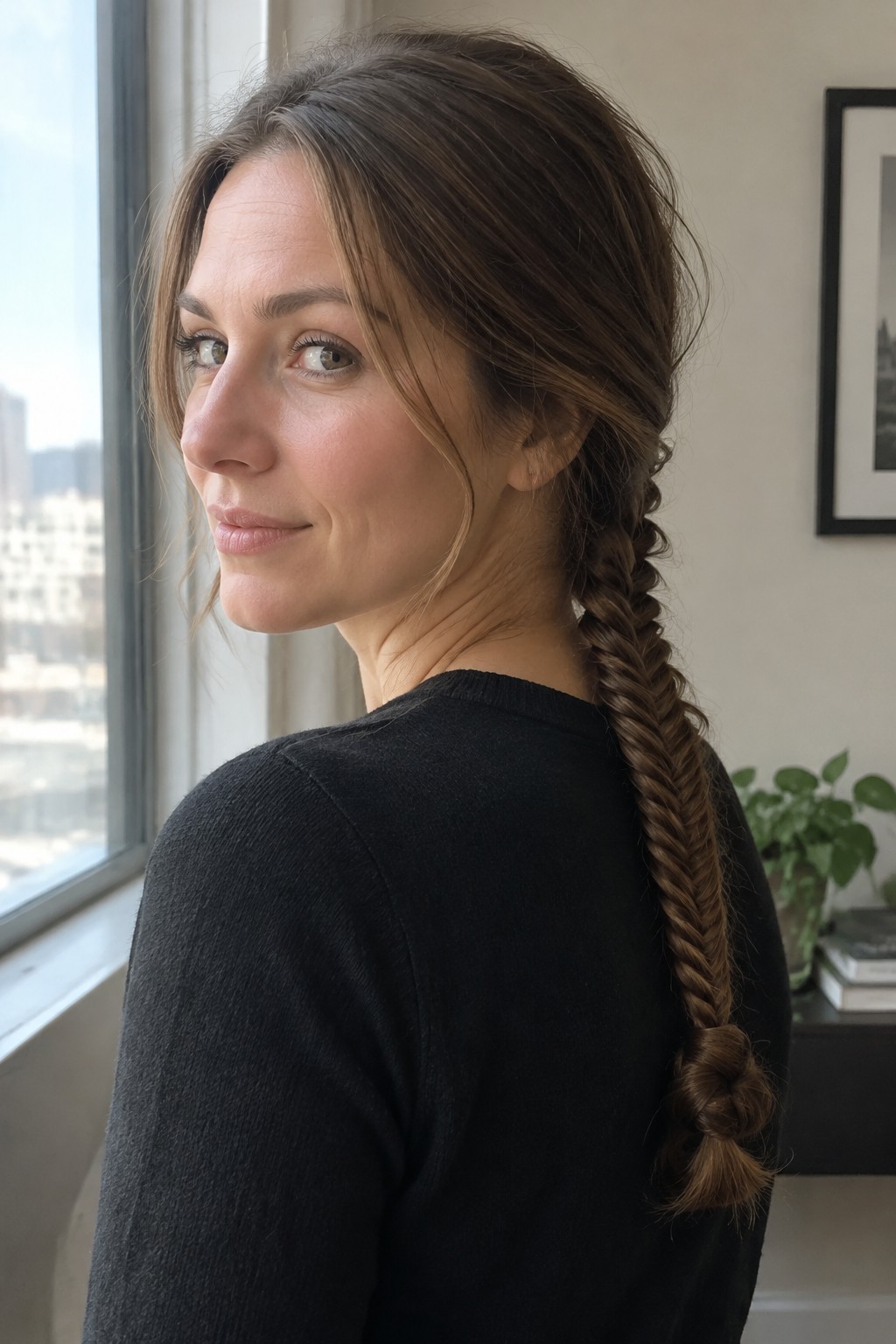
The long French braid starts at the back of the head and follows the hair down in a close, secure plait. A few loose strands around the face keep the style from feeling too pulled back, while the looped end neatly contains the length.
For a long shift, I’d keep the braid snug through the middle and secure the loop with a strong elastic or pins. It’s a practical way to keep long hair off the shoulders without leaving the whole style looking severe.
Braided Crown With a Side Braid

A braid woven along the crown feeds into a thicker braid that hangs over one shoulder, keeping the long hair gathered and secure. The center part and loose face-framing strands leave a little softness around the front.
I’d keep the braid snug through the crown and down the length for a practical workday style, then use a few pins to secure any loose sections. The braided shape also makes a nice change from a single braid started at the nape.
Cornrows Gathered Into a Low Bun

Neat cornrows run back from a clean side part and gather into a compact bun at the nape. The close-to-the-scalp braids keep the sides secure, while the bun holds the length away from the shoulders.
For a long shift, I’d keep the bun snug and use a few pins to secure any loose ends. This is a practical choice if you want your hair fully gathered without wearing a high bun.
Loose Dutch Braid for Long Hair
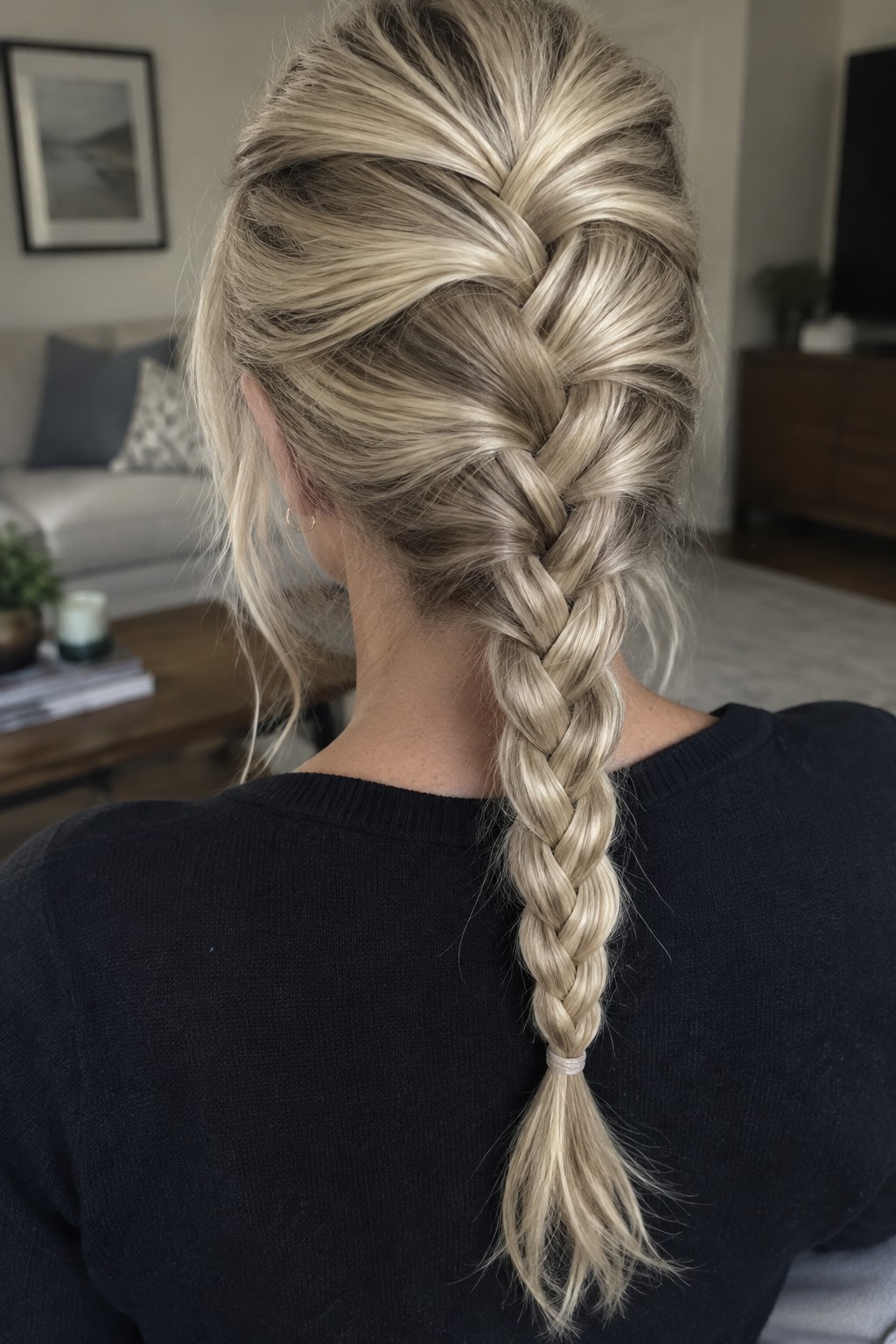
A loose Dutch braid starts high at the crown and continues down the back, with the woven sections gently pulled wider for a fuller shape. The long blonde lengths make the braid easy to see, while a few fine pieces around the sides keep the finish from looking too tight.
For a long shift, I’d keep the braid secure at the bottom with a small elastic and smooth flyaways with a little styling cream. It keeps the lengths gathered without needing a complicated updo.
Side Braid Into a Low Bun

A braid that follows the side of the head and joins a low bun keeps the hair gathered neatly at the nape. The silver strands stand out along the plait, while a slim piece left loose by the face breaks up the swept-back shape.
I’d consider this a useful option for a long shift when you want your hair secured without pulling it into a high style. The bun sits close to the head, so it feels tidy and contained.
Frequently Asked Questions
Q: How tight should my braids be for a full shift? A: They should feel secure without pulling at your scalp. If you notice soreness or a headache, loosen them a little before you head to work.
Q: What’s a quick way to keep flyaways from escaping during a busy shift? A: Smooth them down with a little leave-in conditioner or styling cream, then tuck loose ends into the braid. Keep a few hairpins handy for touch-ups.
Q: Can I braid my hair when it’s damp? A: It’s better to braid hair when it’s mostly dry. Damp hair can stay wet under a tight style, which may feel uncomfortable over a long shift.
Q: How can I make my braids more comfortable under a work hat? A: Try a low braid or tuck the braid into a bun at the nape of your neck. Keep bulky twists and pins away from spots where the hat presses.
