


Thick hair gives work hairstyles plenty to work with, but all that volume can have a mind of its own by midmorning.
I’m always drawn to styles that gather bulk neatly without making thick hair feel pinned into submission.
These quick work hairstyles offer clever ways to keep things polished and comfortable, with enough variety for busy mornings when your hair is not interested in a complicated plan.
A little shape or a well-placed twist can make a surprising difference, and I’m curious which approach will suit your routine best.
Textured Pixie With A Long Side-Swept Top
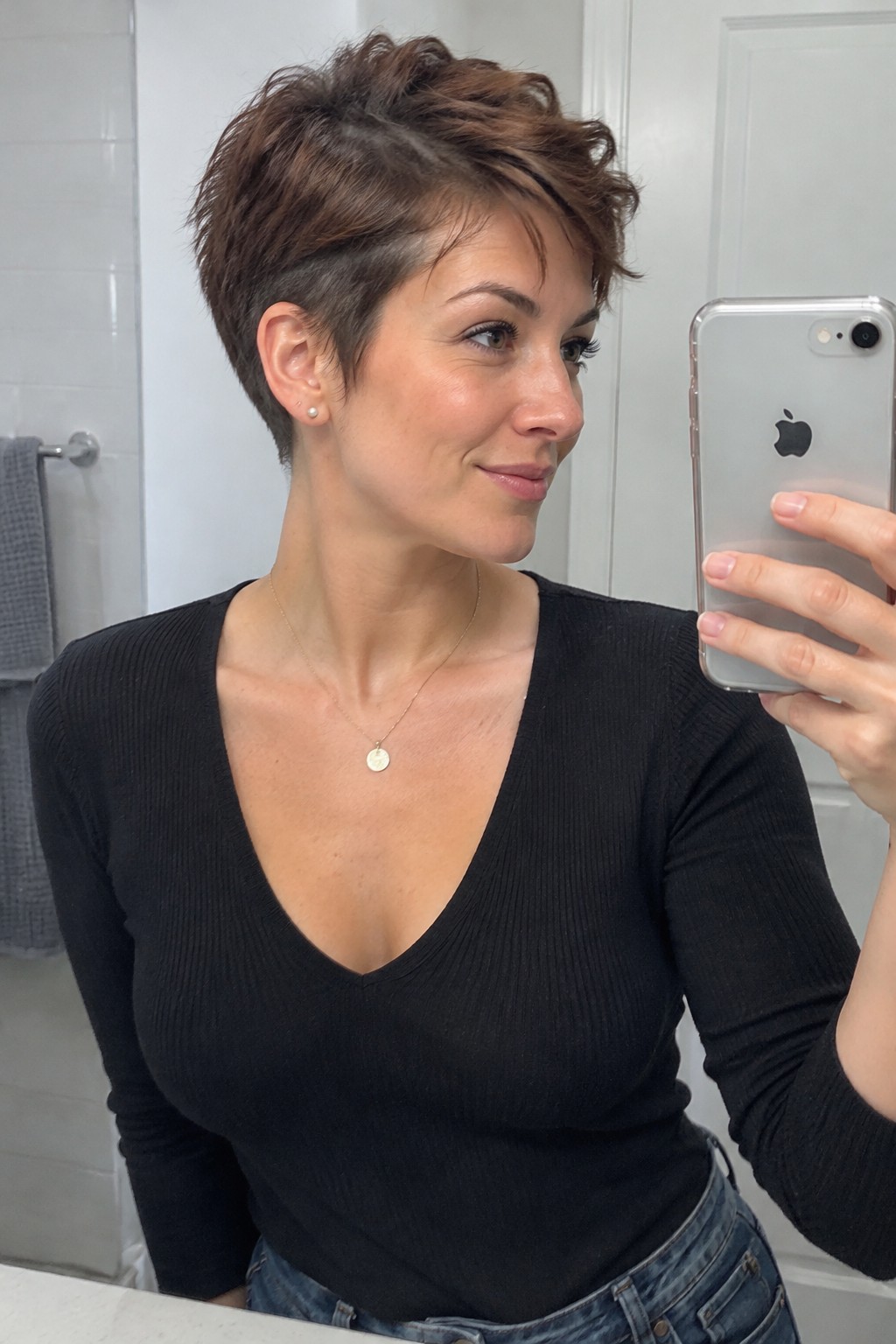
The short, tapered sides keep bulk close to the head, while the longer top is styled up and across in loose, textured pieces. A deep side part helps give the cut its swept shape without needing much length around the sides.
For thick hair, I’d keep the top light and piecey rather than building it into a solid, heavy shape. A little styling paste can help separate the layers and hold the direction through a busy workday.
Stacked Bob With Long Face-Framing Pieces
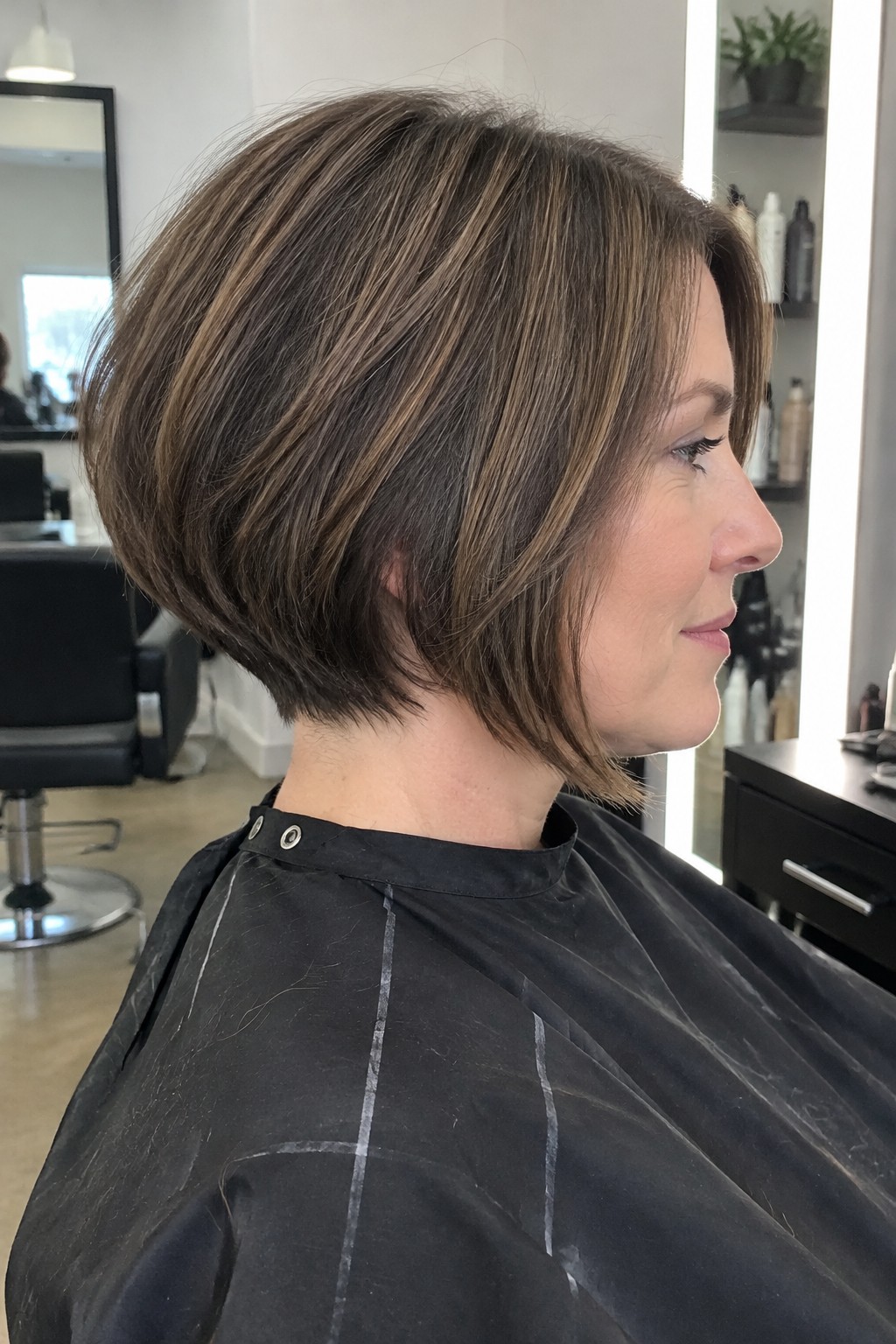
A rounded, stacked bob keeps the back short at the nape while longer pieces angle forward toward the chin. The layers build a compact shape at the back, which can help thick hair sit neatly instead of spreading out.
The narrow highlights pick out the angled sections without making the cut look too busy. I’d keep the finish smooth and slightly curved at the ends for work, though this shape will need regular trims to maintain the short nape.
Long Layered Hair With a Soft Center Part
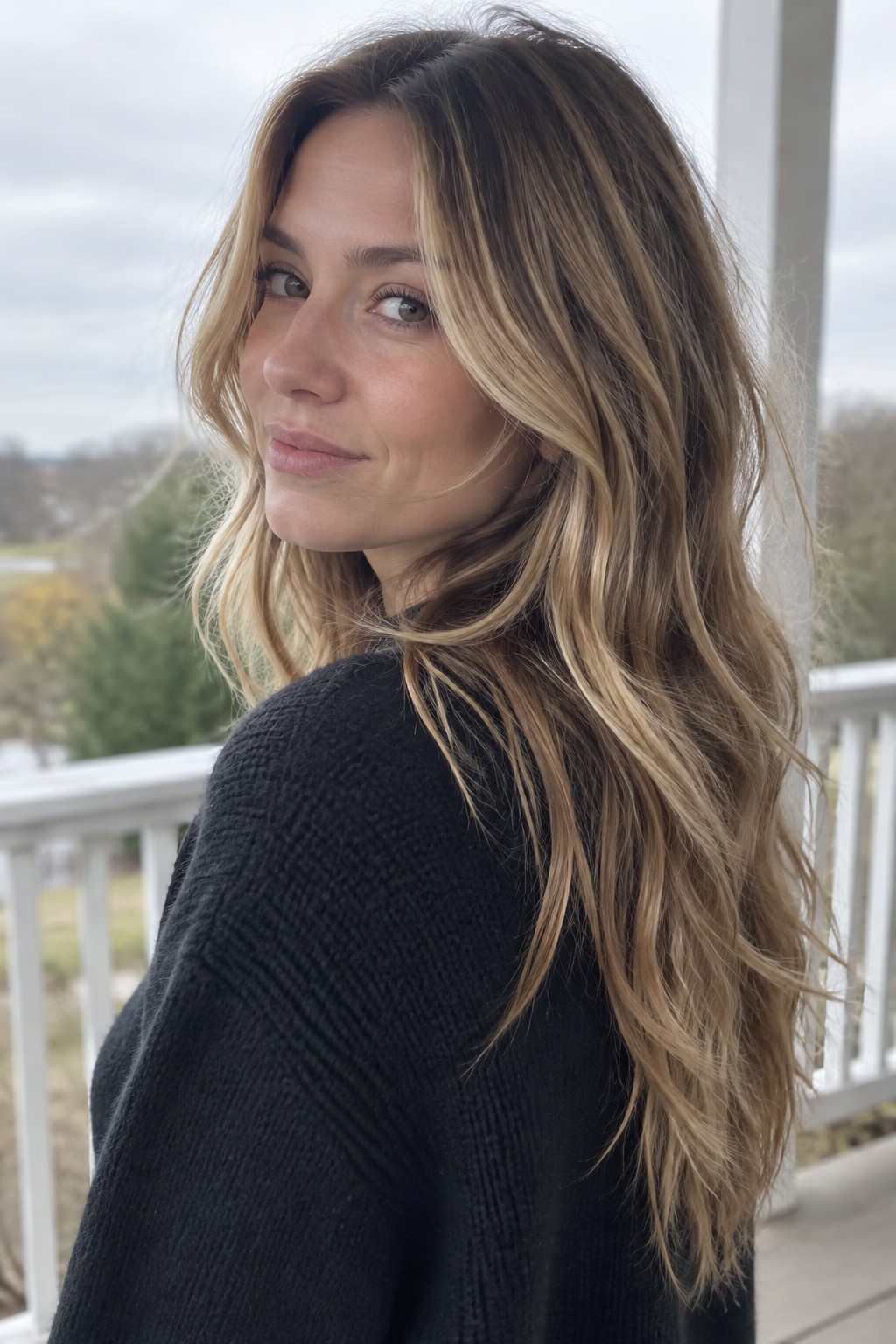
Long layers keep the length of this thick hairstyle while breaking up its broad, heavy shape. The center part and longer face-framing pieces blend into the rest of the hair, so the front doesn’t feel weighed down.
I’d keep the styling loose and slightly tousled rather than curling every section, which lets the layers show without adding extra bulk. The warm blonde highlights also pick up the lighter strands around the face.
Low Ponytail With Face-Framing Pieces
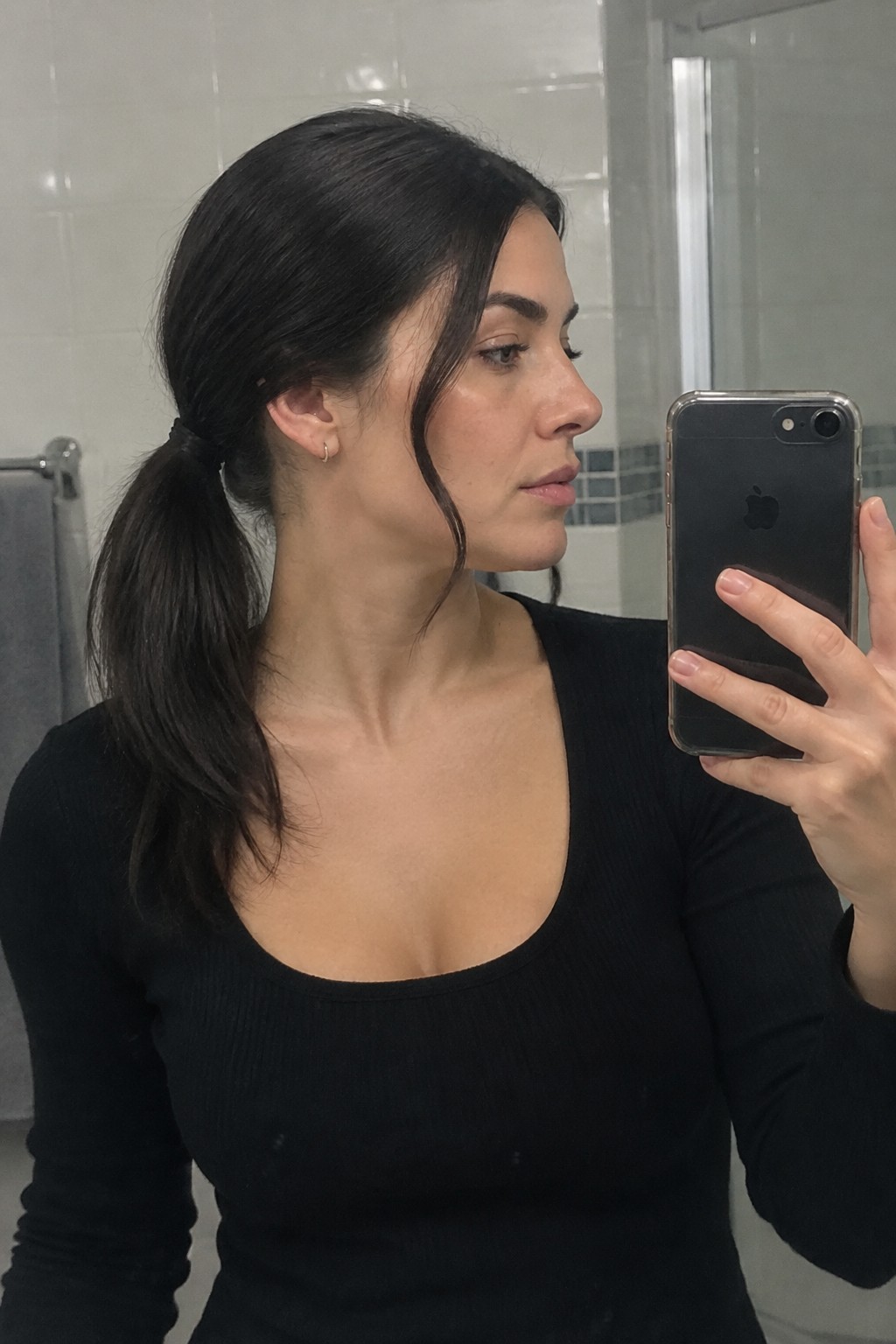
The low ponytail keeps long, thick hair gathered neatly at the nape, while a loose front section curves along the cheek. That simple shape feels pulled together for work without needing to smooth every strand tightly back.
I’d keep the ponytail sleek at the crown and let the front piece fall naturally, so the style stays relaxed rather than overly polished. It’s a useful option when you want thick hair contained but still like a little softness around your face.
Half-Up Bun With Loose Face-Framing Layers

The half-up bun keeps the crown pulled back while the rest of the hair falls to the shoulders in loose, lightly layered ends. Long pieces around the face soften the outline, and the lifted section gives thick hair a little shape without gathering all of it into one style.
For a workday, I’d keep the bun relaxed rather than pulling it tight, so the loose lengths still show their natural texture. It’s a useful option when you want hair away from your face but prefer to leave most of its bulk down.
Dutch Braid Into a Low Bun
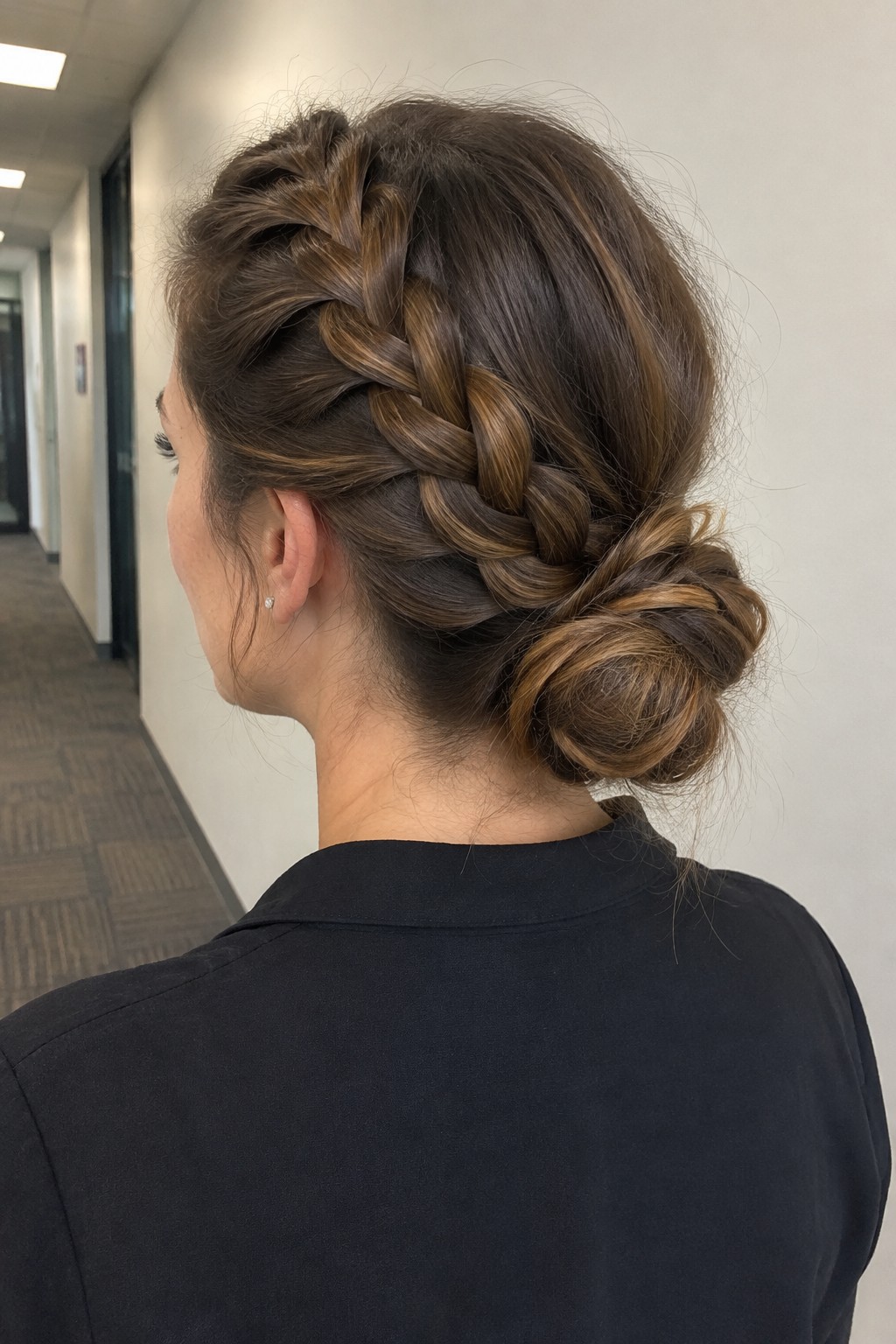
A thick Dutch braid runs along one side of the head and feeds into a low bun at the nape. The braid keeps the sides neat while gathering the length into a compact shape for work.
I’d keep the bun a little loose so the braid’s woven sections stay visible. A few flyaways are easy to smooth down with a touch of styling cream if you prefer a tidier finish.
Shoulder-Length Bob With Long Curtain Bangs
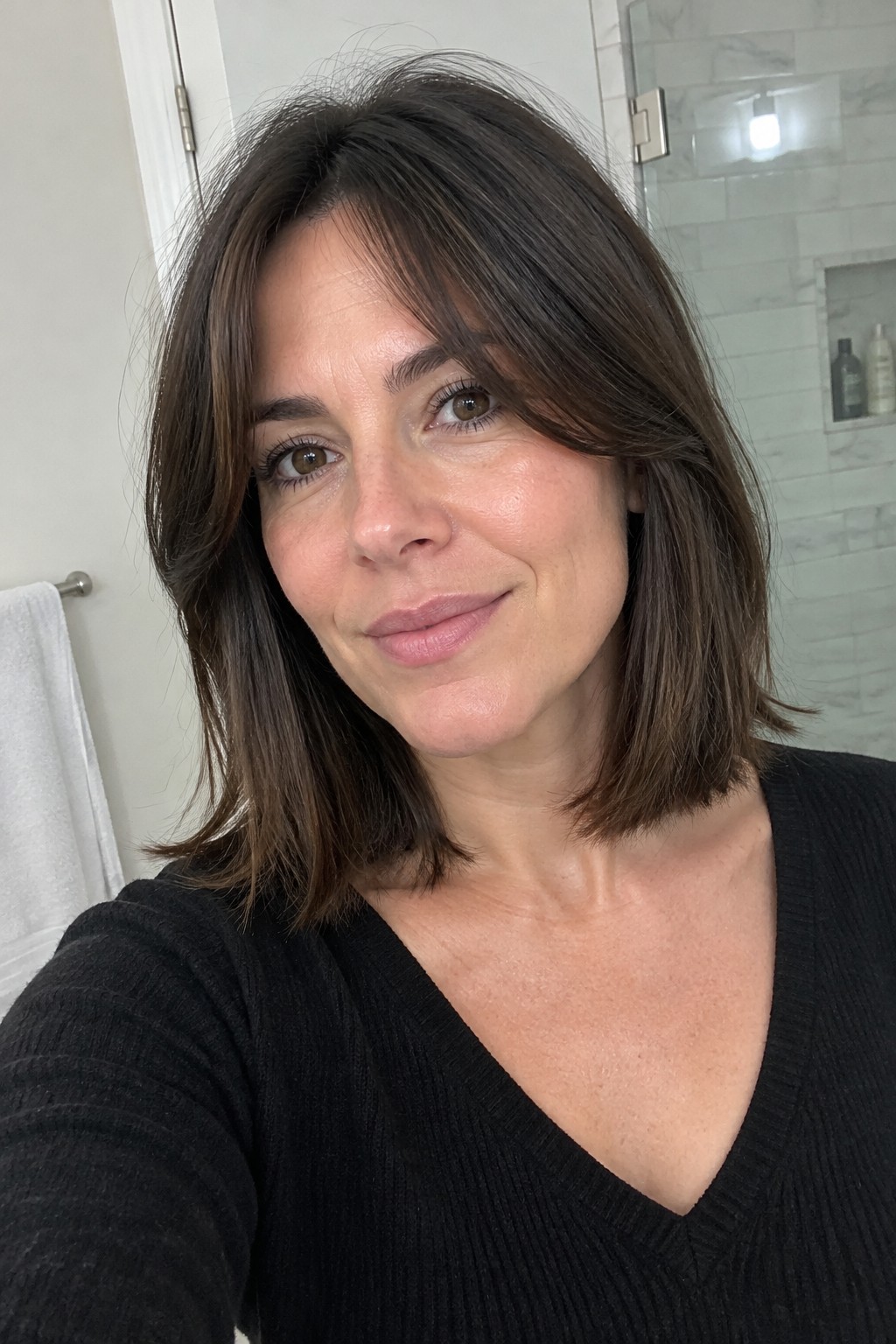
The shoulder-length bob has a slightly choppy outline, with long curtain bangs blending into the sides. That loose shape keeps thick hair from forming one heavy block, while the center part lets the front pieces fall naturally around the face.
I’d keep the finish fairly smooth and let the ends flick out a little, rather than trying to make every strand sit perfectly. It’s a useful workday option if you want hair that feels shaped but can still be tucked behind your ears.
Shoulder-Length Shag With Curtain Bangs

The shoulder-length cut has loose, choppy layers that keep the sides from forming a heavy, rounded shape. Its parted curtain bangs blend into the front layers, while the natural waves give the ends a relaxed finish.
For thick hair, I’d keep the layers light and focused around the face so the shape feels airy without losing too much fullness. A quick tousle or a little texture cream can help bring out the uneven ends on busy mornings.
Low Twisted Chignon With Swept-Back Layers
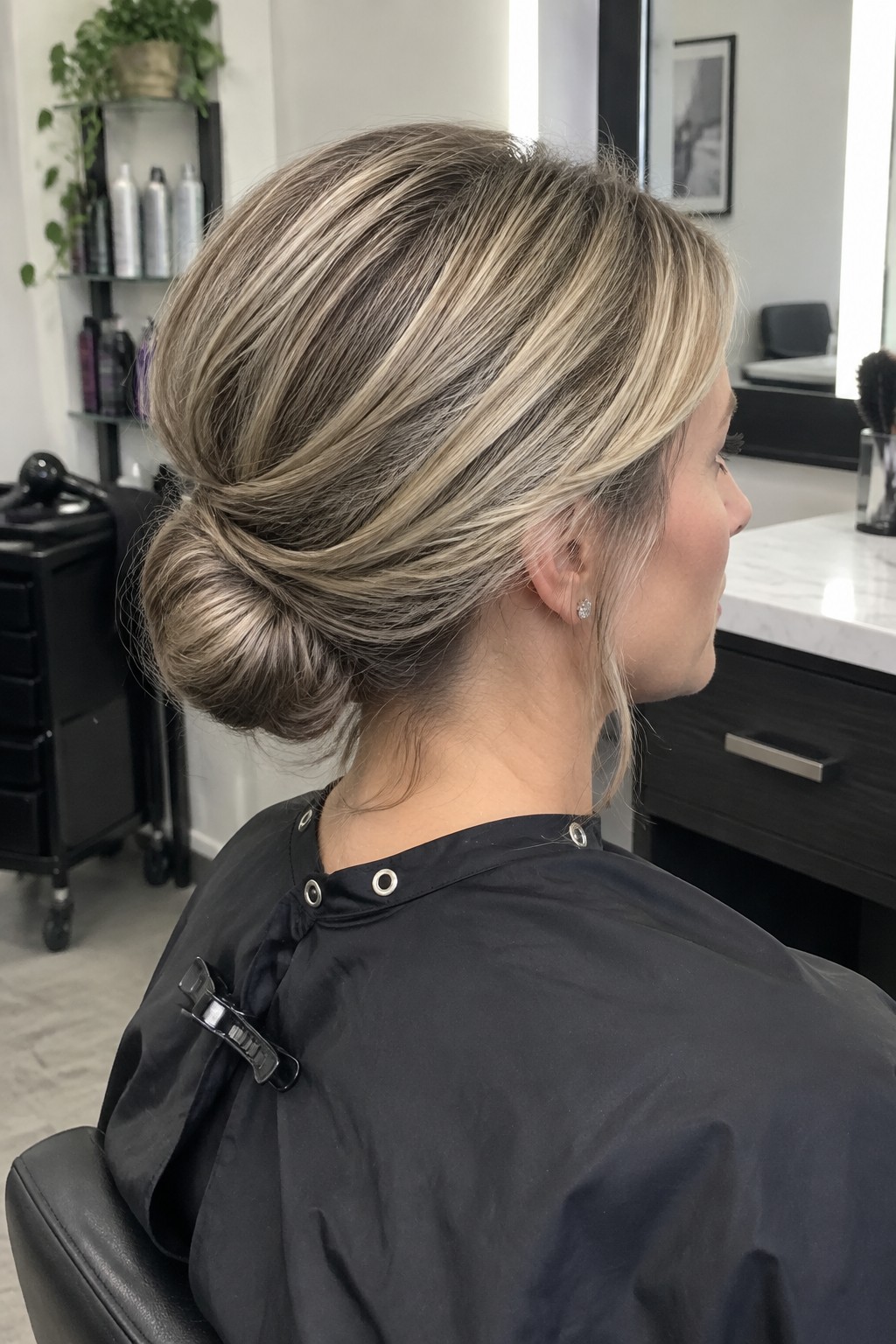
Sweeping thick hair into a low chignon keeps it neatly gathered at the nape, while the smooth, curved sections create a tidy shape instead of a bulky pile. The blonde highlights show through the twist and make its overlapping sections easy to see.
For work, I’d keep the crown smooth and let a few fine pieces near the face stay loose. This updo suits longer hair, though thicker lengths may need several pins to keep the bun secure.
High Ponytail With a Sleek Crown
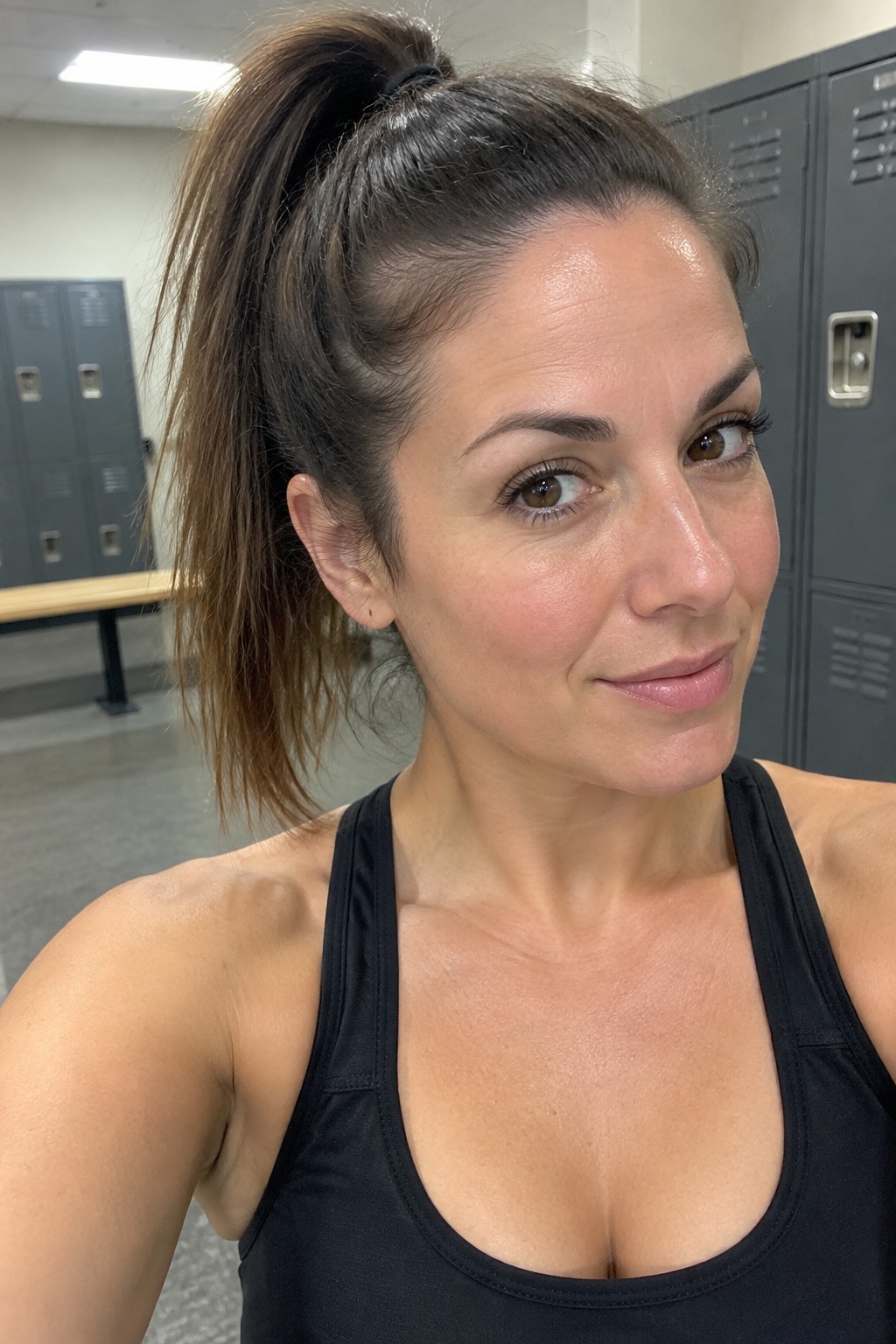
The high ponytail keeps thick hair gathered up and away from the shoulders, while the smooth crown gives the style a neat shape. The length stays full through the tail, so it feels sporty without needing a complicated finish.
For work, I’d keep the ponytail secure and smooth down any flyaways around the hairline. A little natural texture in the tail is fine, and it makes the style feel less rigid.
Layered Blonde Bob With a Side Part
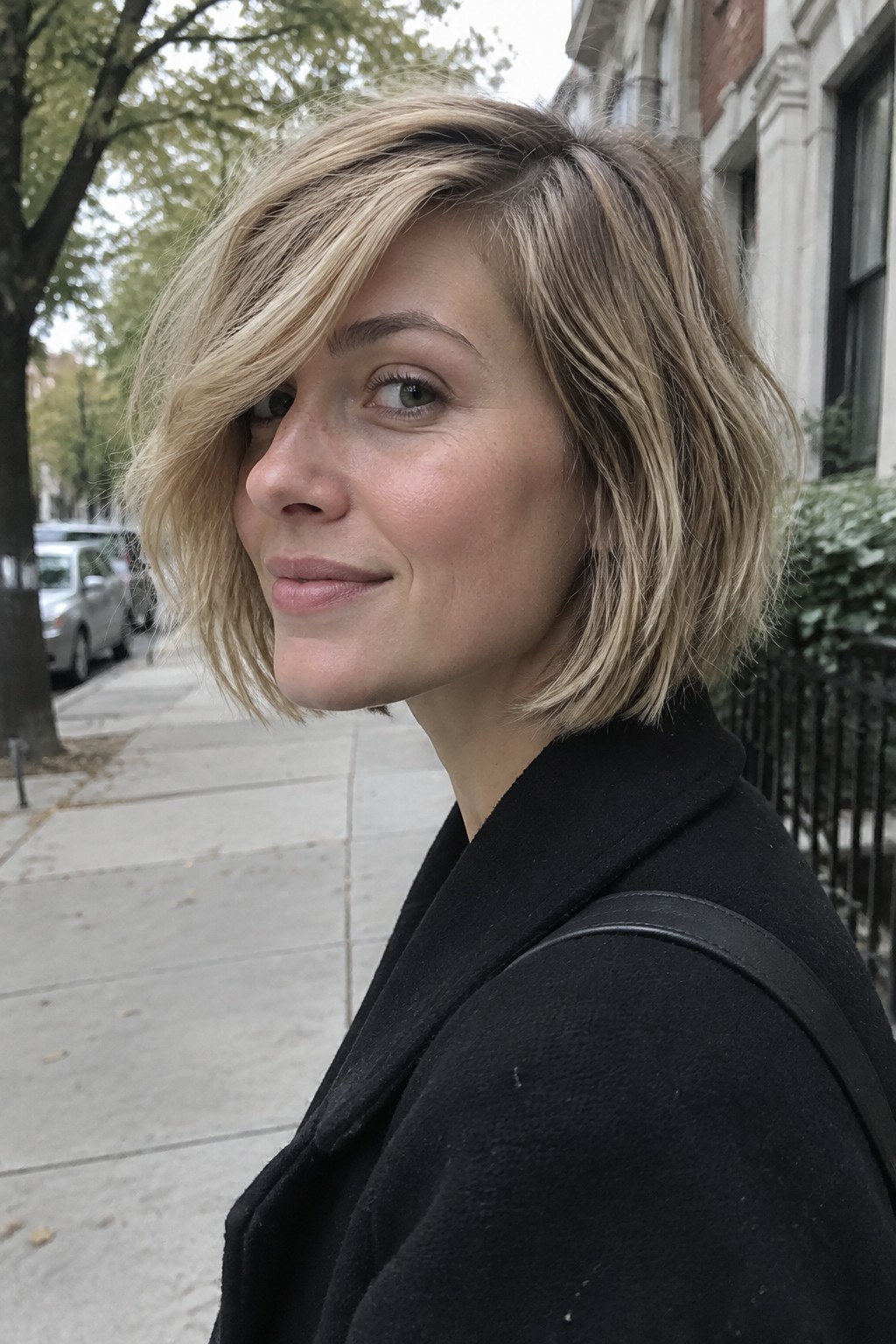
The chin-length bob has a softly rounded outline, with choppy layers that keep the ends from looking too bulky. A deep side part lets the longer front pieces sweep across the forehead and blend into the rest of the cut.
For thick hair, I’d keep the layers light and concentrated around the sides so the shape stays easy to tuck behind the ear. The tousled finish also means the bob doesn’t need to sit perfectly in place to look put together.
Half-Up Top Knot With Long Face-Framing Layers
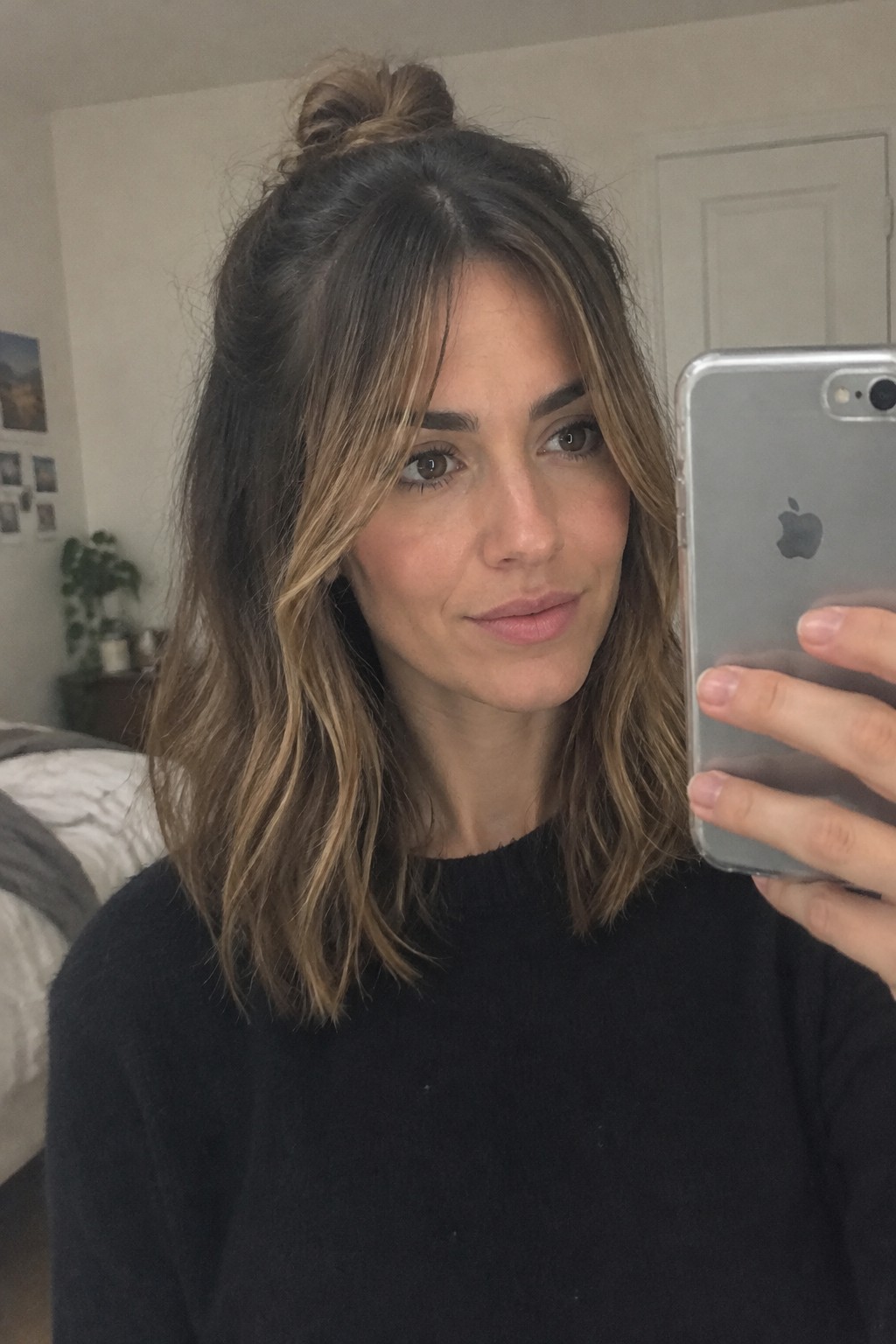
The small top knot keeps the crown pulled back while the rest of this shoulder-length cut stays loose. Long, lightened pieces fall around the face, and the relaxed layers keep the ends from forming a heavy block.
For thick hair, securing just the top section can feel more manageable than gathering it all up. I’d keep the knot loose and let a few front pieces fall naturally, so the style still has shape without looking too arranged.
Angled Bob With a Deep Side Part
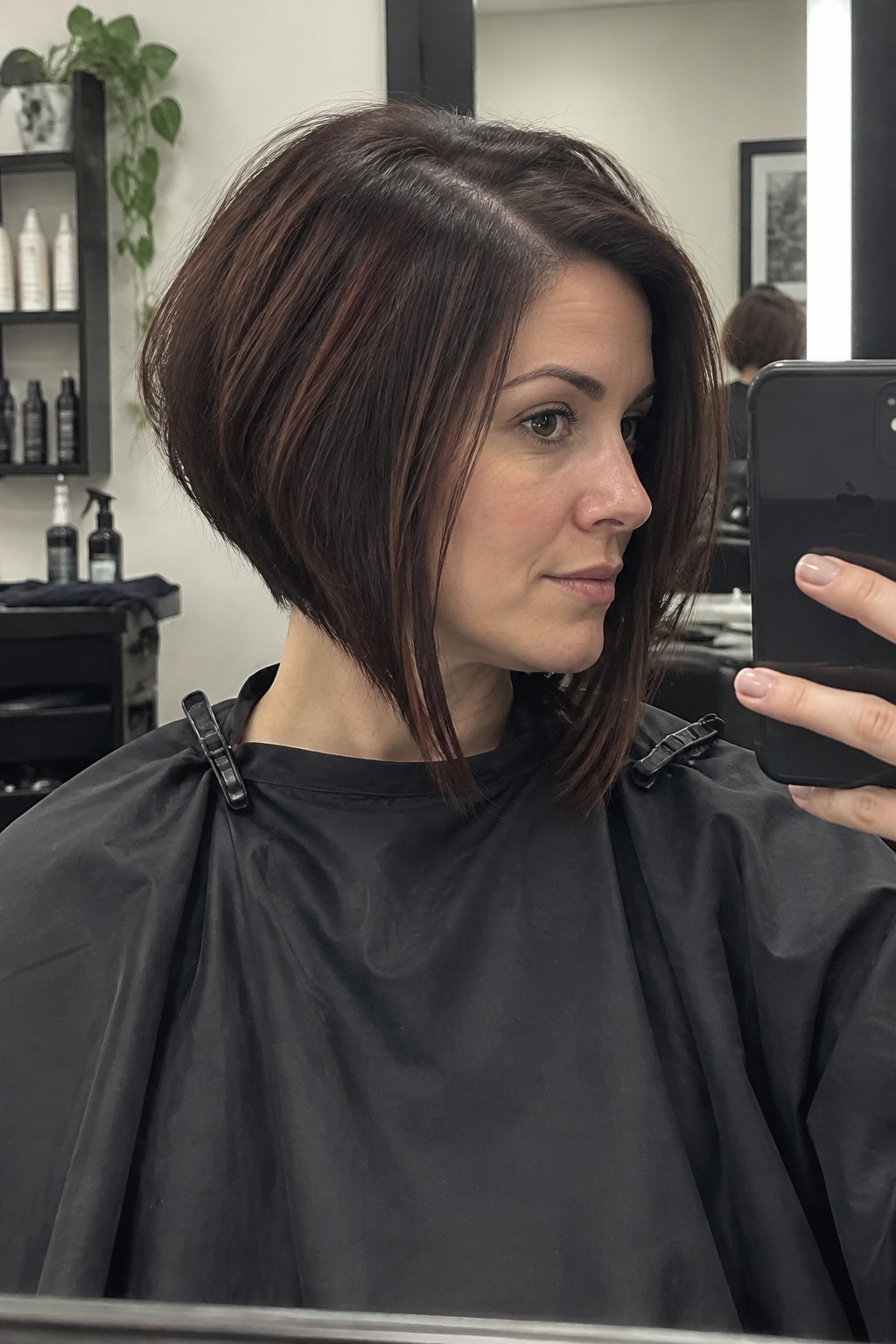
The deep side part gives this angled bob a fuller shape at the crown, while the back sits shorter and the front pieces fall below the chin. Subtle layers keep the dense hair from forming one heavy block.
I’d keep the finish smooth with a slight bend through the ends, so the longer front sections stay distinct. It’s a work-friendly cut, though the short back may need regular trims to hold its shape.
Short Pixie With a Voluminous, Swept-Back Crown
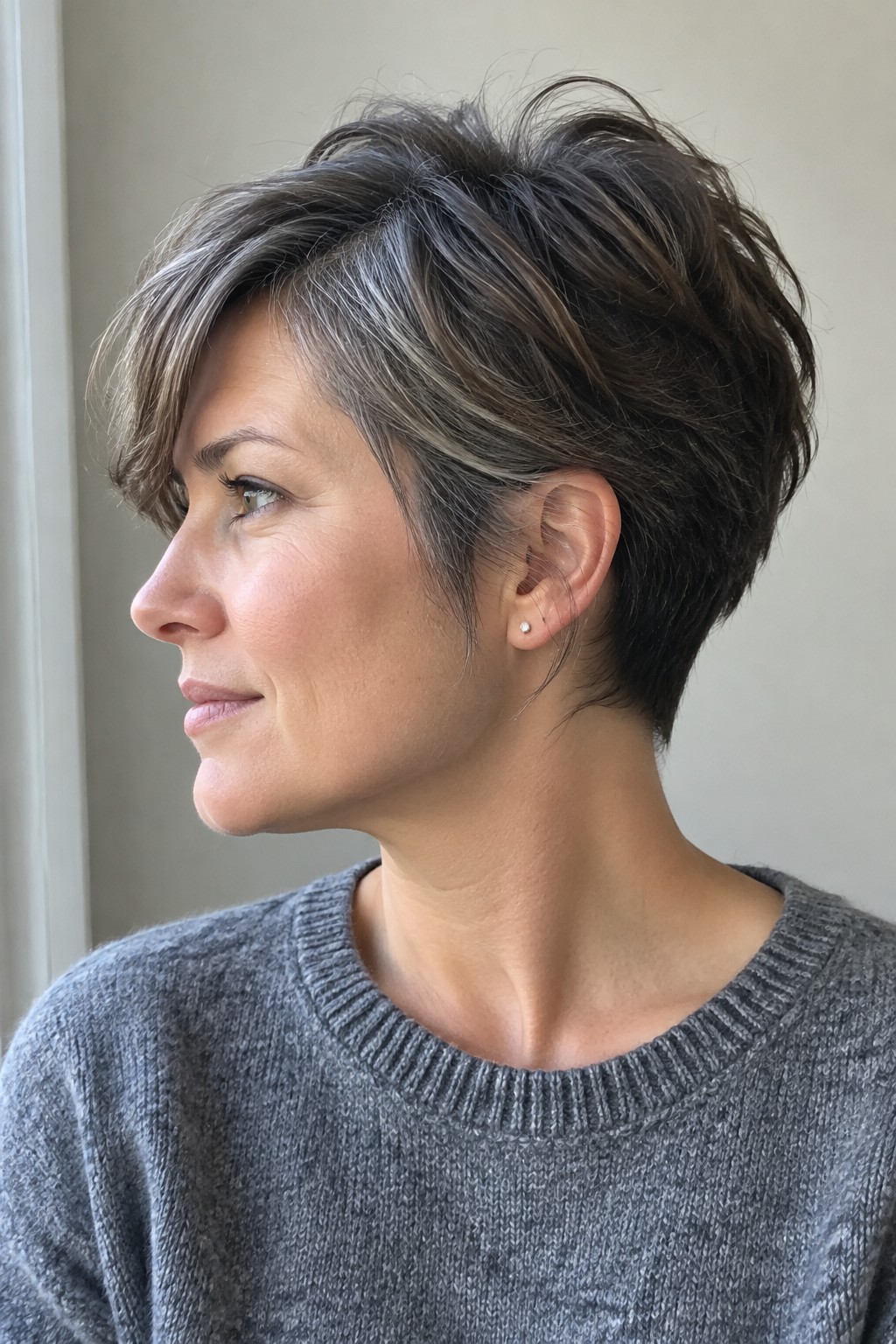
The nape and sides are cut short, while longer layers on top create a fuller, tousled shape. A side-swept fringe blends into the crown, and silver strands stand out against the dark base.
For thick hair, keeping the sides close can help contain bulk while the longer top stays easy to reshape with your fingers. I’d keep the finish a little loose rather than smoothing it flat, so the layers remain visible.
Low Twisted Bun With Loose Face-Framing Pieces
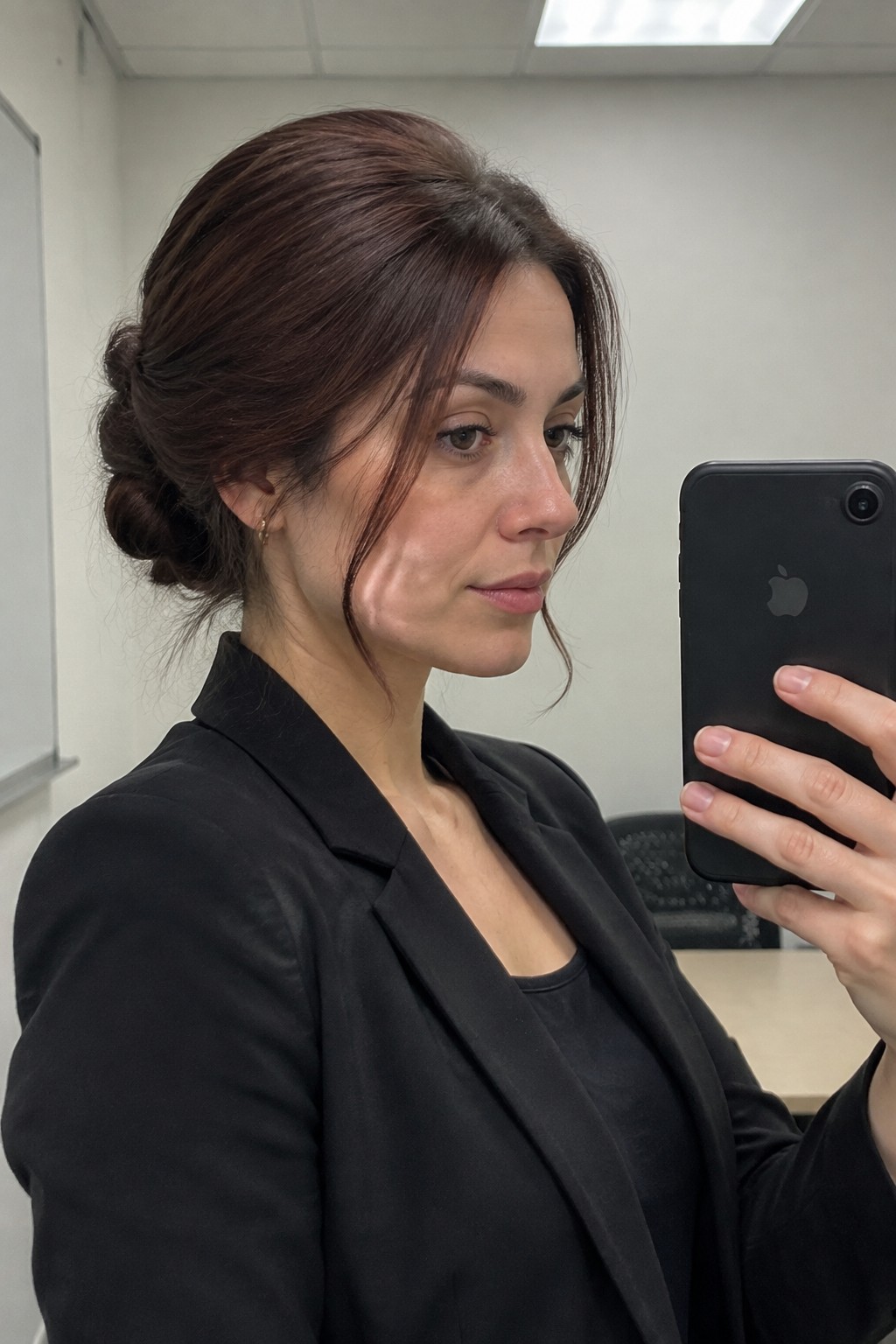
A low, twisted bun gathers thick hair neatly at the nape while keeping the crown smooth and controlled. The long pieces left loose around the face soften the pulled-back shape without adding bulk at the sides.
For a workday, I’d keep the twist fairly compact and let a few fine strands fall naturally rather than pulling out too much hair. The updo suits medium to long hair and looks tidy without needing a perfectly sleek finish.
Double Dutch Braids Into a Low Bun
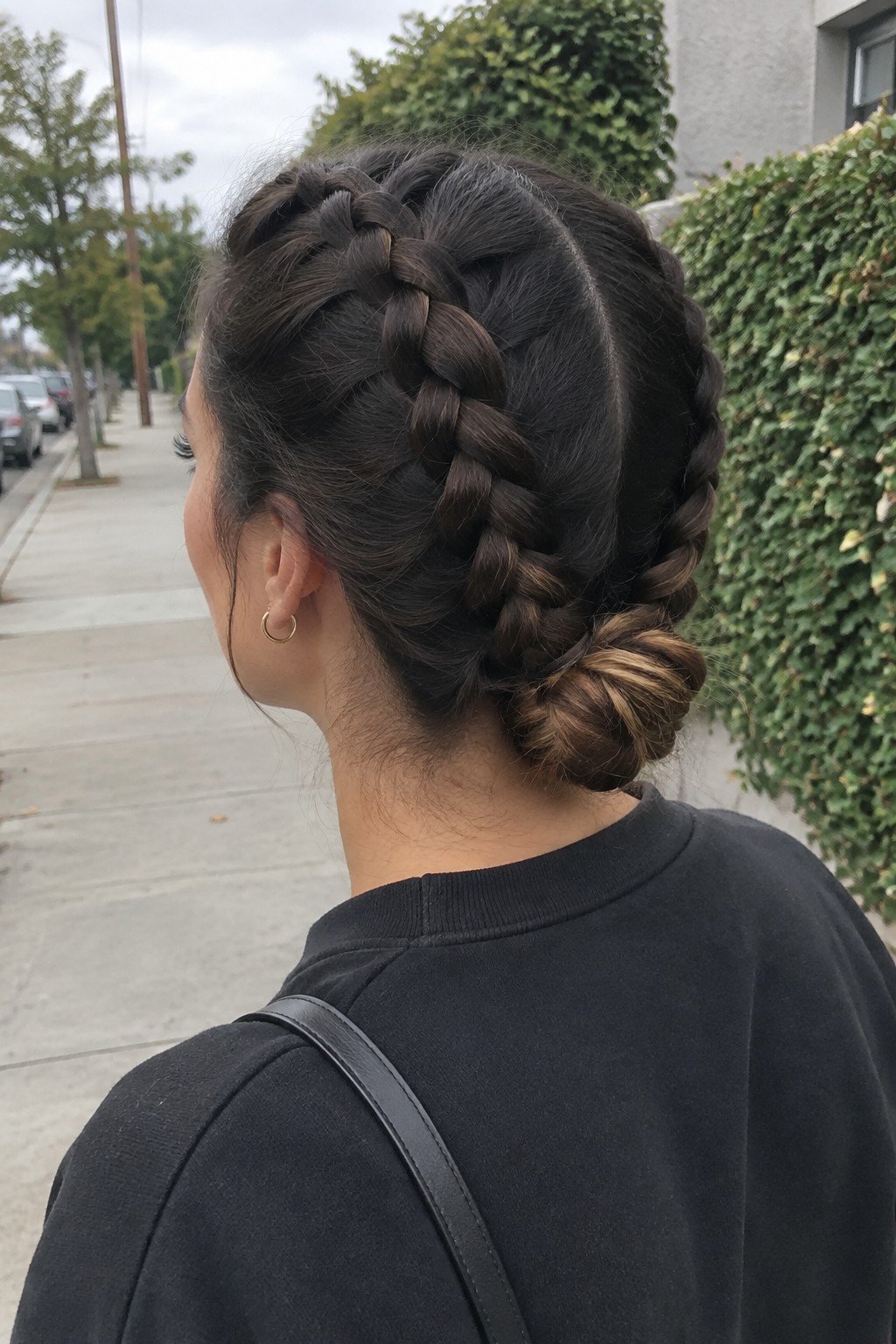
Two Dutch braids run from the crown down the back of the head, then join into a compact low bun. The close, woven shape keeps thick hair gathered neatly and controls bulk without relying on a slicked-down finish.
I’d keep the braids snug so they stay in place through a workday, then tuck the ends into the bun with pins. It’s a polished option when you want thick hair fully secured but still want the braid detail to show.
Straight Blunt Bob With a Center Part
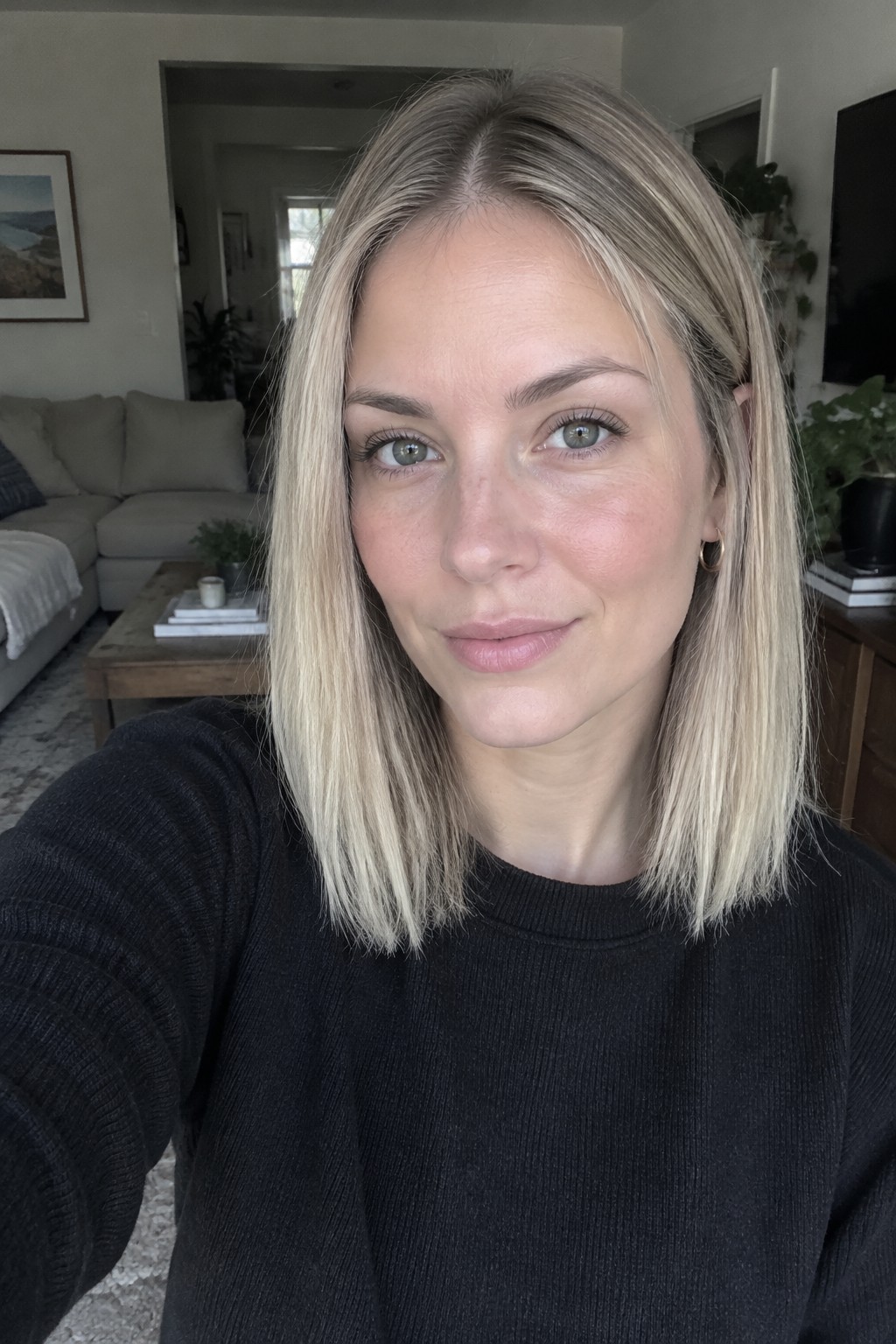
The ends of this shoulder-length bob sit in a clean, blunt line, while the center part keeps the shape simple and balanced. Its smooth finish gives thick hair a neat outline without relying on lots of layers.
For work, I’d keep the part and ends tidy with a quick blow-dry or a pass of a flat iron. The solid perimeter can help the hair look controlled, though very dense hair may need some subtle internal shaping to avoid a bulky feel.
Side-Swept Pixie With a Tapered Side
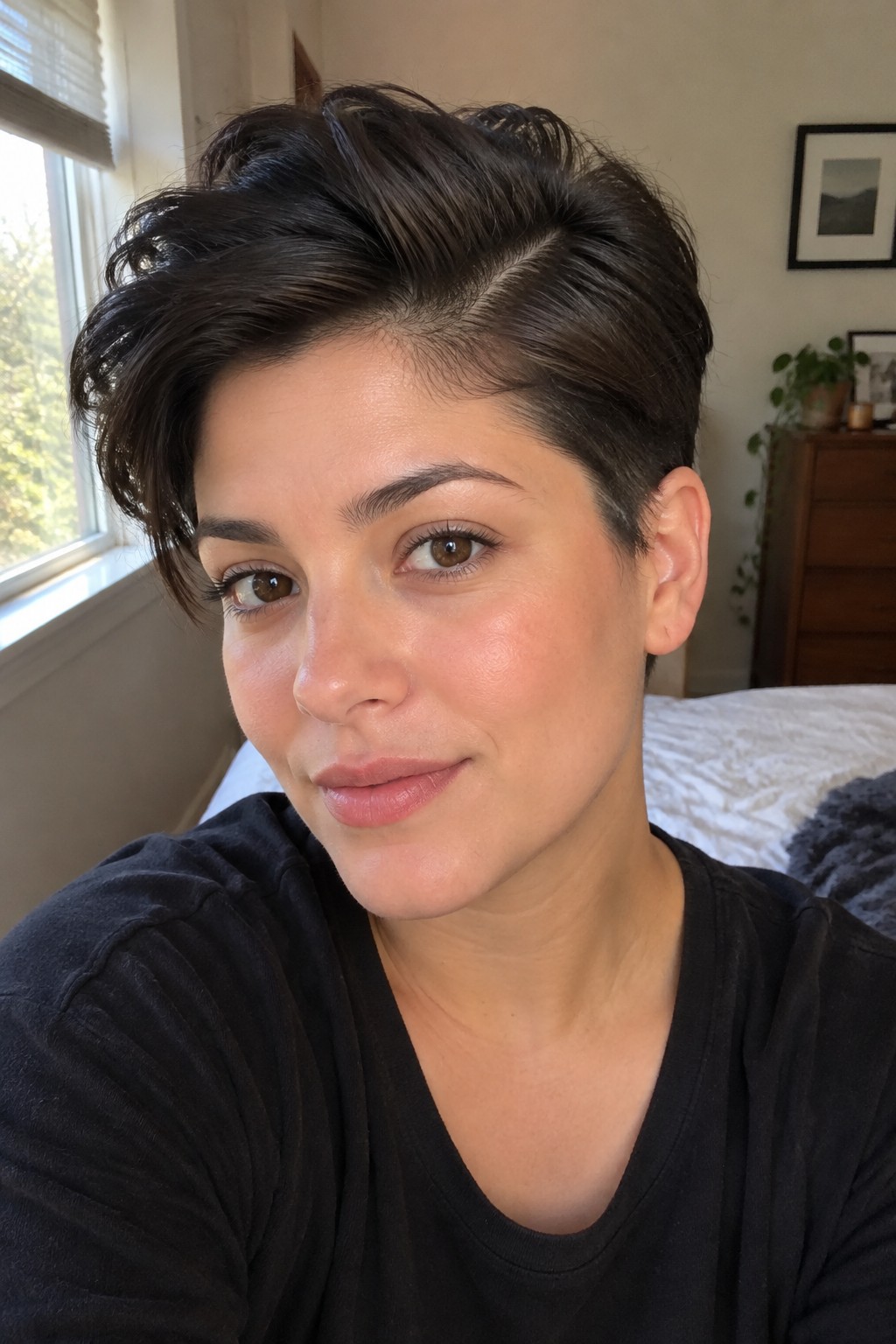
A long, textured top sweeps across this short pixie, while the sides are cut close for a neat outline. The contrast keeps thick hair from looking too wide at the sides without losing fullness through the crown.
For a workday, I’d keep the top loosely swept to one side rather than pressing it flat. The short sides help contain bulk, though the longer top may need a quick touch-up to hold its shape.
Low Messy Bun With Loose Face-Framing Pieces
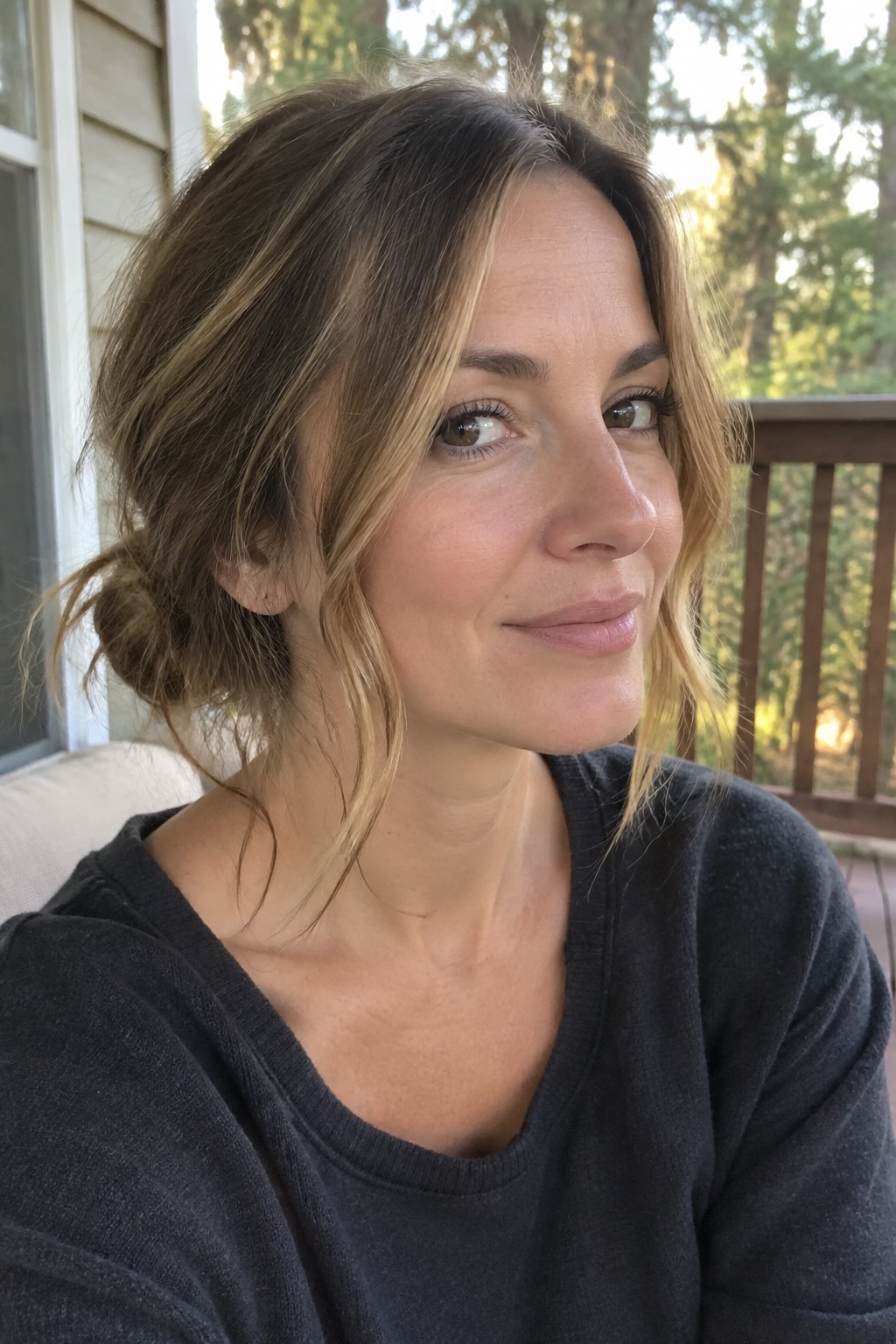
The hair is gathered into a relaxed low bun, with longer front pieces left loose around the cheeks and jaw. That pulled-back shape keeps thick hair contained, while the soft strands prevent the style from feeling too severe.
For a workday, I’d keep the bun secure but not overly tight so the loose pieces sit naturally. A few subtle highlights through the front also help those sections stand out from the darker hair.
Thick Side Braid With a Deep Side Part
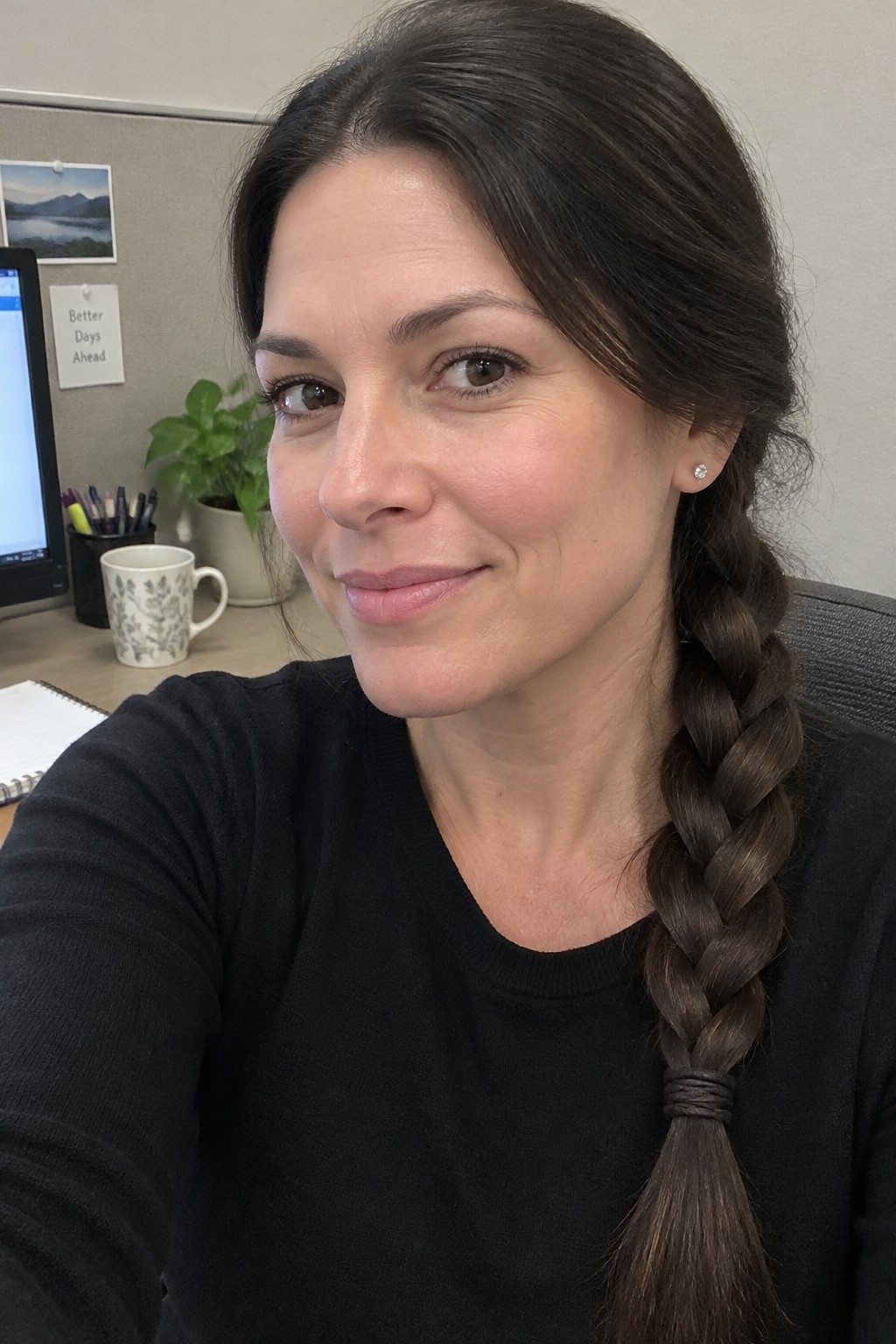
A deep side part sweeps the long, dark hair across the crown and directs it into a thick braid over one shoulder. The braid gathers the length neatly, keeping bulky hair controlled without needing to pull it into a tight updo.
I’d keep the braid a little relaxed so it stays comfortable through a workday, while still holding the hair together. It’s a simple option for long, thick hair, especially when you want the front to look smooth and tidy.
Long Layered Hair With a Center Part
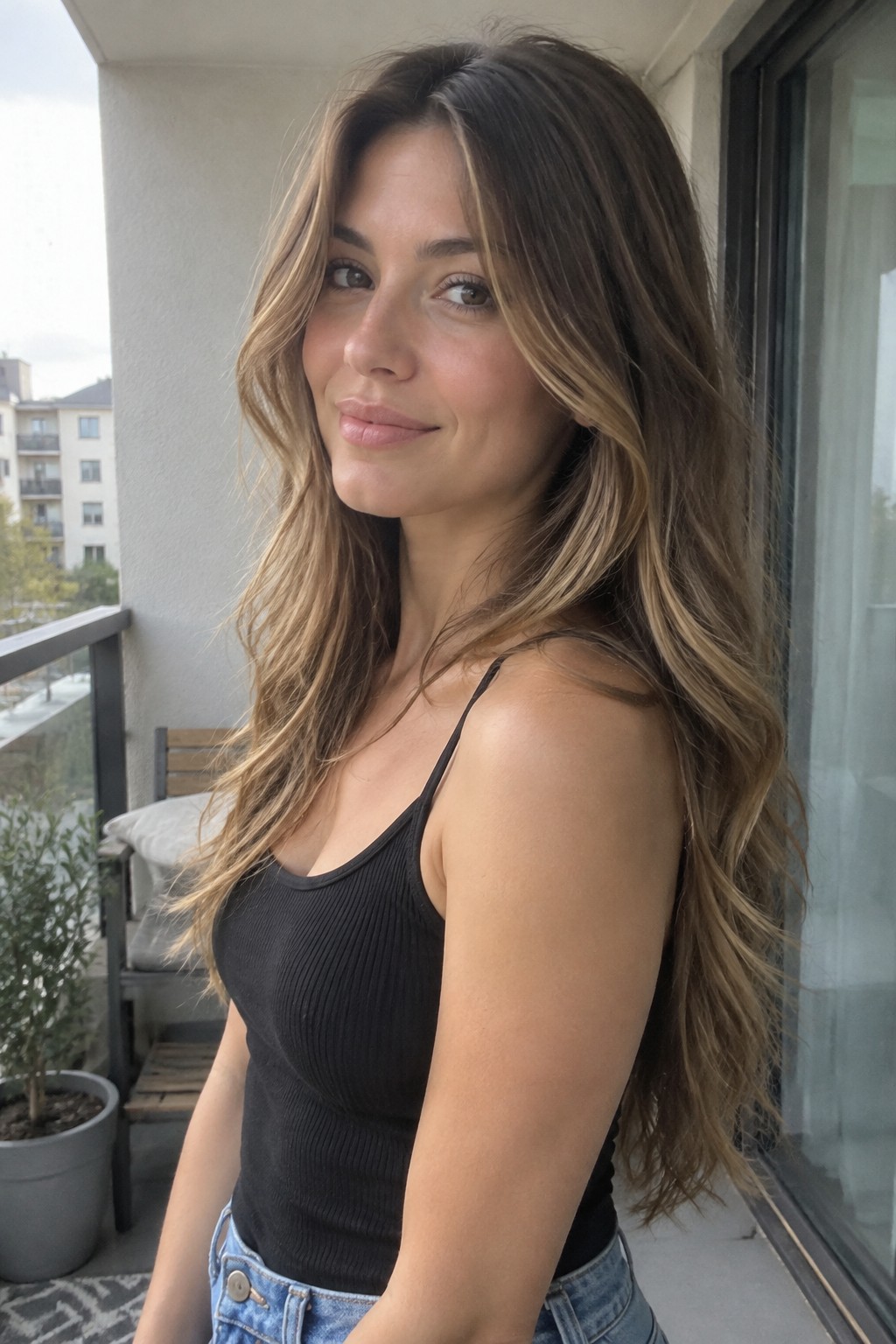
Long, loose layers keep this thick hair from forming one heavy shape, while the center part lets the front pieces fall naturally along the cheeks. The warm blonde highlights pick up the bends through the lengths without changing the relaxed finish.
For work, I’d keep the texture soft and natural rather than trying to smooth every strand into place. A little lift at the roots and a quick pass through the front layers can help the hair sit neatly while still looking full.
Chin-Length Bob With a Deep Side Part
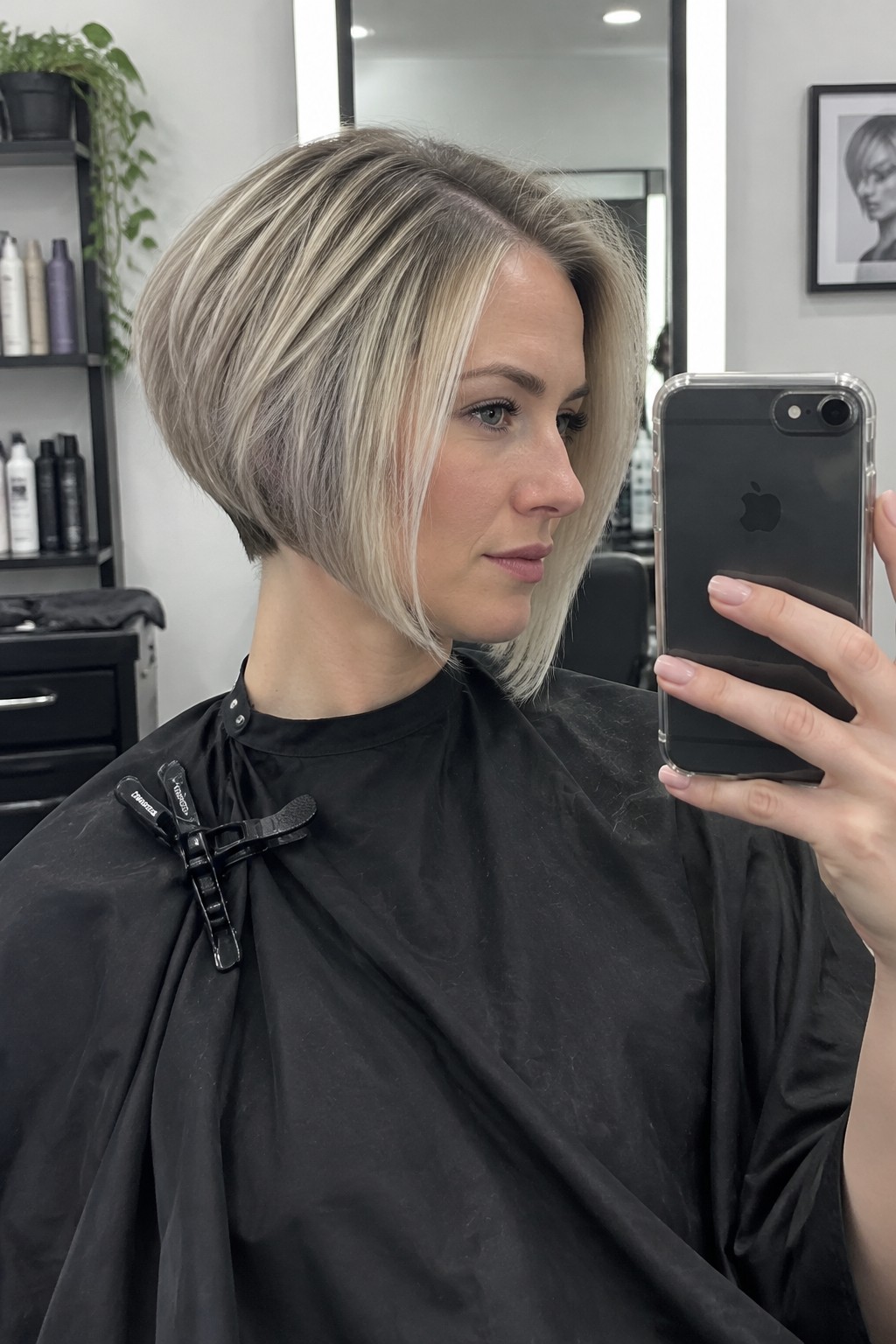
A deep side part gives this chin-length bob an asymmetrical shape, with longer, tapered pieces skimming the cheeks and a shorter, stacked back. The choppy layers break up thick hair so the rounded silhouette doesn’t feel too heavy.
I’d keep the finish smooth with a little lift at the roots to show off the shape. The blonde highlights also pick out the layers, while the longer front sections can be tucked behind one ear when you want them out of the way.
High Curly Puff With Defined Tendrils
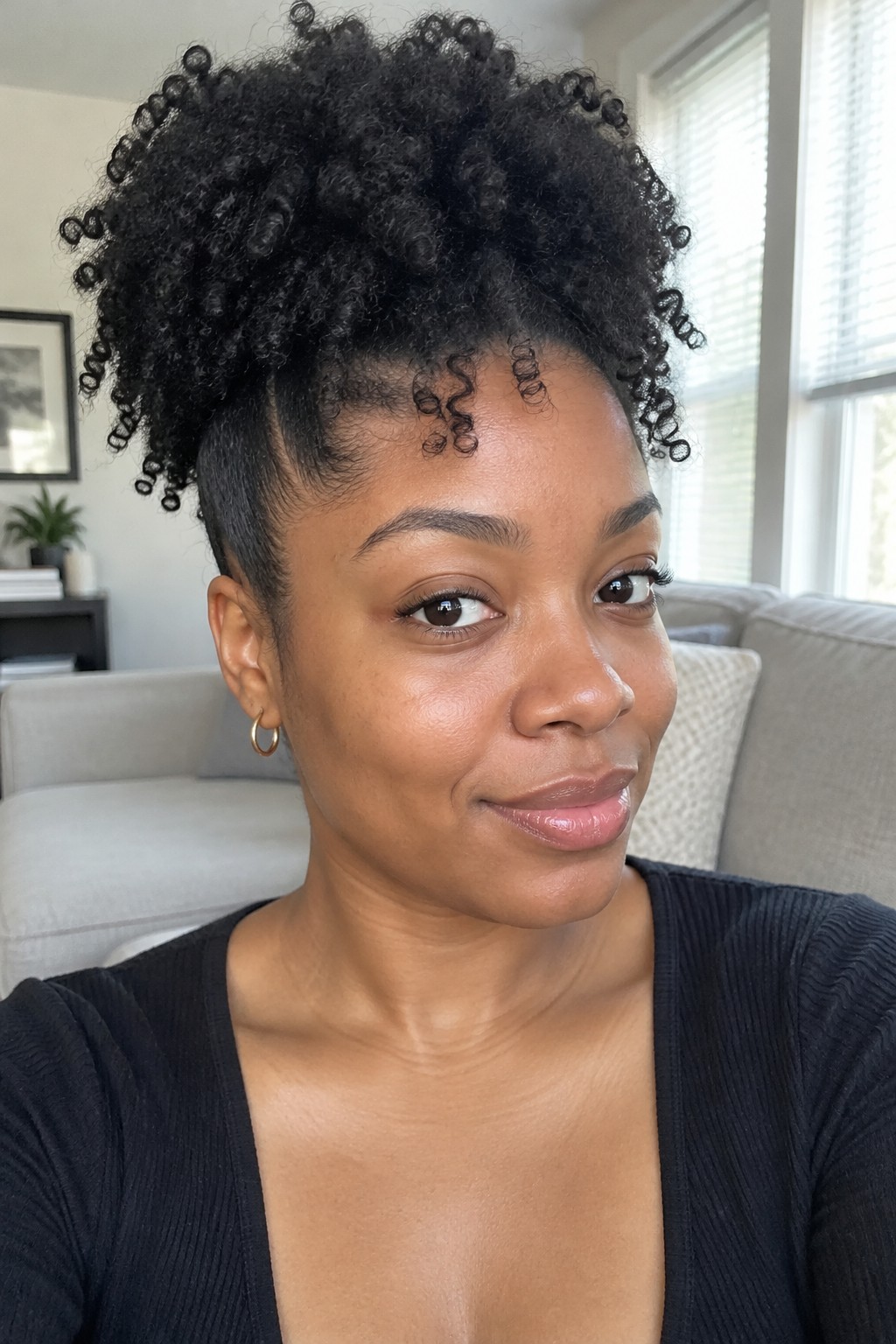
The curls are gathered high into a rounded puff, keeping the sides sleek while letting the natural texture spread out above the crown. A few springy tendrils at the hairline give the updo a relaxed finish.
For thick, tightly curled hair, this shape gathers the length away from the neck without flattening the curls. I’d keep the puff’s outline loose rather than pulling every curl into place, so its natural texture stays visible.
Low Twisted Bun With a Braided Detail
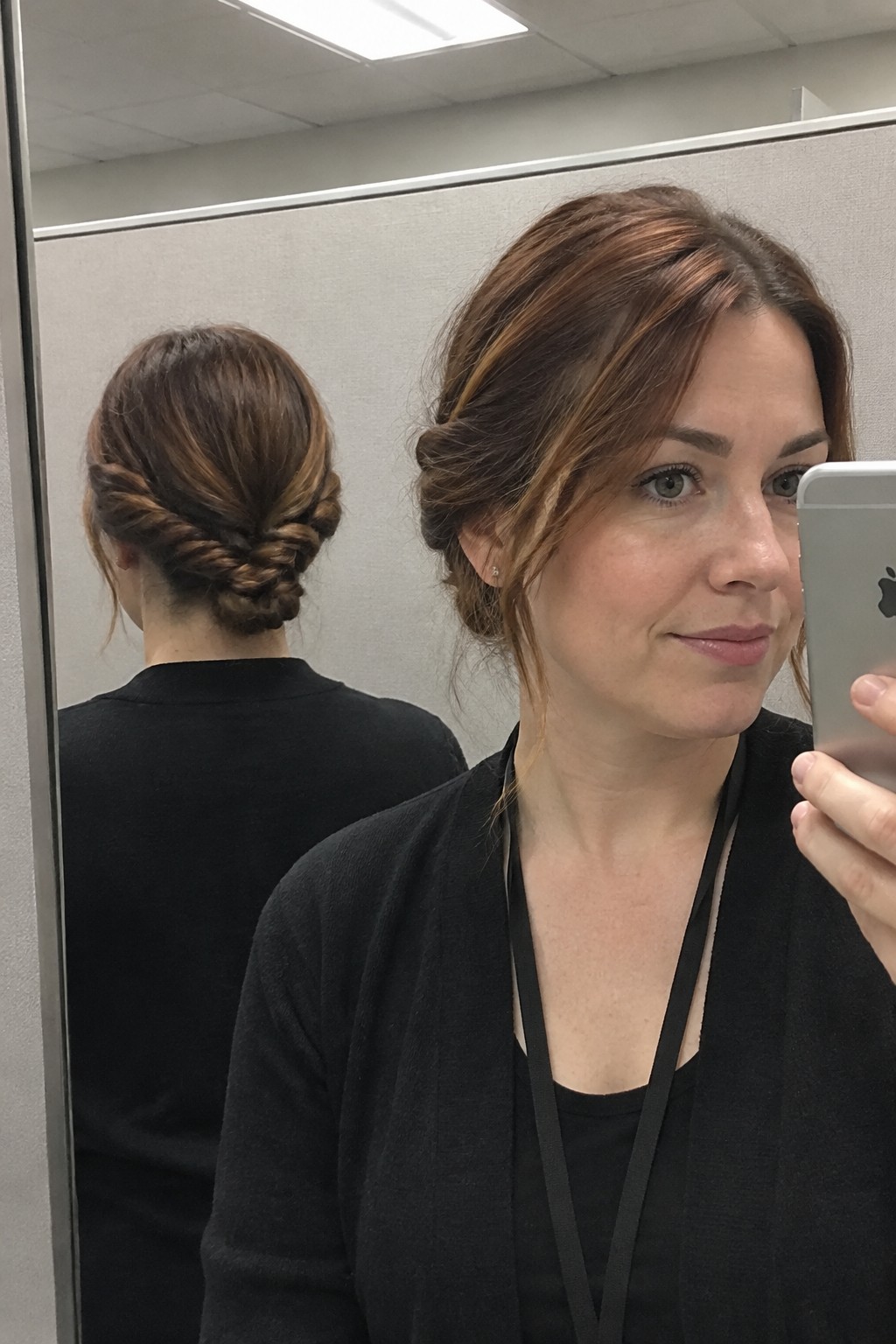
A low bun keeps thick hair gathered neatly at the nape, while the twisted sections crossing into it give the style a little more shape than a plain knot. The loose pieces around the face soften the swept-back finish.
I’d keep the bun slightly relaxed rather than pulling every section tight, so the twists stay visible and the style feels comfortable through a workday. It’s a useful option when you want thick hair secured without relying on a high, bulky ponytail.
Frequently Asked Questions
Q: How can I keep a bun or ponytail from feeling too bulky? A: Gather your hair in sections instead of trying to pull it all back at once. A low bun with a few sturdy pins often feels neater and more comfortable than piling everything into a high knot.
Q: What’s a quick way to tame flyaways before work? A: Smooth a little styling cream over the surface of your hair with your palms, then use a soft brush to guide flyaways into place. Start with a small amount so your hair stays touchable, not greasy.
Q: Will layers make thick hair easier to style? A: Light, well-placed layers can reduce bulk and help hair sit more easily in a clip or ponytail. Ask your stylist to keep enough weight at the ends so your hair doesn’t puff out.
Q: How do I keep a braid from getting too wide? A: Make a low, loose braid and secure it with a small elastic, then gently tuck the tail under if you want a tidier work look. A touch of cream through the lengths can help keep the braid smooth.
