


A sharp side part has a way of making a man’s haircut look polished without feeling overly fussy, and the 1940s version has plenty of character.
I’m especially drawn to the neat shape and that satisfying sweep of hair to one side.
It feels classic, but there’s room to make it suit a more relaxed, present-day style.
The details can change the whole mood, from a close, tidy finish to a little more height and movement on top.
I’ve gathered 18 handsome takes on the vintage side part, with enough variety to show just how much personality this simple parting can have.
Classic Side Part With a Textured Top

A deep side part and neatly tapered sides give this cut its 1940s influence, while the longer top is brushed back and across. The slight texture keeps the shape from looking too stiff.
I’d keep the finish fairly natural, with a small amount of pomade to guide the part without flattening the top. It’s a good option if you want a polished side-part style that still has some give.
Textured Side Part With a Long Quiff

A deep side part keeps this cut rooted in classic 1940s style, while the longer top is brushed up and across into a loose quiff. The sides are cut much shorter, so the contrast gives the shape a clean outline without making the top look too slick.
I’d keep some natural texture through the top rather than combing it into a tight wave. A small amount of matte product can help the quiff hold its direction while leaving room for the hair to move.
Side-Part Pompadour With a Tapered Fade

The deep side part sets off a long, swept-back top, while the tapered sides keep the shape close around the temples and ears. It has the neat outline of a classic 1940s side part, with extra height and texture through the front.
I’d keep the top’s natural separation visible rather than combing it into a solid, glossy sweep. A light-hold styling cream can help guide the hair back while leaving some texture, especially if your hair is thick enough to hold the lift.
Slicked Side Part With Tapered Sides
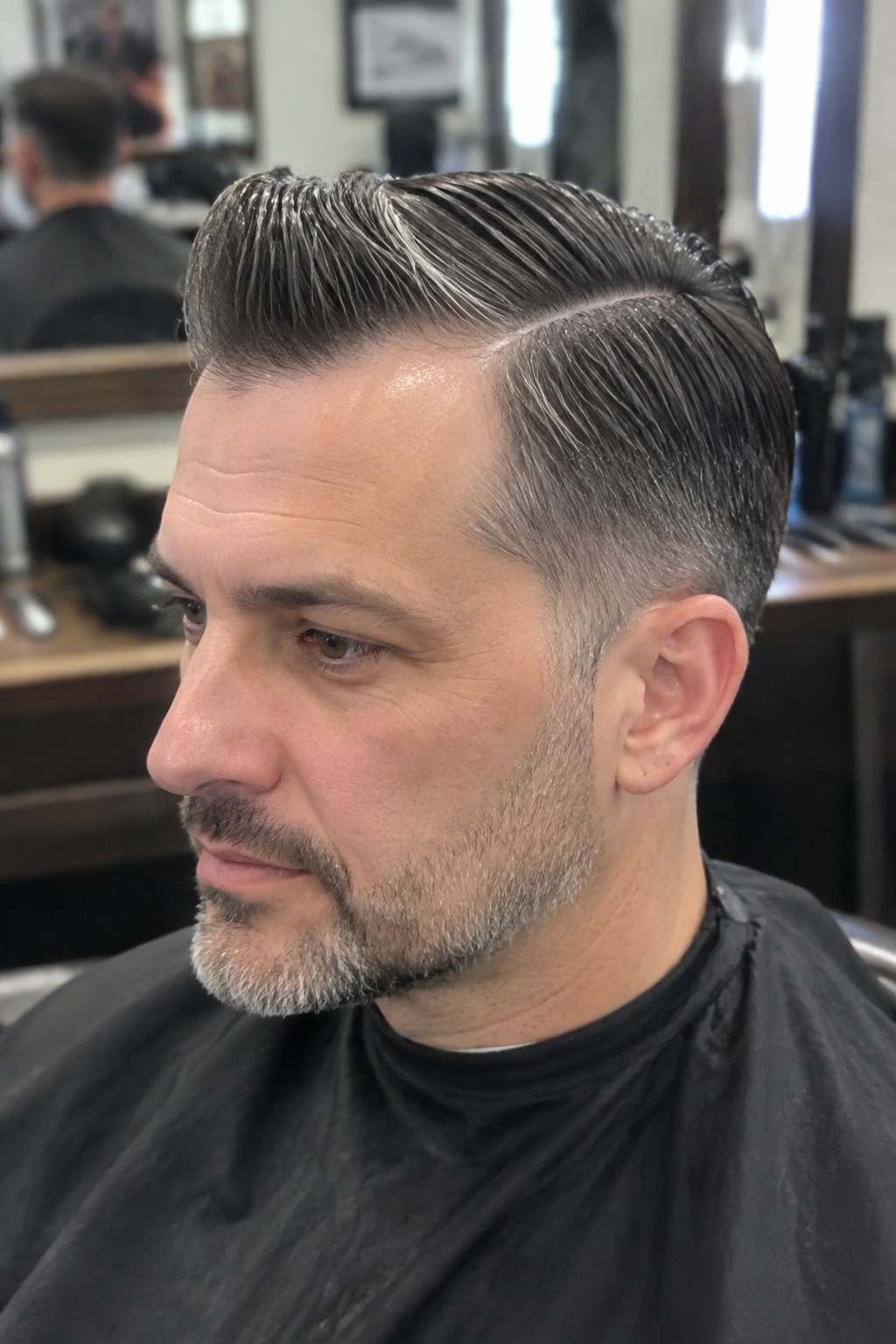
A deep side part and neatly combed top give this short-to-medium cut its classic 1940s shape. The sides taper close around the temples, keeping the outline tidy while the longer top sweeps smoothly across.
I’d keep the finish controlled but not overly stiff, so the comb lines stay visible without the hair looking pasted down. It’s a good option if you enjoy a polished side part and are happy to spend a little time styling the top.
Side Part With a Swept-Back Quiff

The longer top is brushed up and across from a subtle side part, while the sides stay shorter and neat. That contrast gives the hairstyle a clean outline without making the top look overly slick.
I’d keep a little natural texture through the quiff so it doesn’t feel too formal. It’s a good direction for someone who wants a polished, 1940s-inspired part with a softer finish.
Curly Side Part With a Low Fade

A defined side part separates the short, faded sides from a longer top of tight natural curls. Keeping the curls full gives this take on the 1940s side part a more textured shape than a slick, close-set finish.
I’d keep the part crisp and let the curl pattern stay visible rather than combing the top flat. That contrast keeps the hairstyle distinctive while still giving it a neat outline.
Long Layered Side Part

The deep side part sweeps long, loose layers across the forehead, while the fuller sides and back keep the shape relaxed rather than sharply tapered.
I’d keep the finish lightly tousled to let the layers fall naturally. It has a casual take on the side-part styles associated with the 1940s, without the slick, close-set finish.
Side Part With a Sculpted Quiff

The deep side part keeps the sides neat, while the longer top is swept up and back into a rounded quiff. Its polished shape has a clear 1940s influence, with enough texture through the top to keep it from looking completely slick.
I’d keep the sides close and let the top stay long enough to hold its height. A light pomade can help define the part and control the front without flattening the quiff.
Side Part With a Short Taper

A clean side part separates the longer top from closely tapered sides, while the top is combed back with a slight lift. The neat shape has a distinctly 1940s feel without looking overly slick.
I’d keep the finish natural rather than loading the hair with shine, especially if you want the top to hold some texture. It’s a good option if you like a defined part and tidy sides but still want a little height.
Side Part With a Short, Neat Quiff

The top is left longer and combed up and back from a distinct side part, while the sides stay shorter and tidy. A touch of natural texture keeps the shape from looking overly slick.
I’d keep the finish fairly soft to let the silver strands show through and avoid making the top feel stiff. It’s a neat take on a 1940s-inspired part that still feels easy to wear day to day.
Side Part With a Loose, Swept Fringe

The longer top is parted to one side, with loose layers sweeping forward and across the forehead. Shorter sides keep the outline neat while the top stays relaxed rather than slicked flat.
I’d keep the finish natural with a little lightweight cream, so the fringe can fall into place without looking stiff. It’s a good option if you like a classic side part but want some texture through the front.
Long Side Part With a Swept Fringe

The long top is parted to one side and swept across the forehead, while the sides stay shorter and close to the head. Loose layers keep the shape from looking too neat, and the highlighted strands make the direction of the sweep easy to see.
I’d keep the finish lightly textured rather than slick, so the front can fall naturally into place. It’s a relaxed take on a 1940s side part that still keeps the longer top as the focus.
Side Part With a Blonde Textured Quiff

The deep side part keeps this short tapered cut neat, while the longer top is brushed up and across into a loose quiff. Fine texture through the top gives it shape without the slick finish of a more formal 1940s style.
I’d keep the sides tidy and use a small amount of matte product to separate the top, so the lighter strands stay visible. It’s a good option if you want a classic side part with a bit more height and a relaxed finish.
Side Part With a High, Swept-Back Top

The top is left long enough to sweep back from a defined side part, while the sides sit shorter and close to the head. That contrast gives this 1940s-inspired style a tidy outline without flattening the hair.
I’d keep the finish lightly textured rather than slick, so the raised top still looks natural. It’s a good direction if you like a polished side part but want more height than a close, flat comb-over.
Side Part With a Tousled Quiff

A deep side part separates short, closely tapered sides from a longer top swept up and across the forehead. The loose, slightly wavy texture keeps the quiff from looking too slick, while subtle lighter strands make the top’s layers easier to see.
I’d keep the part defined but let the front stay a little undone for a relaxed take on the 1940s-inspired shape. A small amount of matte styling product can help the top hold its direction without flattening its texture.
Side-Part Pompadour With a Clean Taper

A deep side part sets off the tall, smoothly combed pompadour, while the shorter sides taper neatly around the ear and neckline. The contrast gives this 1940s-inspired style a crisp outline without making the top look overly rigid.
I’d keep the finish fairly glossy to suit the combed shape, using a strong-hold product to help the front stay lifted. It’s a good option if you enjoy a defined part and don’t mind spending a little time styling the top.
Side Part With a Long Swept Top

A clean side part separates the long, layered top from closely tapered sides. The top sweeps back with a slight lift, while the shorter hair around the ears and nape keeps the silhouette tidy.
I like the way the layers let the top keep some natural texture instead of sitting flat like a slicked style. It’s a strong option if you enjoy a 1940s-inspired part but want a little more looseness through the finish.
Classic Side Part With a Long, Swept Top

A clean side part keeps this medium-length cut rooted in the 1940s, while the longer top sweeps across the forehead and curves gently at the ends. The sides are shorter and neat, creating a clear contrast without the sharp look of a skin fade.
I’d keep the finish softly combed rather than slicked flat, so the top retains its natural texture. It’s a good option if you like a traditional part but want enough length to change how the front sits.
Frequently Asked Questions
Q: Do I need thick hair to pull off a 1940s side part? A: Not necessarily. A clean part and a little volume at the front can give fine hair plenty of shape. Ask your barber to keep the cut tailored without thinning the top too much.
Q: How do I keep the part in place all day? A: Start with damp hair, comb in your part, then blow-dry the top in that direction. Work a small amount of pomade through dry hair afterward, adding more only if you need extra hold.
Q: Can I wear a 1940s side part with a beard? A: Absolutely. Keep the sides neat and your beard shaped so the overall look feels intentional. A shorter beard works especially well with a sharp, polished part.
Q: How often should I get this haircut trimmed? A: Every three to five weeks usually keeps the part and sides looking crisp. You can stretch it longer if you prefer a softer, less precise finish.
